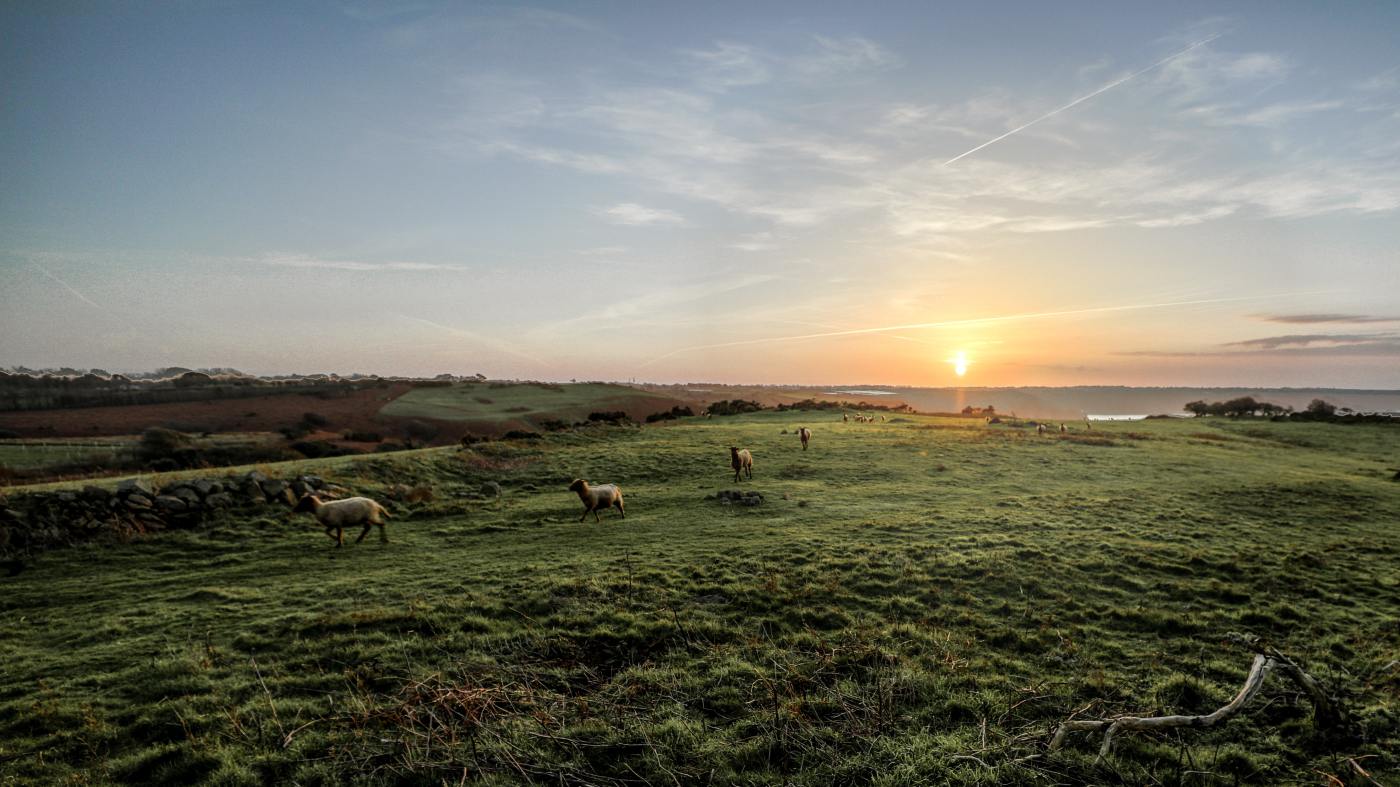
Then the LORD said to Moses, “Give these instructions to the Israelites: When you come into the land of Canaan, which I am giving you as your special possession, these will be the boundaries…”
Numbers 34:1 NLT
When reading through the Bible there are certain chapters that modern readers, myself included, often find tedious. I would venture to guess that the most frequently skipped or skimmed chapters in Scripture are the genealogies and the passages dealing with land and borders. This is understandable. Few people enjoy reading a long list of names, especially when we know little to nothing about most of the people listed. Likewise, the geography of a foreign land and detailed accounts of who will dwell there is not all that interesting for those of us who are separated from the story by thousands of miles and thousands of years. While these passages can be tedious, there is a reason for their inclusion and some truths which we can meditate on and benefit from even today.
For example, it is worth noting that the Lord is the one who sets Israel’s borders. Today, we mostly tend to think of borders and land disputes as secular matters over which God has little to say, but as with all things there is a spiritual element we often fail to consider. All the earth belongs to God, including the land in which we live and labor. We own land only so far as God grants us the right to be be stewards of the land, and as stewards we acknowledge that our ownership is dependent on Him and accountable to Him. Just as God set the boundaries of Israel, so too has He set the boundaries and limitations of your life here on earth. The place and time in which you were born, the body which you were given, the gifts and talents you posess, and the influence you have were all determined by your Creator. You are accountable for the spheres of dominion that we have been given.
Another fact worth considering is that, while descriptions of the Promised Land might lead us to think otherwise, Canaan was actually quite small. Many empires would rise and fall around Israel that would dwarf God’s people in size and scope of dominion, but this was seemingly of little concern for God’s people. The land of promise was a good land that provided the inhabitants all they needed. The former inhabitants had done great wickedness in the land, and had lost their right to inhabit the land. Israel too would have periods of exile in which God temporarily removed them from the land of promise. The fact is that no one could hold the land longer than God allowed them to hold it, and none could take the land unless God allowed it to be taken.
The LORD gave, and the LORD has taken away; blessed be the name of the LORD.”
Job 1:21 ESV
This is a reminder not only to be content with what God has given us, but also to steward our gifts for God’s glory and for the good of our neighbors. With each gift comes responsibility and accountability. While we may not all be land owners, we are all stewards of what we have been given dominion over. Everything from your land and your wealth to your time and your talents is given to you on loan. It may be yours for a season, or perhaps it will be yours for a lifetime, but either way it will one day be given back to the Lord and we will give an account for what we did with it.
‘Well done, good and faithful servant. You have been faithful over a little; I will set you over much. Enter into the joy of your master.’
Matthew 25:23 ESV
In the same sense, each of us has borders in our lives which mark the end of our dominion and stewardship. Much pain is caused by those who refuse to steward the gifts they have received for God’s glory, just as much pain also results from individuals who try to overstep the borders which God has placed. Today the headlines are dominated by a deadly war over territory in which Russia is attempting to enforce dominion over a land which they are not the rightful stewards. This is an extreme example, but we all see examples of this in our lives and in the lives of others. Parent’s are stewards of their children for a season, but if parents refuse to surrender their dominion over their adult children great dysfunction can occur. A neighbor who tries to police the neighborhood will inevitably create conflict among the community. When individuals or groups try to control what is not theirs to control, the result is always a disruption of peace and prosperity. This is one reason why it is important for borders, boundaries, and limitations to be known and understood. It is a good habit to take inventory over the things which God has given us to steward, as well as the things over which we are not stewards. No man or woman, no matter how great, is without God ordained limitations placed upon them. Even the most powerful king or wealthy individual will still inevitably face the limitation of time. As the author of Hebrews noted:
“It is appointed for men to die once, and then comes the judgement”
Hebrews 9:27 ESV
Time is the great equalizer. No individual can live forever, and every worldly empire will one day fall. Their power, wealth, and influence will be redistributed elsewhere, and the world will either be better or worse as a result.
Ultimately, all that is of this life is only a temporary shadow of the things to come. It is preparation for “a better country, that is, a heavenly one” (Heb. 11:16). Unlike the secular man who exhausts himself for the sake of temporary worldly power and riches, the Christian patiently stewards their possessions and influence,looking ahead to the day when they shall receive, “an inheritance that is imperishable, undefiled, and unfading, kept in heaven for you,” (1 Peter 1:4). In this truth we find the freedom to live a life of simplicity, generosity, contentment, and peace – knowing that all we have is a gift to be shared from a loving Heavenly Father who will provide all that we need.
 hardincrowder.com