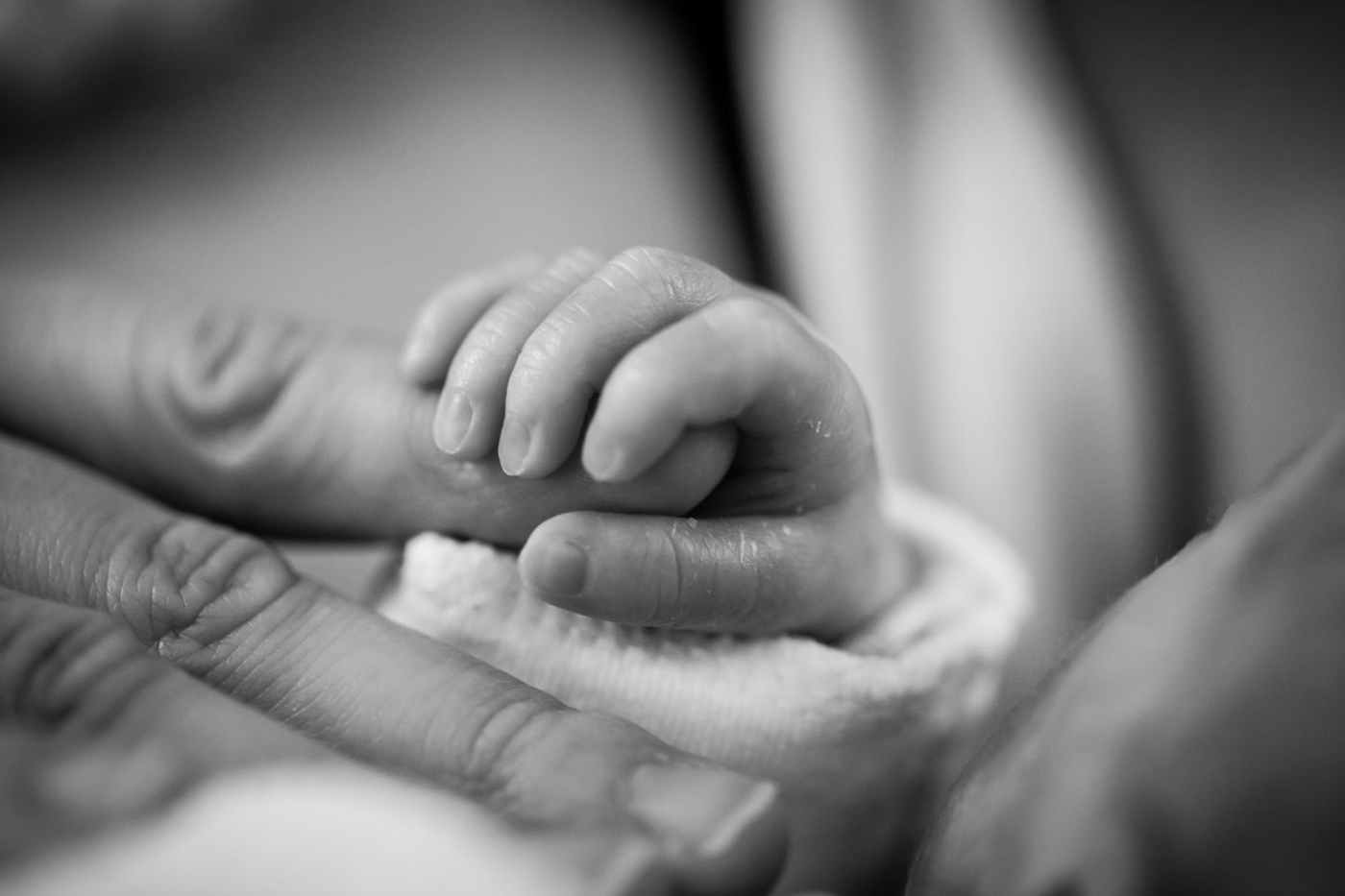
Now there was a man of the Pharisees named Nicodemus, a ruler of the Jews. This man came to Jesus by night and said to him, “Rabbi, we know that you are a teacher come from God, for no one can do these signs that you do unless God is with him.” Jesus answered him, “Truly, truly, I say to you, unless one is born again he cannot see the kingdom of God.” Nicodemus said to him, “How can a man be born when he is old? Can he enter a second time into his mother’s womb and be born?” Jesus answered, “Truly, truly, I say to you, unless one is born of water and the Spirit, he cannot enter the kingdom of God. That which is born of the flesh is flesh, and that which is born of the Spirit is spirit. Do not marvel that I said to you, ‘You must be born again.’ The wind blows where it wishes, and you hear its sound, but you do not know where it comes from or where it goes. So it is with everyone who is born of the Spirit.”
Nicodemus said to him, “How can these things be?” Jesus answered him, “Are you the teacher of Israel and yet you do not understand these things? Truly, truly, I say to you, we speak of what we know, and bear witness to what we have seen, but you do not receive our testimony. If I have told you earthly things and you do not believe, how can you believe if I tell you heavenly things? No one has ascended into heaven except he who descended from heaven, the Son of Man. And as Moses lifted up the serpent in the wilderness, so must the Son of Man be lifted up, that whoever believes in him may have eternal life.
“For God so loved the world, that he gave his only Son, that whoever believes in him should not perish but have eternal life. For God did not send his Son into the world to condemn the world, but in order that the world might be saved through him. Whoever believes in him is not condemned, but whoever does not believe is condemned already, because he has not believed in the name of the only Son of God. And this is the judgment: the light has come into the world, and people loved the darkness rather than the light because their works were evil. For everyone who does wicked things hates the light and does not come to the light, lest his works should be exposed. But whoever does what is true comes to the light, so that it may be clearly seen that his works have been carried out in God.”
John 3:1-21, ESV
A Pharisee By Any Other Name
The evolution of language is a subject that I find fascinating. For example, the word “awful” was originally a combination of awe- (fear, terror, great reverence) and -ful (full of, having, characterized by). There was a time when one would describe something profoundly reverential or deserving of respect as “awful”, and yet over time the usage evolved to mean something excessively bad. Not only do etymological quirks like this make for interesting trivia, but they also can help us immensely when we read writings from past eras. The term “Pharisee” is another example of a word that has taken on a negative connotation with the passage of time.
In the days of Jesus, the Pharisees were a religious movement that favored a wide application and daily observance of the Law recorded in the Hebrew scriptures. The Pharisees were also much more supernaturally prone; willing to believe in angelic visitations, a future resurrection, and the literal coming of a Messiah. This separated them from the Sadducees who seem to have been much more narrow in their application of the Law, and who seem to have rejected the supernatural concepts of resurrections and rewards and punishments after death. In short, Jesus’ teachings had a lot more in common with the Pharisees than with other forms of Judaism that were prevalent during the first century. In spite of this, if you called someone a “Pharisee” today they would probably take it as an insult. Because Jesus frequently disputed with members of the Pharisee sect, often disagreeing with their overzealous and improper application of the Law, the term “Pharisee” has now come to be associated with a holier-than-thou style of legalism.
This shift in meaning didn’t happen without reason. In desiring to apply the Law of God to every area of life, many Pharisees fell into legalistic thinking, but we should also remember that many of the Pharisees were morally upright, deeply religious, and highly respected teachers to many in the Jewish faith. Their problem was not so much that they had wrong theology, which in some areas they did, but rather that they had started off on the wrong theological foot. In seeking to live righteously in all things, they became an idol unto themselves. They trusted in their own righteousness to save them, neglecting the reality that “there is none righteous, no, not one” (see: Romans 3:10; Psalms 14:1-3; 53:1-3; Eccles. 7:20). The solution to the problem of sin doesn’t come from unlocking the secret to sinless living. The solution to sin comes in being born again, an act of faith that happens independently of our works. As Christ himself declared,“unless one is born again he cannot see the kingdom of God.”
The Necessity for the New Birth
A of the basic truth we often find in Jesus’ teachings is that religious piety and moral living is not what make us worthy of the kingdom of God, but his seems contradictory to so many of our assumptions about life and how the universe should work. We naturally seem to assume that if we act rightly we deserve rewards, and if we act wrongly we deserve punishment. Putting this idea into religious language, we would naturally conclude that good people go to heaven and bad people go to hell. That seems to make sense at first glance.
The problem in this thinking become apparent when we really begin to examine ourselves and the assumptions we are making. Should I expect to be rewarded for not physically assaulting my neighbor? Most people would agree that no reward should be expected for choosing to do something that I shouldn’t have even considered in the first place. Likewise, should I expect to be praised for paying my taxes on time? Again, most would say that obeying the law is something we are simply expected to do. When we see God’s commandments as the standard by which we are judged, we realize not only that we fall short of the standard more often than we care to admit, but also that we have not merited the kingdom of God even if we feel like we reach the lowest bar more often than others. If obedience to the commandments is the bare minimum, then the truly righteous person would go far above and beyond the law in righteousness. This is what Jesus probably meant when he said:
For I tell you, unless your righteousness exceeds that of the scribes and Pharisees, you will never enter the kingdom of heaven.
Matthew 5:20, ESV
Nicodemus struggled to comprehend Jesus’ teachings because he was making many of the same false assumptions that we make today. Nicodemus was probably like his contemporaries in thinking that one could please God by abiding by the right set of religious rules and acting morally. He likely saw righteousness as something one could obtain through education, piety, and discipline. What Nicodemus struggled to grasp was that true righteousness does not come from the inside out. If that were the case then it might be possible for sinful man to save himself. No, true righteousness originates in God. It comes upon us from beyond us and transforms us into a new creation. New life, new birth, salvation is a gift of grace received by faith. We assume that something so grand must be obtained or merited somehow. Like Nicodemus, we struggle with the gospel because it is so simple.
The Apostle Paul summarized the problem like this:
Jews demand signs and Greeks look for wisdom, but we preach Christ crucified: a stumbling block to Jews and foolishness to Gentiles, but to those whom God has called, both Jews and Greeks, Christ the power of God and the wisdom of God. For the foolishness of God is wiser than human wisdom, and the weakness of God is stronger than human strength.
1 Corinthians 1:22-25
And again in the same letter:
Now we have received not the spirit of the world, but the Spirit who is from God, that we might understand the things freely given us by God. And we impart this in words not taught by human wisdom but taught by the Spirit, interpreting spiritual truths to those who are spiritual. The natural person does not accept the things of the Spirit of God, for they are folly to him, and he is not able to understand them because they are spiritually discerned.
1 Corinthians 2:12-14
Worldly thinking struggles to comprehend the simple gospel of Christ because the love of God is so unlike the love we have come to expect from others. It is is not based on human achievement, but instead originates in God’s grace and love for his people. God’s love is grounded in the work of Jesus Christ and results in salvation for all who receive the gift in faith. The resulting transformation is what Christ refers to as “being born again.”
It is noteworthy that Nicodemus “came to Jesus by night.” Practically speaking, Nicodemus was probably seeking an audience with Christ at night to avoid being seen by his fellow Pharisees, who as we already noted were frequently in opposition to Christ’s teachings. There is, however, possibly a symbolic element at play here. Darkness is sometimes used in scripture to symbolize one who lacks understanding (Ephesians 4:18). We see this play out in the confusing Nicodemus expresses towards Christ’s teachings concerning the new birth. While Nicodemus saw the new birth as some sort of physical event, Jesus revealed that he was speaking of a spiritual event. While all of us are born into a sin nature as children of Adam, we can inherit a new nature by being reborn in Christ. Paul would later expand on this teaching while writing to the church in Rome:
Therefore, just as sin came into the world through one man, and death through sin, and so death spread to all men because all sinned— for sin indeed was in the world before the law was given, but sin is not counted where there is no law. Yet death reigned from Adam to Moses, even over those whose sinning was not like the transgression of Adam, who was a type of the one who was to come.
But the free gift is not like the trespass. For if many died through one man’s trespass, much more have the grace of God and the free gift by the grace of that one man Jesus Christ abounded for many. And the free gift is not like the result of that one man’s sin. For the judgment following one trespass brought condemnation, but the free gift following many trespasses brought justification. For if, because of one man’s trespass, death reigned through that one man, much more will those who receive the abundance of grace and the free gift of righteousness reign in life through the one man Jesus Christ.
Therefore, as one trespass led to condemnation for all men, so one act of righteousness leads to justification and life for all men. For as by the one man’s disobedience the many were made sinners, so by the one man’s obedience the many will be made righteous. Now the law came in to increase the trespass, but where sin increased, grace abounded all the more, so that, as sin reigned in death, grace also might reign through righteousness leading to eternal life through Jesus Christ our Lord.
Romans 5:12-21
With this understanding in mind, it makes sense that one must be born again in Christ if one is to enter into the kingdom of God. One of the reasons Nicodemus might have been thinking of a physical rebirth, as opposed to a spiritual rebirth, is that he was likely among the many Jews of his era who hoped and prayed that the Messiah would usher in an earthly political “kingdom of God” by overthrowing Roman rule. They rightly expected that the Messiah would bring about a kingdom that would destabilize existing power dynamics, defeat evil, and establish justice, but how they expected this to unfold was skewed by their current political climate (perhaps we can learn something from their mistakes when we seek interpret prophecy in our day).
Nicodemus had believed all his life that strict obedience to God’s law would satisfy God, and that in the time of the Messiah he would be counted among the righteous. If Jesus was the Messiah, then Nicodemus was going to have to reevaluate much of his assumptions about what it means to be right in God’s sight. It was not enough to be born a Jew, or even living a life of obedience to the Law of Moses. No, to be right in God’s sight they must be born again, reborn spiritually into Christ. Only in and through the person and work of Jesus can we enter into the kingdom of God and receive eternal life. But what would this new birth be like?
The Reality of the New Birth
The most plainly stated truth about the new birth is that it is a spiritual new birth. Being spiritual in nature, the new birth cannot be accomplished by physical means or works. Some will argue that being “born of water” in verse 5 is a reference to baptism, but this would not make sense with the rest of the passage since baptism is itself a physical action using water, a physical substance. While baptism is a symbolic act that celebrates a spiritual rebirth, the actual act of baptism is associated more with the dying to the old self.
Do you not know that all of us who have been baptized into Christ Jesus were baptized into his death? We were buried therefore with him by baptism into death, in order that, just as Christ was raised from the dead by the glory of the Father, we too might walk in newness of life.
Romans 6:3-4
The “water” references in verse 5 most likely refers to the amniotic fluid that is released during physical birth. Even today we still refer to this as a mother’s “water breaking.” We are first born physically “born of water” physically, but we cannot enter the kingdom of heaven unless we are also born of the Spirit. While we can proclaim the Word of God and pray for the Spirit to move and work, we cannot control or command the Spirit. As Jesus declared in verse 8, “the wind blows where it wishes, and you hear its sound, but you do not know where it comes from or where it goes.” While we can be instruments of God to bring people to Christ, it is only the Spirit which can give new birth and eternal life to people.
One might be tempted to assume that with all this discussion of physical and spiritual births, that the spiritual birth is merely symbolic or somehow less than real. This couldn’t be further from the truth. Jesus is very clear that he is bearing witness to things that he has intimate knowledge of. He speaks of earthly things to convey spiritual realities. The spiritual birth, eternal life, and heavenly kingdom are not mere concepts. They are as much a reality as anything else in God’s creation, differing only in nature from the physical realities we can measure, touch, and see. Christ’s atoning work was not merely a symbolic representation of God’s love, but was in fact a catalyst that forever changed reality as we know it.
The Requirements for the New Birth
In order for sinners like us to be born again, Christ first had to die in our place. Much like the sacrificial system of the Old Testament, which Nicodemus was undoubtedly quite familiar with, atonement was brought about through the shedding of blood. Whereas sin separates us from God, the guilt of sin and it’s consequence (death) could be placed upon an undefined and unblemished animal. In this way the innocent animal becomes our substitute.
Indeed, under the law almost everything is purified with blood, and without the shedding of blood there is no forgiveness of sins.
Hebrews 9:22 ESV
Christ hints in this discourse that he himself will serve as our ultimate substitute and sacrifice. The passing reference to Moses and the bronze serpent is a call back to Numbers 21, in which the Hebrews were being bitten by venomous snakes as a consequence for their own rebellion. In the account Moses was called to lift up a bronze serpent, which stood a symbol of the punishment that the people had earned. If the people refused to look upon the serpent and acknowledge their sin and rebellion they would die, but if the people looked upon the bronze serpent then they would be healed from the serpent’s venom. In a similar way, the sinless Son of God came to die and to be lifted up on a cross so that sinful man could be cleansed of our guilt and rescued from eternal death and condemnation.
Apart from Christ, we all stand condemned by our sin, with spiritual venom in our veins. Unless we look to Christ in faith, we will perish in our sin and will not receive eternal life or enter the kingdom of heaven. However, for those who look to Christ for their salvation, they will not perish but have everlasting life. They will be born again of the Spirit, and will enter the kingdom of heaven. It takes courage to step into the light and acknowledge your sin and your need for a savior. As Jesus taught us, many hate the light and would rather live in darkness. However, the days of darkness are coming to an end. Light has come, and is still coming, into the world. We will not be able to hide in our shadows forever, so let us step into the light. Let us find healing in the cross and new life in Spirit. May we come to Jesus and live, while the days of salvation are still at hand.
 hardincrowder.com