Sermon Audio: LINK
A Mother’s Day Minute:
Good Morning and Happy Mother’s Day! Today, before we get into our message, I want to take a moment to celebrate the incredible gift of motherhood in all its forms. Whether you are caring for an infant, chasing after toddlers, driving children from one activity to another, guiding teenagers through the ups and downs of middle school and high school, or a mom advising grown children, we are here to honor and appreciate you.
Your tireless efforts, unwavering commitment, and resilience are inspiring! Whether you realize it or not, you are sowing seeds of love and faith that will flourish across generations, and we are grateful for your endless contributions to our community. Your wisdom and strength serve as a cornerstone in your children’s lives, and your guidance remains a lifelong gift to them.
Today, we also pause to remember and celebrate the mothers who are no longer with us but whose memories and legacies continue to enrich our lives. Their wisdom, love, and lessons remain embedded in our hearts, guiding us like beacons of light through our journeys. Though they are absent in body, their spirits and influences are ever-present, nurturing us from beyond. We give thanks for the time we shared with them, the values they instilled, and the unconditional love they bestowed upon us. As we reflect on their lives, we feel gratitude for their enduring impact and are comforted by the hope that their souls are at peace in the loving embrace of our Heavenly Father.
Lastly also want to take a moment to recognize and celebrate the amazing spiritual mothers in our church. Even if you were not called to raise children of your own, we recognize that your boundless love and wisdom have nurtured so many of us, and in many ways, your love for us has reflected the nurturing heart of God. Your dedication to shaping and nurturing souls is a testament to your deep faith and commitment. We admire and praise you for your selfless service to our community.
Each of you, in your unique roles, demonstrate to the world the beauty of God’s design for motherhood. Through your daily lives, you demonstrate His unconditional love and care. Your roles are not just important, they are integral and profoundly valued in the tapestry of our church. Without you, our community would not be the same.
On this particular day, we want to thank you for all that you do and all that you are. May your day be filled with joy, reflection, and celebration! May God bless you richly, wrapping you in His infinite grace and peace.
A Prayer For Mothers:
Heavenly Father, we give thanks today for the mothers among us, whose dedication and love reflect Your own nurturing heart. Strengthen them in their daily tasks and comfort those who mourn the absence of their own mothers, reminding us that their influence lives on through us. We are also grateful for the spiritual mothers in our community, whose guidance and care extend Your grace. May all these women be blessed with Your peace and joy, and feel deeply valued and appreciated. “Her children rise up and call her blessed” (Proverbs 31:28); so do we today, as we celebrate the beauty and diversity of motherhood in our church. In Jesus’ name, Amen.
Series Introduction:
Over the past few weeks, we’ve explored the early life of Moses, a Hebrew boy born into danger but preserved by God’s grace, raised amidst Egyptian royalty yet cast down after a rash act of violence. As a fugitive tending sheep in obscurity, Moses encountered God in the burning bush, where he was commissioned to lead his people to freedom. Despite his initial fear and hesitation, God patiently reassured him, “I will be with you.” Today, we reflect on Moses’ persistent confrontations with Pharaoh and the profound lessons of divine justice and perseverance that they reveal.
Scripture Reading:
Ex 6:28-7:6 (ESV) – On the day when the Lord spoke to Moses in the land of Egypt, the Lord said to Moses, “I am the Lord; tell Pharaoh king of Egypt all that I say to you.” But Moses said to the Lord, “Behold, I am of uncircumcised lips. How will Pharaoh listen to me?”
And the Lord said to Moses, “See, I have made you like God to Pharaoh, and your brother Aaron shall be your prophet. You shall speak all that I command you, and your brother Aaron shall tell Pharaoh to let the people of Israel go out of his land. But I will harden Pharaoh’s heart, and though I multiply my signs and wonders in the land of Egypt, Pharaoh will not listen to you. Then I will lay my hand on Egypt and bring my hosts, my people the children of Israel, out of the land of Egypt by great acts of judgment. The Egyptians shall know that I am the Lord, when I stretch out my hand against Egypt and bring out the people of Israel from among them.” Moses and Aaron did so; they did just as the Lord commanded them.
Opening Prayer:
Heavenly Father, as we gather here today, we humbly seek Your presence and guidance. Open our hearts and minds to the profound truths of Your Word as we reflect on Your mighty acts of redemption and judgment. Help us to see Your hand at work in the past and recognize Your continued action in our lives today. Teach us to trust in Your sovereign power and to rest in the assurance of Your grace through Jesus Christ, our Lord and Savior. Amen.
Introduction:
The Lord makes a profound promise: to make Himself known. He chooses to reveal His character, His power, and His purpose through the redemption of a people He calls His own. This act of salvation is not just a liberation of the Hebrews from physical bondage in Egypt but a foreshadowing of the ultimate redemption brought about through Christ.
As we delve into these accounts of judgment, we see God renewing the call of Moses and Aaron, setting them apart as His instruments. Through them, God challenges the false gods of Egypt with acts of overwhelming power. Each plague is a direct confrontation against the Egyptian deities, a testament to God’s supremacy over all earthly and spiritual forces.
The plagues themselves are grouped into three sets of triads, each escalating in intensity and impact, demonstrating that the God of Israel is the one true God. The magicians of Egypt themselves acknowledge this divine power when they declare during the third plague of gnats, “This is the finger of God.” As the plagues progress, God distinctly protects His people, highlighting them as His covenant community, untouched by judgments that devastate Egypt.
This narrative also points us to the greater work of redemption in Jesus Christ. Just as Moses was called to lead his people out of physical bondage, Christ came to lead us out of the bondage of sin. Moses, Aaron, and their lineage, though chosen, were marred by human weakness and sin. In contrast, Jesus Christ stands as the ultimate deliverer, the ultimate prophet, and the ultimate priest; sinless, perfect, and the complete Mediator of God’s covenant of grace.
A Heart of Stone and Staffs to Serpents
In Exodus 7, the Lord once again sends Moses and Aaron to Pharaoh, but He also declares to Moses:
“But I will harden Pharaoh’s heart, and though I multiply my signs and wonders in the land of Egypt, Pharaoh will not listen to you. Then I will lay my hand on Egypt and bring my hosts, my people the children of Israel, out of the land of Egypt by great acts of judgment. The Egyptians shall know that I am the LORD, when I stretch out my hand against Egypt and bring out the people of Israel from among them.” (Exodus 7:3-5, ESV)
What is the point of sending Moses and Aaron if the Lord knew that Pharaoh would not listen? From our human perspective, it makes little sense, but from a heavenly perspective, it serves two pivotal purposes. It is both a judgment upon Pharaoh and his people for four hundred years of cruel slavery and a means to glorify God’s name. This dynamic underscores the broader narrative of Scripture, where God’s actions always serve His ultimate purpose of revealing His nature and authority.
The Apostle Paul reflects on this theme in Romans 9:14-23, providing a New Testament theological basis for understanding God’s actions in Exodus. Paul asks,
“What shall we say then? Is there injustice on God’s part? By no means! For he says to Moses, ‘I will have mercy on whom I have mercy, and I will have compassion on whom I have compassion…So then it depends not on human will or exertion, but on God, who has mercy. For the Scripture says to Pharaoh, ‘For this very purpose I have raised you up, that I might show my power in you, and that my name might be proclaimed in all the earth.'” (Romans 9:15-18, ESV).
The hardening of Pharaoh’s heart serves to magnify God’s grace. By showing mercy to Israel, whom, like Egypt, deserved judgment for their sins, God reveals His nature as merciful and gracious. Israel’s deliverance is not predicated on their righteousness but on God’s sovereign choice and covenant promise. This distinction is crucial; it is not human merit but divine grace that dictates redemption.
This narrative leads us to reflect on our own position before God. Just as Israel was shown mercy, we too are recipients of mercy, not because of our deeds but due to His grace. Paul’s letter to the church in Ephesians echoes this, declaring;
“For by grace you have been saved through faith. And this is not your own doing; it is the gift of God, not a result of works, so that no one may boast.” (Ephesians 2:8-9, ESV).
This grace invites us into a posture of humility and gratitude, recognizing our dependence on God for salvation. As we ponder these truths, let us embrace the full measure of God’s grace and respond in faith and obedience to His divine will.
In Exodus 7:10-13 we read;
“So Moses and Aaron went to Pharaoh and did just as the Lord commanded. Aaron cast down his staff before Pharaoh and his servants, and it became a serpent. Then Pharaoh summoned the wise men and the sorcerers, and they, the magicians of Egypt, also did the same by their secret arts. For each man cast down his staff, and they became serpents. But Aaron’s staff swallowed up their staffs.” (Exodus 7:10-13, ESV)
The swallowing of the magicians’ staffs by Aaron’s staff is significant because it directly challenges the spiritual and cultural foundations of Egypt. The Egyptian magicians represent not only Pharaoh’s courtly power but also the religious structure that supported Egypt’s divine claims to supremacy through their gods. By overcoming the symbols of Egypt’s power, God demonstrates His sovereignty and establishes His authority over all claims of divine or magical power in Egypt. This event serves as a prologue to the plagues that follow. Each plague systematically dismantles the Egyptian understanding of the divine order. By doing so, God not only punishes Egypt for its oppression of His people but also discredits the gods they worship, asserting His identity as the one true God. This revelation is crucial for the Israelites, who have lived under Egyptian oppression and might have doubted God’s power or even existence. By demonstrating His superiority over the Egyptian gods, God reassures His people of His presence and His promise to deliver them. It also serves as a testament to the other nations who would hear of these events, spreading the fear of God and recognition of His supremacy far beyond the borders of Egypt.
A River of Blood
Refusing to heed the warning of the serpents, Pharaoh is made to bear witness to the first plague against Egypt. Remember that the Nile was Egypt’s lifeline. Without the Nile, Egypt could not exist. This dramatic alteration of the Nile is a direct challenge to the Egyptian gods and their supposed control over the natural world. Through Moses, God declares, “By this you shall know that I am the LORD” (Exodus 7:17, ESV), signaling the purpose of this plague and every plague that would follow: to reveal the sovereignty of the God of Israel over all the earth and over all other deities.
Like Pharaoh and the Egyptians, who trusted in the Nile, today, many place their ultimate trust and security in creations rather than in the Creator. The transformation of the Nile into blood reminds us that the things we often consider invincible and indispensable can be altered at a moment’s notice under God’s directive. Better to put your faith in God than in the things of Earth that are here today but might be gone tomorrow.
Signs of Sovereign Judgement
In Exodus 8, the narrative of the plagues unleashed upon Egypt reaches a new level of intensity, marking a significant shift in how these divine acts impact the life of the Egyptian populace.
The plague of frogs brings a swarming mass of these creatures across the entirety of Egypt.
“And the Nile shall swarm with frogs that shall come up into your house and into your bedroom and on your bed and into the houses of your servants and your people, and into your ovens, and your kneading bowls.” (Exodus 8:3, ESV)
This invasion into private and sacred spaces of home and hearth not only causes physical and emotional discomfort but also strikes at the heart of Egyptian religious life, challenging the deity Heket, the frog-headed goddess of fertility. This plague mocks the Egyptians’ reverence for Heket, suggesting that instead of bringing fertility and life, their goddess brings chaos and disorder.
The third plague, featuring gnats, described in Exodus 8:16-19, affects both people and animals, covering “all the land of Egypt” (Exodus 8:16, ESV) The magicians of Pharaoh’s court, already bewildered by the transformation of staffs into serpents, reach the limits of their own magical arts and declare, “This is the finger of God!” (Exodus 8:19, ESV) Here, the Lord demonstrates His power over the earth itself, debunking the authority of the Egyptian god Geb, considered the god of the earth.
The fourth plague brings swarms of flies, detailed in Exodus 8:20-32. This swarm of flies not only disrupts daily life but also defiles all it touches, rendering places and offerings unclean, challenging the Egyptian god Khepri, who is represented as a scarab beetle and associated with creation. This plague is particularly significant because it comes with a divine segregation: the land of Goshen, where the Israelites dwell, is spared, highlighting a clear demarcation between God’s people and the Egyptians. This distinction serves as a powerful testament to God’s protective grace over His chosen people and His sovereignty in controlling who experiences His judgments.
In each of these plagues, the message is clear: the God of Israel exerts supreme control over all creation, demonstrating powerfully that “there is no one like the Lord our God” (Exodus 8:10, ESV). The natural world, which the Egyptians believed was under the safekeeping of their myriad deities, is shown to be firmly under the command of Yahweh.
However, this escalation of the plagues, penetrating ever deeper into the personal and communal life of the Egyptians, serves not just to punish but to instruct. It teaches both the Israelites and the Egyptians about the power and authority of the one true God, setting the stage for even greater revelations of His might and character. As the plagues progress, they reveal the impotence of the Egyptian gods and affirm the omnipotence of Yahweh, leading up to the ultimate demonstration of God’s power and grace in the liberation of His people.
Death, Sickness, and Hail
In Exodus 9, God’s judgment on Egypt continues through the fifth, sixth, and seventh plagues. Again, each plague is intricately designed to demonstrate God’s absolute power over Egypt, challenge the supposed authority of the Egyptian gods, and distinctly mark His people, Israel, with His merciful protection.
The fifth plague strikes a devastating blow to Egypt’s livestock, a direct attack on the wealth and economy of Egypt, which relied heavily on cattle and livestock for agricultural productivity and religious ceremonies. This plague challenges the deity Hathor, associated with motherhood and fertility, and Apis, the bull deity symbolizing strength and fertility. Yet, Israel’s livestock are spared, again highlighting God’s selective mercy and the covenant distinction He makes between His people and the Egyptians.
Following the livestock disease, the sixth plague brings boils that afflict both humans and animals across Egypt. This plague strikes at the heart of Egyptian cleanliness and ritual purity, essential aspects of their religious and social life, directly confronting the Egyptian gods associated with health and medicine, such as Sekhmet, Sunu, and Isis. The eruption of painful boils demonstrates the impotence of these deities, further asserting Yahweh’s dominance as the one true God.
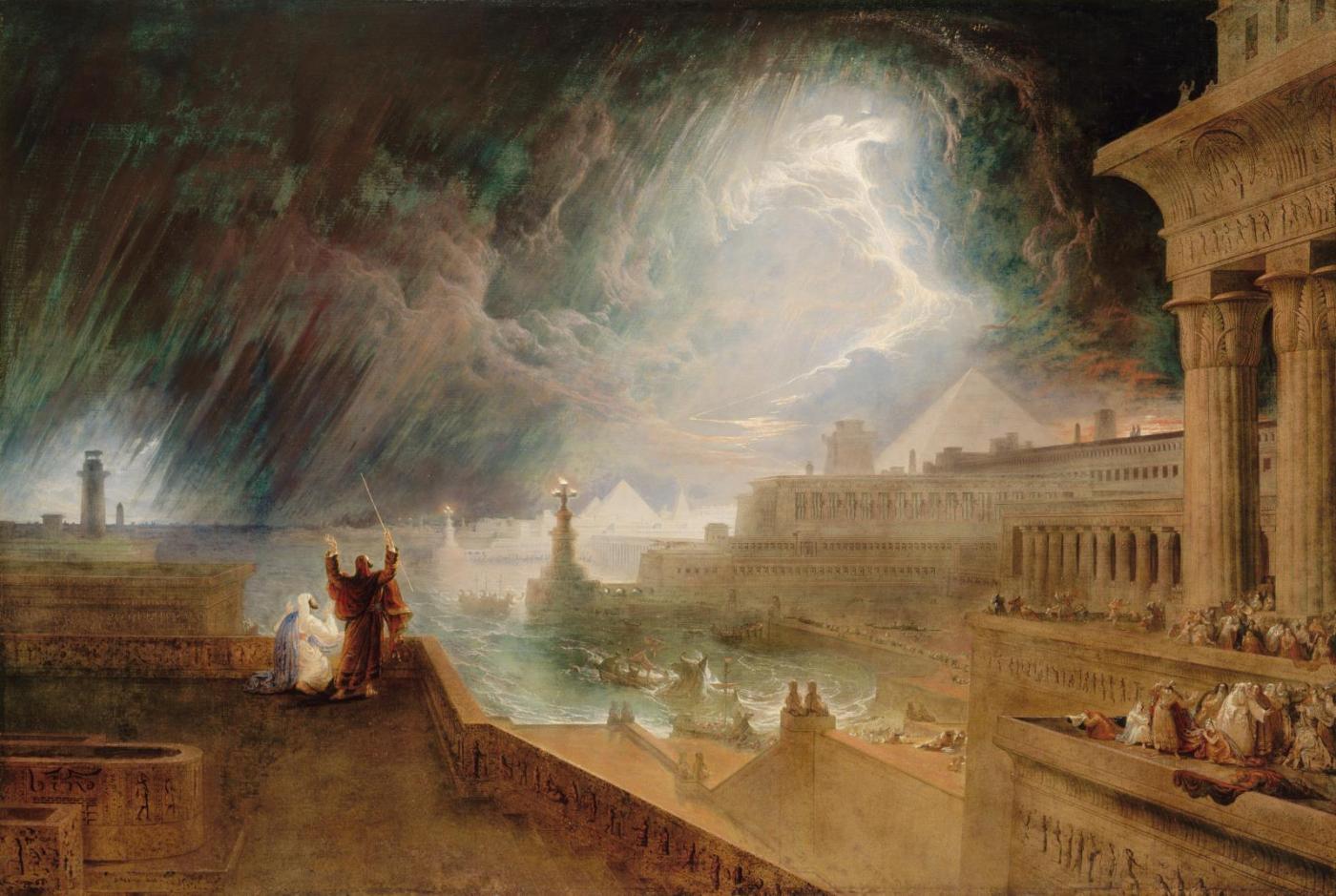
The seventh plague of hail mixed with fire marks a dramatic escalation as it devastates the crops and landscape of Egypt, challenging Nut, the sky goddess, and Osiris, the god of vegetation and fertility. God is not ambiguous about the purpose of this plague:
“That you may know that there is none like me in all the earth… That my name may be proclaimed in all the earth.” God uses this plague not only to demonstrate His power but also to communicate His sovereignty to all nations, not just to Israel or Egypt. (Exodus 9:13-16, ESV).
Pharaoh’s response to the seventh plague of hail is particularly telling. His admission, “I have sinned; the LORD is in the right, and I and my people are in the wrong,” (Exodus 9:27, ESV) resembles repentance, but as the narrative unfolds, it becomes clear that his change of heart is temporary and superficial. Once the immediate threat of the hail ceases, Pharaoh’s heart hardens again (Exodus 9:34).
This dynamic is explored in the New Testament:
“Therefore God gave them up in the lusts of their hearts to impurity, to the dishonoring of their bodies among themselves, because they exchanged the truth about God for a lie and worshiped and served the creature rather than the Creator, who is blessed forever! Amen.” (Romans 1:24-25, ESV)
This passage shows that God’s giving over of individuals to their own sinful desires is a judgment in response to their rejection of the truth. It is a sobering reminder that persistent disobedience and idolatry can lead to a judicial hardening, where God allows individuals to pursue their rebellion to its natural and destructive ends.
The hardening of Pharaoh’s heart, while serving as an immediate obstacle to Israel’s release, ultimately fits within a larger redemptive framework. Each act of defiance by Pharaoh leads to a greater revelation of God’s power, affirming His supremacy not just to the enslaved Israelites but to the watching world. This revelation is not just about wrath but about showcasing the might, patience, and justice of God who controls the course of history for the ultimate good of His people and the fulfillment of His promises.
Locusts and Darkness
In Exodus 10:1-2 we read:
“Then the Lord said to Moses, “Go in to Pharaoh, for I have hardened his heart and the heart of his servants, that I may show these signs of mine among them, And that you may tell in the hearing of your son and of your grandson how I have dealt harshly with the Egyptians and what signs I have done among them, that you may know that I am the Lord.” (Exodus 10:1-2, ESV)
This is an important reminder that these plagues are intended as lessons not only for the Egyptians but also for the Israelites and their descendants. God commands Moses to recount these events, ensuring that the acts of divine judgment are remembered and passed down through generations. This is not merely about recording history but about instilling a deep recognition of God’s sovereignty and character. By remembering and recounting these events, each generation learns of God’s might, His opposition to oppression, and His commitment to deliverance.
Now, moving on to the final plagues that we will cover this morning:
The Lord sends a plague of locusts to devastate what remains of Egypt’s crops after the earlier plagues have already weakened the country’s agricultural stability. The locusts consume the fields, leaving nothing behind, demonstrating that God can strip away the foundations of a nation’s economy with a simple command.
Then the Lord sends a plague of darkness that envelops Egypt in a tangible, oppressive darkness for three days. Unlike ordinary darkness, this is a supernatural phenomenon that can be felt, a chilling manifestation of divine power. Exodus 10:23 highlights the striking contrast between the Egyptians and the Israelites during this time:
“They did not see one another, nor did anyone rise from his place for three days, but all the people of Israel had light where they lived” (Exodus 10:23, ESV).
The darkness that enveloped Egypt was more than a simple absence of light; it was a palpable, oppressive darkness that could be felt. This plague directly challenges Ra, the Egyptian sun god, one of the most central deities in the Egyptian pantheon, who was associated with light and the sun. By overpowering Ra, God not only discredits the religious foundations of Egyptian society but also demonstrates His supremacy over the most revered elements of creation.
The imagery of light and darkness is powerful within the Christian faith, representing knowledge versus ignorance, goodness versus evil, and salvation versus condemnation. As believers, the light of Christ is our guide through the moral and spiritual darkness of this world. In the midst of confusion, despair, or sin, it is Christ who provides clarity, hope, and direction. Ephesians 5:8 reminds believers of their transformation and calling: “For at one time you were darkness, but now you are light in the Lord. Walk as children of light.”
Conclusion:
As we bring our sermon to a close, we come to a time of decision. Remember that each act of judgment we witnessed this morning was not just an act of punishment but also a revelation of God’s power and His desire to save His people. Will we, like Pharaoh, harden our hearts and ignore the clear signs of God’s sovereignty, or will we respond to His call with faith and humility? Today, I invite each of you to reflect on where you stand with God. Have you recognized His power in your life? Have you acknowledged His grace that comes not because of who we are or what we have done, but simply because of His mercy?
If you feel the tug in your heart today, do not resist. This is the Holy Spirit calling you to a deeper commitment. Perhaps you have not yet given your life to Christ. Today could be the day of your salvation. Perhaps you are a believer, yet you feel the Lord calling you to a deeper walk with Him or to renew your commitment. Let today be the day.
And if you are looking for a church family, a community where you can grow, serve, and worship, we invite you to join us. Together, as a family of believers, we can support one another, grow in our faith, and spread the light of Christ in a world that desperately needs it.
Closing Prayer:
Father God, we thank You for the lessons of faith and the demonstrations of Your power that we have explored today. As we leave this place, may the truths of Your Word resonate in our hearts and transform our lives. Strengthen us, O God, to walk in faith and obedience, trusting in Your sovereign will and embracing the grace You freely offer. May Your love inspire us to serve You wholeheartedly and to extend Your kingdom in all we do. In the name of Jesus Christ, we pray. Amen.
 hardincrowder.com