Sermon Audio: LINK
Introduction:
Last week, we left Israel at the foot of Mount Sinai, where the Israelites, freshly delivered from Egypt, witnessed the awe-inspiring presence of God. Amid thunder and lightning, God established a covenant with His people, presenting the Ten Commandments and calling them to be a holy nation. Moses ascended the mountain, entered into deep communion with God, and received not only the tablets of the Law but also detailed instructions for building the Tabernacle, a sacred space for God’s dwelling among them. These chapters laid a foundation of divine Law and worship, underscoring God’s desire for a relationship with His people and setting a high standard of holiness.
However, this morning, as we transition to Exodus 32, we find a contrast as the Israelites falter in their faithfulness. This pivotal moment invites us to reflect on the tension between divine faithfulness and human frailty and how God’s grace and justice are displayed, even in the midst of our failures.
Scripture Reading:
Exodus 32:1-35 (ESV)
Opening Prayer:
Heavenly Father, we come before You today with hearts open and humbled by Your presence. As we gather to reflect on the story of the Israelites at Mount Sinai, we ask for Your Spirit to guide us. Illuminate our minds and soften our hearts to receive Your truth. May Your word convict, challenge, and draw us closer to You. In Jesus’ name, we pray. Amen.
The People’s Rebellion (Exodus 32:1-6)
The Israelites, newly freed from the chains of Egyptian slavery, are encamped at the foot of Mount Sinai. Their leader, Moses, the man through whom they’ve seen the power and majesty of God, has been atop the mountain for forty long days and nights, receiving divine laws that will shape their new lives as a liberated, holy people. Yet as the days drag on, the people’s faith wavers, their hearts quake with doubt.
Their impatience boils over, and they turn to Aaron, Moses’ brother, demanding:
“Rise up, make us gods who shall go before us. As for this Moses, the man who led us out of the land of Egypt, we do not know what has become of him” (Exodus 32:1, ESV).
Their voices, filled with fear and fading faith, reflect the deep tension in their hearts. Despite their miraculous deliverance from slavery in Egypt by the very Hand of God, they waver in Moses’ absence. Instead of clinging to God’s promises, they crave something immediate and tangible, even if it leads them astray.
In their desperation, the people are ready to replace Moses, and even God Himself, with something they can see and touch. This demand for new gods isn’t just dismissing Moses; it’s a profound rejection of the very God who saved them from bondage. They seek to fill the void with anything that feels real, forsaking their faith in the process.
Tragically, Aaron, left to lead in Moses’ absence, succumbs to their demands. Instead of guiding them back to God, he compromises. He instructs them to bring their gold, and from it, he crafts a golden calf. Declaring, “These are your gods, O Israel, who led you out of the land of Egypt” (Exodus 32:4, ESV), Aaron leads them into a grievous betrayal of their covenant with God. They exchange the worship of the Almighty for a lifeless idol, a blatant symbol of their abandonment of faith and trust.
The golden calf is more than just a statue; it represents the Israelites’ decision to take control and seek their own path. This act of idolatry, flagrantly violating God’s commandments, underscores the fragility of faith and how easily we can be led astray. How often do we, in moments of impatience or dissatisfaction with God’s plans, create our own “golden calves”? We grow impatient with God and, in our restlessness, look for anything to guide us and fill the void where faith once dwelled.
Even before Moses descends the mountain, the people have already shattered God’s first two commandments: “You shall have no other gods before me” (Exodus 20:3, ESV) and “You shall not make for yourself a carved image” (Exodus 20:4, ESV). This act lays bare their weak faith and susceptibility to sin. It serves as a powerful reminder of how easily we can stray when we lose patience and trust in God’s timing.
We must ask ourselves: Are we any different? Do we not also create idols when we lose faith, when God’s timing doesn’t align with ours? We must confront this hard truth and strive to hold steadfast in our faith, resisting the urge to seek worldly substitutes that only lead us away from God’s perfect plan.
God’s Righteous Anger and Moses’ Intercession (Exodus 32:7-14)
In Exodus 32:7-8, God speaks to Moses with grave urgency:
“And the Lord said to Moses, ‘Go down, for your people, whom you brought up out of the land of Egypt, have corrupted themselves. They have turned aside quickly out of the way that I commanded them. They have made for themselves a golden calf and have worshiped it and sacrificed to it and said, “These are your gods, O Israel, who brought you up out of the land of Egypt”‘” (Exodus 32:7-8, ESV).
Notice God’s words: “Your people, whom you brought up out of the land of Egypt” (Exodus 32:7, ESV). In His righteous anger, God distances Himself, laying a divine indictment against the Israelites. They’ve forsaken the God who freed them, embracing an empty idol instead.
God emphasizes their rapid rebellion: “They have turned aside quickly” (Exodus 32:8, ESV). This swift departure from faithfulness is alarming, a stark warning about how easily we can stray. Despite clear evidence of God’s power, they are “stiff-necked,” stubbornly resisting divine authority.
In verses 9-10, God’s response is severe:
“And the Lord said to Moses, ‘I have seen this people, and behold, it is a stiff-necked people. Now therefore let me alone, that my wrath may burn hot against them and I may consume them, in order that I may make a great nation of you.’” (Exodus 32:9-10, ESV).
God’s wrath is just and holy, rooted in righteousness. Idolatry is a grave sin, challenging God’s sovereignty and shattering the covenant. Yet, even amid His anger, there’s a glimmer of redemption: God offers to start anew with Moses. Yet, Moses steps into the role of intercessor, pleading for mercy:
“But Moses implored the Lord his God and said, ‘O Lord, why does your wrath burn hot against your people, whom you have brought out of the land of Egypt with great power and with a mighty hand?‘” (Exodus 32:11, ESV).
Moses appeals to God’s past acts of redemption, emphasizing that these are His people, saved by His power. He urges God to remember His mighty deliverance and not destroy His own people.
Moses continues, with concern for God’s reputation:
“Why should the Egyptians say, ‘With evil intent did he bring them out, to kill them in the mountains and to consume them from the face of the earth’? Turn from your burning anger and relent from this disaster against your people” (Exodus 32:12, ESV).
Destroying the Israelites would give the wrong impression to the Egyptians and the world, portraying God as malicious rather than just. Moses urges God to protect His name and glory among the nations.
In his final plea, Moses invokes the promises made to the patriarchs:
“Remember Abraham, Isaac, and Israel, your servants, to whom you swore by your own self, and said to them, ‘I will multiply your offspring as the stars of heaven, and all this land that I have promised I will give to your offspring, and they shall inherit it forever’” (Exodus 32:13, ESV).
Moses calls on God to remember His unbreakable promises, appealing to His faithfulness and the unchanging nature of His word.
“And the Lord relented from the disaster that he had spoken of bringing on his people” (Exodus 32:14, ESV).
When the Israelites sinned gravely by turning to a golden calf, God’s wrath was poised to bring justice. Yet, through Moses’ heartfelt intercession, we see a stunning act of divine mercy. God chooses forgiveness over destruction, revealing His incredible compassion. This moment beautifully foreshadows the ultimate intercession of our Lord and Savior, Jesus Christ, who stands in the gap for us and secures our forgiveness through His sacrificial love.
As we reflect on Moses’ intercession, we are called to be inspired by his example. Moses did not hesitate to pray fervently for his people, to stand boldly before God on their behalf. Are we, too, praying earnestly for our loved ones, for our community, and for our nation? Are we willing to stand in the gap, lifting up those in need of God’s mercy?
Despite our many failures, God’s grace is abundantly extended to us when we repent and turn back to Him. Inspired by Moses’s faithful intercession and the perfect mediation of Jesus Christ, our great High Priest, we are encouraged to embrace God’s mercy and live lives of faithful devotion.
Let also us be challenged today to intercede for others with the same boldness and compassion Moses displayed. Our prayers can indeed make a difference. God’s grace is always available, always ready to transform lives. Through Christ, we have the blessed assurance of forgiveness and the promise of a restored relationship with our Creator.
Let this profound truth fill our hearts with hope and inspire us to live lives that reflect His love and mercy. Let us go forth, committed to prayer, standing in the gap for others, and embracing the fullness of God’s grace in our lives.
The Aftermath and Atonement Attempt (Exodus 32:15-35)
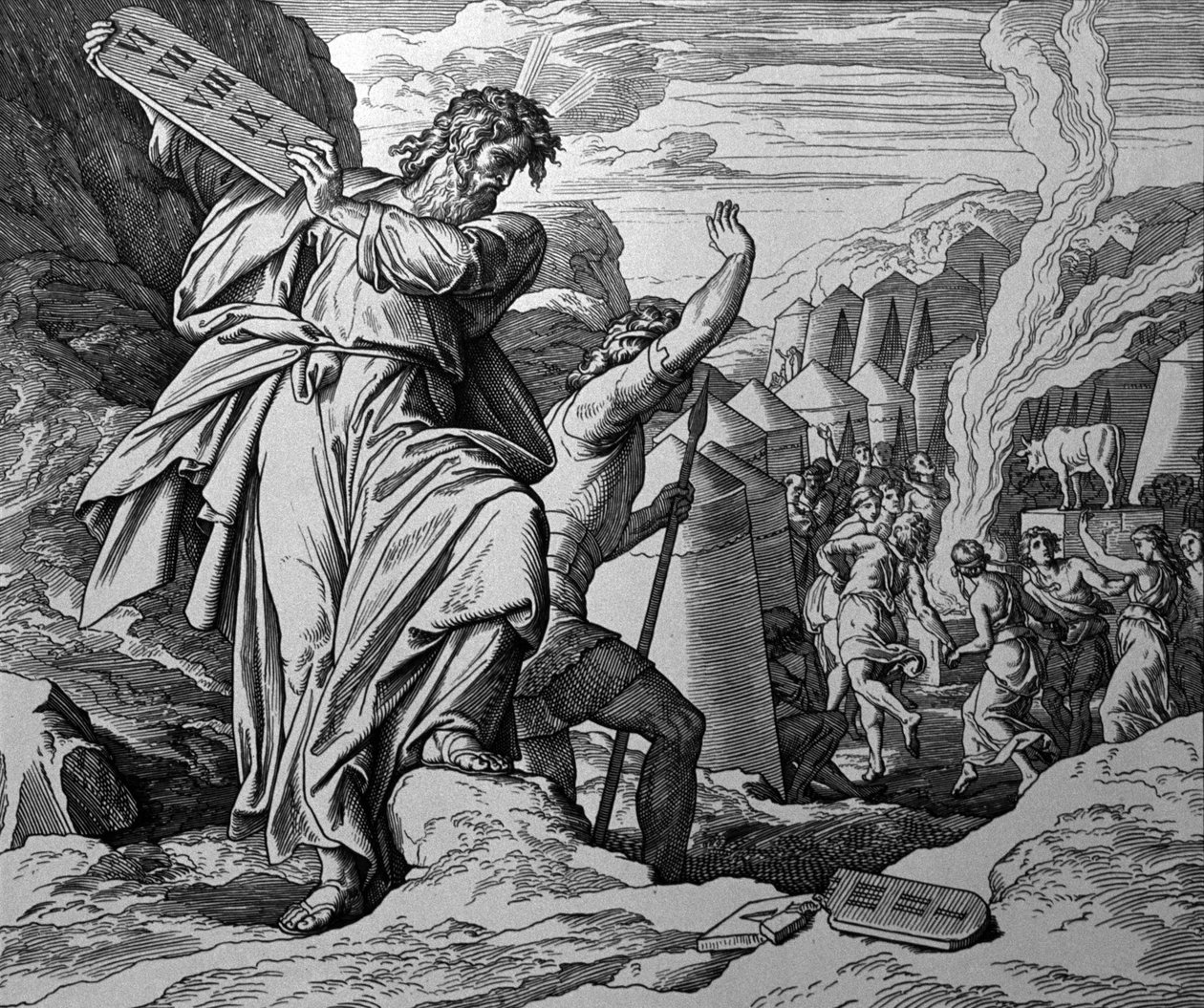
Now imagine the intense scene as Moses and Joshua descend from the mountain, the air thick with the noise of chaos. It is not the sound of war they hear but the wild revelry of a people lost in sin. As they approach, a shocking sight unfolds: the Israelites dancing around a golden calf, brazenly defying God’s commandments. Here, Moses’ righteous anger mirrors God’s wrath, and in a moment of fury, he shatters the tablets of the Law at the mountain’s base. These broken tablets symbolize more than shattered stone; they signify a broken covenant and a betrayal of God’s trust.
Moses acts swiftly and decisively. He destroys the golden calf, grinds it into powder, scatters it over the water, and forces the Israelites to drink it (Exodus 32:20). This bitter act makes the people taste the emptiness of their idolatry, a powerful reminder that worshiping anything other than the living God leads only to emptiness and despair.
When confronted, Aaron, who was left in charge, responds feebly. He tries to shift the blame onto the people, portraying himself as a victim of their demands. He even concocts a false story about the calf miraculously leaping from the fire (Exodus 32:24). Aaron’s weak response highlights the perils of poor leadership. When leaders fail to uphold their convictions and succumb to popular pressure, chaos and sin inevitably follow.
Moses witnesses the resulting anarchy, a direct consequence of Aaron’s failure to restrain the people (Exodus 32:25). Standing resolutely at the camp’s gate, he calls out, “Who is on the Lord’s side? Come to me” (Exodus 32:26). The sons of Levi respond, and Moses commands them to execute judgment on the unrepentant, resulting in the death of about three thousand men that day (Exodus 32:28). This somber event is a stark reminder of the seriousness of sin and the holiness that God demands from His people.
The Levites’ willingness to stand with God, even against their kin, sets them apart as His chosen servants. Moses acknowledged their sacrifice, declaring that they were ordained for God’s service at great personal cost (Exodus 32:29). This powerful moment illustrates that true devotion to God often requires difficult and steadfast decisions.
With a heavy heart, Moses intercedes once again for the people, acknowledging their great sin (Exodus 32:30). He returns to God, offering himself as a substitute for their transgression: “But now, if you will forgive their sin, but if not, please blot me out of your book that you have written” (Exodus 32:32). God’s response is firm: He rejects Moses’ offer, stating that only the guilty will be blotted out from His book (Exodus 32:33). This moment foreshadows the ultimate need for a perfect, sinless sacrifice, something Moses cannot provide.
And here is where we see the glory of the Gospel shine through. Where Moses could not serve as a substitute, Jesus Christ steps in as the perfect mediator. Jesus, the sinless Son of God, offered Himself on the cross as the perfect sacrifice for our sins, fully knowing the cost. As 1 Peter 2:24 (ESV) proclaims, “He himself bore our sins in his body on the tree, that we might die to sin and live to righteousness. By his wounds you have been healed.”
In Christ, we find the ultimate substitute, the Lamb of God who takes away the sin of the world (John 1:29 ESV). His sacrifice brings us forgiveness, reconciliation, and eternal life. Through His intercession, we are no longer condemned, but are welcomed into the family of God. As Romans 8:34 (ESV) declares, “Who is to condemn? Christ Jesus is the one who died, more than that, who was raised, who is at the right hand of God, who indeed is interceding for us.” May this truth fill our hearts with gratitude and inspire us to live lives that reflect His love and holiness.
Conclusion:
As we come to a close, let’s deeply reflect on the powerful lesson of the golden calf. This account vividly reminds us of our hearts’ natural inclination toward sin. Despite witnessing God’s miracles and receiving His commandments, the Israelites quickly turned to idolatry when they felt abandoned and insecure. Their story mirrors our own, a testament to how easily we can stray from God.
But, beloved, this story also illuminates a path of hope and redemption. It underscores our need for a greater mediator, Jesus Christ. Unlike Moses, whose intercession had limits, Jesus offers perfect atonement and unending intercession. His sacrifice on the cross is sufficient to cover all our sins, and His continuous advocacy secures our relationship with God. Jesus is the ultimate solution to our sin, offering grace, forgiveness, and transformation.
1. Trust in Jesus’ Finished Work: If you haven’t yet placed your faith in Him, today is the day of salvation. Acknowledge your need for a Savior and accept the forgiveness and new life He offers. There is no greater moment than now to embrace His love and redemption. He is waiting with open arms to welcome you into His family.
2. Seek the Spirit’s Transformation: The Christian journey is not about relying on our strength but allowing the Holy Spirit to transform us. Pray for His renewal, seek His guidance daily, and depend on His power to overcome sin and live righteously. Let the Spirit’s transformative power shape every part of your life. Surrender your struggles and weaknesses to Him, and watch as He works wonders in your heart.
3. Live in Grateful Obedience: Let Christ’s sacrifice and ongoing intercession fill your heart with gratitude. Let this gratitude inspire you to obey God’s commands out of love and thankfulness for all He has done. Live each day as a testament to the grace you’ve received. Let your life be a shining example of His love, mercy, and transformative power.
In Jesus, we find the perfect mediator and the path to true, lasting transformation. Embrace His grace and let it lead you to a life of faith, hope, and love. Let His love be the guiding force in your life, transforming every moment and every action. Do not let the noise of the world drown out His voice. Stand firm in His promises and let His light shine through you.
May we leave here today inspired, convicted, and transformed by the power of His Word and the depth of His love Amen.
Closing Prayer:
Gracious Lord, we thank You for Your Word and the insights You have shared with us today. As we have seen the frailty of the human heart and the gravity of sin, we are reminded of our need for Your grace and mercy. Thank You for the ultimate intercession of Jesus Christ, who stands as our perfect mediator. Help us turn away from our idols and place our trust wholly in You. Empower us by Your Spirit to live lives that reflect Your holiness and love. As we leave this place, may we carry Your truth with us and walk in obedience to Your will. We pray this in the precious name of Jesus. Amen.
 hardincrowder.com