Sermon Audio: LINK
Opening:
In the first three chapters of Judges, we saw the unfolding of Israel’s recurring pattern of disobedience and deliverance. After the death of Joshua, the tribes of Israel failed to drive out the Canaanites, as God had commanded fully. Instead, they allowed many of these pagan nations to remain, which led to their downfall. As we moved through Judges 2, we read how Israel repeatedly turned away from God, falling into cycles of sin, idolatry, and oppression. Despite this, when they cried out to the Lord, God mercifully raised up judges to deliver them. Judges like Othniel, Ehud, and Shamgar stepped up to free the people from foreign oppressors. But each time a judge died, the people quickly returned to their sinful ways.
This brings us to Judges 4, where the cycle continues. But here, God uses an unexpected leader, a woman named Deborah, and a hesitant warrior named Barak to accomplish His purposes. Today, we’ll see how God calls us to trust His leadership, step out in faith, and recognize that He often uses unlikely people and means to bring about His plans.
Scripture Reading
Judges 4:1-24 ESV
Opening Prayer:
Heavenly Father, we come before You today with humble hearts, acknowledging our need for Your guidance and grace. As we reflect on the story of Israel in the book of Judges, we recognize how easily we, too, fall into cycles of disobedience, forgetting Your goodness when life is easy, only to cry out to You in times of distress. Lord, forgive us for the times we have grown complacent, for the moments we have turned away from Your path.
We ask now, Father, for the strength to obey Your call, even when it seems beyond our ability. Help us trust in Your leadership, knowing that You work through unlikely people and circumstances to accomplish Your will. Give us the faith to step forward, confident that the battle is Yours and the victory is assured in You.
Open our hearts to receive Your truth as we turn to Your Word. Reminds us that You are sovereign and that Your plans are perfect, even when we cannot see the way. May we learn from Deborah’s faith and courage and be willing to follow wherever You lead. In Jesus’ name we pray, Amen.
The Cycle of Disobedience and Oppression (Judges 4:1-3)
Our passage begins with these solemn words, “And the people of Israel again did what was evil in the sight of the Lord after Ehud died” (Judges 4:1, ESV). Notice that word, “again.” How quickly Israel turned away from righteousness and cast aside their calling to holiness! With their deliverance barely a memory, they returned to their sin, like a dog returning to its vomit (see Proverbs 26:11). Doesn’t this resonate with us today? How often do we cling to God in times of adversity, holding fast to His promises as if our lives depend on them? But how soon do we grow complacent, indifferent, and careless when the storms pass and prosperity returns? We lower our guard, and like Israel, we let sin creep back in. It’s the same old, tragic cycle: in trouble, we cry out; in peace, we forget.
Make no mistake, the sins we casually ignore is offensive to a holy God. The Bible says, “For the wages of sin is death” (Romans 6:23, ESV). Israel’s disobedience led them into the hands of a cruel oppressor, and if we are not careful, our own disobedience will bind us in a far worse captivity, into the grip of sin and death.
We read in the next verse that “the Lord sold them into the hand of Jabin king of Canaan” (Judges 4:2, ESV). Consider these words: “the Lord sold them.” This was no random event or the rise of a tyrant by chance. It was the sovereign hand of God, delivering them into judgment. They weren’t merely victims of circumstance but subjects of divine discipline, handed over to their enemies because of their sin. And what a fearsome enemy it was! Jabin’s general, Sisera, commanded an army of 900 iron chariots, which oppressed Israel for twenty years (Judges 4:3, ESV).
Consider this: Sisera’s chariots represent the crushing weight of sin. How often, in pursuing our desires, do we end up enslaved by the very things we once sought? Sin promises freedom but delivers chains. It offers joy but leaves us in despair. Those who chase after fleeting pleasures, believing they’ve found freedom, soon discover they are prisoners of their cravings. Wealth, power, and pride may sparkle like gold, but in the end, they bind us with iron shackles.
Yet, praise be to God, there is hope! Even in Israel’s darkest hour of oppression, a cry arose: “Then the people of Israel cried out to the Lord for help” (Judges 4:3, ESV). What mercy! Though they had forsaken God, He had not forsaken them. Though they had turned away from Him, His ears were still open to their cries. What patience! What long-suffering!
How many of us, weighed down by our sins, remain silent, stubbornly enduring self-inflicted suffering when deliverance is only a prayer away? Do not wait until your sin grows into a Sisera with 900 iron chariots crushing you underfoot. Don’t delay until you are flattened by its weight. Cry out to the Lord today while His mercy is still extended! He is “gracious and merciful, slow to anger and abounding in steadfast love” (Psalm 145:8, ESV). He stands ready to deliver those who humble themselves and call upon His name
But know this: It’s not enough to feel the weight of sin or regret its consequences. We must “turn from it”. We must repent and forsake the paths of disobedience, for the Lord will not share His glory with another. So I urge you, by God’s mercy, to examine your hearts. Where have you strayed from His commandments? Where have you allowed compromise to take root? Are there hidden sins festering within, unconfessed and unrepented? Have you neglected the sacred Scriptures, letting the world shape your desires instead of the Word of God? Have you trusted the temporary promises of wealth, status, or earthly pleasure?
If you feel conviction stirring within, know that the Lord is mighty to save and delights in showing mercy. Even now, He calls out, “Return to me, and I will return to you” (Zechariah 1:3, ESV). Do not take God’s patience for granted. His grace is abundant, but His holiness cannot be mocked. “Today, if you hear his voice, do not harden your hearts” (Hebrews 3:15, ESV).
Deborah’s Leadership: A Woman Called by God (Judges 4:4-7)
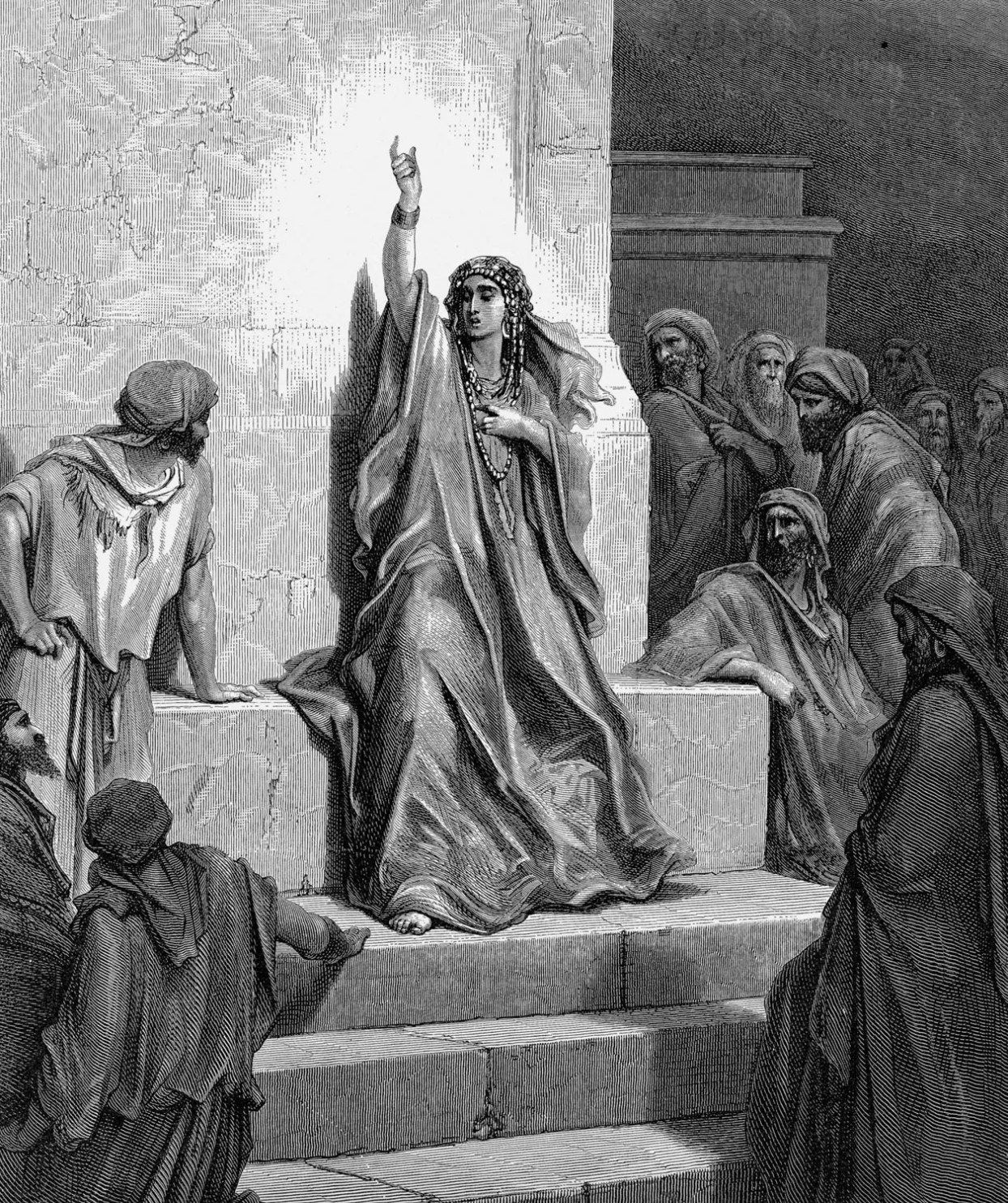
When the people of Israel cried out to the Lord, He did what He often does. He raised up leaders from the most unexpected places to showcase His glory. We tend to think that God only uses those society deems qualified; the educated, the powerful, the influential. Yet in this moment, God called Deborah, a woman, in a time when women were rarely seen as leaders, to serve as both prophet and judge. This was a period when men like Barak, outwardly strong, hesitated in fear. But Deborah, filled with the Spirit of God, stood firm, unwavering in her faith. How desperately Israel needed such a leader! The nation had once again fallen into sin, and God’s judgment came in the form of Jabin, the Canaanite king, and his ruthless general, Sisera. When the people cried out for deliverance, God did not answer with a mighty king or a vast army, but with the voice of a woman beneath a palm tree.
Notice that Deborah did not chase after power or recognition. She simply listened to God, spoke His words, and obeyed His commands. This is the essence of true leadership: not seeking personal glory but humbly submitting to God’s will, pointing others to do the same. In Judges 4:6, we hear Deborah’s bold words to Barak: “Has not the LORD, the God of Israel, commanded you?” (ESV). Such confidence pours from the lips of one who knows the voice of God! Barak was hesitant and fearful, but Deborah’s courage didn’t rely on military might, it was rooted in the unshakable promises of God. She knew victory was certain because God had spoken it. And if God has spoken, what place is there for fear? If He has called you, who are you to delay? May we all have the faith of Deborah, to rise at the sound of God’s command and act without hesitation!
Yet, even in Barak’s reluctance, we see God’s mercy. Barak insisted that Deborah accompany him to battle, a clear sign of his lack of trust. But despite his hesitation, God still granted victory. This is a testament to God’s grace. Even when we waver, when doubt overshadows our faith, God remains faithful.
Deborah was not the leader one would expect in a time of war. She wasn’t a general nor a renowned man of valor. Yet, God called her. Why? Because God delights in using the weak to shame the strong, the foolish to confound the wise (1 Corinthians 1:27). He chooses those the world overlooks, those society deems unfit, so that His power can be displayed in their weakness.
How often do we feel unworthy or unequipped to serve God? How often do we look at our own inadequacies and think, “Who am I that God would use me?” Maybe you feel that because of your background, education, status, or even gender, you aren’t fit to be of use to the Lord. But look at Deborah, a woman in a male-dominated world, yet God chose her. Consider David, a mere shepherd boy, whom God raised up to be a king. Consider the apostles, fishermen and tax collectors, yet God used them to turn the world upside down.
Do not limit God’s power by your own insecurities or the judgments of others. God is not confined by your limitations. You may think yourself small, but in the hands of the Almighty, you are a vessel for His glory. The same God who called Deborah to lead Israel calls you to serve Him, no matter how humble your circumstances may seem. God is not hindered by our weaknesses; in fact, He delights in working through them.
So, where is God calling you to lead? Perhaps you’re not sitting under a palm tree dispensing wisdom to a nation, but God may have placed you in a position of influence, in your family, your workplace, your church, or your community. Are you responding with the faith of Deborah or hesitating like Barak?
Do not let fear, doubt, or the opinions of others hold you back from stepping into the role God has prepared for you. Whether you are young or old, educated or unlearned, male or female, God can use you for His glory. He does not call the equipped; He equips the called.
Barak’s Hesitancy and Need for Assurance (Judges 4:8-16)
Now, for a moment, I want to draw our attention back to Barak, the military leader handpicked by God, who hesitates in the face of an explicit command delivered through Deborah. He responds, “If you will go with me, I will go; but if you will not go with me, I will not go” (Judges 4:8, ESV). Can we not see ourselves in this moment of hesitation? How often, when God calls, do we waver, seeking additional assurance beyond His already unshakable Word?
Barak’s plea for Deborah’s presence revealed a crack in his trust, a condition placed on his obedience. Like Barak, we, too, find ourselves saying, “Lord, I will obey, but only if…” We demand guarantees, forgetting that God’s Word is itself the ultimate assurance. His promises are enough. His presence, whether visible or unseen, is always guaranteed. In seeking reassurance, Barak jeopardized the honor that could have been his. His struggle to fully trust in God’s command cost him the chance to share the glory of the victory.
Consider Sisera’s 900 iron chariots, a terrifying symbol of unbeatable strength. To Barak, and perhaps to us, these chariots seemed an overwhelming force, much like the trials we face today that appear insurmountable. When we fix our gaze on the size of our obstacles, like Barak, we falter, paralyzed by fear. But let us remember: no obstacle, not even Sisera’s mighty chariots, is beyond the power of God. When we focus on our challenges, we see defeat; when we focus on God, we see victory.
Deborah’s response to Barak’s hesitation was both a reassurance and a warning: “I will go with you, but the honor will not be yours; the Lord will deliver Sisera into the hands of a woman” (Judges 4:9, ESV). Barak’s reluctance cost him the full reward of leadership. Though God granted him victory, the ultimate triumph went to Jael, an unexpected heroine. This serves as a powerful reminder: when we hesitate in our obedience, we risk losing the full honor of participating in God’s work. God’s plan will prevail, but we may forfeit the joy of being part of it.
Despite his doubts, Barak eventually rose to the call. “Barak summoned Zebulun and Naphtali to Kedesh, and 10,000 men went up at his heels, and Deborah went up with him” (Judges 4:10, ESV). When the time for battle arrived, Deborah once again stirred him to action with these powerful words: “Up! For this is the day in which the Lord has given Sisera into your hand. Does not the Lord go out before you?” (Judges 4:14, ESV). With this divine assurance, Barak led his men into battle, but it was not by his hand that the victory was won. “The Lord routed Sisera and all his chariots and all his army before Barak by the edge of the sword” (Judges 4:15, ESV). God sent a sudden storm, causing the Kishon River to flood, trapping Sisera’s formidable chariots in the mud and rendering them powerless.
Here, we see the truth: God had gone before him, and Sisera’s once invincible army was utterly crushed. But, as Deborah had foretold, the final blow came not from Barak but from Jael, a woman whose courage secured the glory of Sisera’s defeat.
Unexpected Instruments of Deliverance: God’s Sovereignty (Judges 4:17-22)
As we conclude this mighty account in Judges, we are met with an unexpected twist. Sisera, the fearsome commander of Canaan’s army, flees the battlefield after his forces are decimated by the sovereign hand of God. Barak, the leader of Israel, gives chase, yet it is not Barak who delivers the final blow. Instead, the honor goes to Jael, a seemingly insignificant, non-Israelite woman.
Jael, the wife of Heber the Kenite, had no apparent role in this conflict. She wasn’t an Israelite, wasn’t a warrior, and her tribe was at peace with King Jabin, Israel’s oppressor. Yet, in God’s divine plan, it was Jael who would deliver the fatal strike to Israel’s greatest enemy. When Sisera sought refuge in her tent, Jael welcomed him with what appeared to be gracious hospitality, offering him milk and covering him with a blanket. But as Sisera slept, thinking himself safe, Jael took a tent peg and a hammer and drove it through his temple, ending his life and delivering Israel from its great oppressor.
How extraordinary that Sisera, the terror of Israel, was not felled on the battlefield but by the hand of a woman in the quiet of her tent. This is the sovereign hand of God at work, turning human expectations upside down. Jael was not a soldier, but God gave her the strength to defeat the enemy, reminding us that His power is not constrained by human limitations. God’s plans are not dependent on earthly status or qualifications. He delights in using the weak, the overlooked, and the unexpected to carry out His will
So, as we close, let me ask you: Are you open to the unexpected ways God may work in your life? Are you willing to trust Him, even when His methods seem unconventional or beyond your understanding? Just as God used Jael in her tent, He may be working through unexpected people or situations in your life right now. Trust in His sovereignty, for His ways are perfect, and His strength is made perfect in our weakness.
Do not underestimate the power of what God can do through you, no matter how ordinary or unqualified you may feel. For when God is at work, even a tent peg can become a weapon of deliverance.
Conclusion
As we reflect on Judges 4, we see several key lessons for our own lives. First, Israel’s disobedience led them into oppression, but God, in His mercy, raised up unlikely leaders like Deborah to bring deliverance. Second, even when we, like Barak, hesitate, God invites us to obedience and promises to lead us to victory. Finally, God often works through unexpected means, using people like Jael to accomplish His sovereign purposes, reminding us that He is always in control.
So, where might you be hesitating in your own walk with God? Are there areas where you feel unqualified or unsure? Today, I challenge you to trust in God’s leadership and step out in faith. Remember, it is not our strength but His that secures the victory. God is ready to work through you, no matter how unlikely or unprepared you may feel.
Let us pray:
Heavenly Father, we come before You, asking for the courage to follow Your call, even when it seems beyond our ability. Help us trust in Your plans, knowing that Your power is made perfect in our weakness. Give us the faith to step out in obedience, confident that You will go before us and bring the victory. We ask this in Jesus’ name, Amen.
Devotional 1: The Cycle of Disobedience and Deliverance
Scripture Reading:
Judges 4:1-3
Devotional:
In Judges 4:1-3, we see the familiar cycle of Israel’s disobedience after the death of a leader. “And the people of Israel again did what was evil in the sight of the Lord” (v. 1). Israel’s failure to remain faithful brought oppression under Jabin, king of Canaan, and his powerful general Sisera. It was a tragic cycle of sin leading to suffering, followed by the people’s cries for deliverance. How often do we find ourselves in a similar pattern? In times of comfort, we may drift from God, but when adversity strikes, we cry out for His help.
The story of Israel shows us that God’s judgment is not arbitrary, it is a consequence of their disobedience. Yet, even in His discipline, God’s mercy shines through. When the people cried out, He heard them. Though they had sinned repeatedly, His ears were still open to their cries. This highlights the patience of God, who responds to genuine repentance with grace, offering us deliverance even when we least deserve it.
As we reflect on our own lives, we must examine where we may have grown complacent or allowed sin to take root. Are we seeking God only in times of distress, or are we committed to living in faithfulness even when life is going well? The Lord is always ready to deliver, but He desires more than temporary repentance. He calls us to lasting obedience.
Reflection Questions:
1. Can you identify areas in your life where you have fallen into a cycle of disobedience and repentance?
2. How does God’s patience and mercy toward Israel in Judges encourage you in your walk with Him?
3. What practical steps can you take to ensure that your relationship with God remains strong, even in times of peace?
Prayer:
Heavenly Father, thank You for Your patience and mercy, even when I fall into patterns of sin. Forgive me for the times I have turned away from You and sought my own path. Help me to remain faithful, not only in times of trouble but in all seasons of life. Strengthen my heart to live in obedience, knowing that true peace comes only from walking with You. In Jesus’ name, Amen.
Devotional 2: God’s Unexpected Leaders
Scripture Reading:
Judges 4:4-7 (ESV)
Devotional:
In Judges 4:4-7, we are introduced to Deborah, a prophetess and judge whom God raised to lead Israel during a time of crisis. In a culture where men held most positions of power, Deborah stands out as an unexpected leader. Despite societal expectations, God chose her to deliver His people. Deborah’s leadership reminds us that God often works through the unexpected. His call isn’t limited by our human standards. He sees beyond gender, status, and experience, choosing those who trust in Him.
Deborah’s story challenges us to reconsider the ways we view leadership and influence. True leadership isn’t about power or position; it’s about obedience to God’s call. Deborah was a woman of faith, willing to step into the role God had given her, even when it went against the norms of her day. She didn’t seek glory for herself but faithfully pointed others to the Lord, saying, “Has not the LORD, the God of Israel, commanded you?” (Judges 4:6).
God may be calling you to step into a position of influence or leadership that feels unexpected or beyond your qualifications. Like Deborah, we must be willing to answer His call with courage and faith, trusting that God will equip us for the task He sets before us. Remember, God often chooses the unlikely to accomplish His purposes.
Reflection Questions:
1. In what areas of your life might God be calling you to step into leadership or influence?
2. How does Deborah’s example challenge your view of who God can use for His purposes?
3. Are there any fears or doubts holding you back from obeying God’s call in your life?
Prayer:
Lord, thank You for the example of Deborah, who led with faith and courage. Help me to trust that You can work through me, even when I feel unqualified or unsure. Give me the strength to step into the roles You’ve called me to, knowing that You equip those You call. Let my life point others to You, just as Deborah’s did. In Jesus’ name, Amen.
Devotional 3: The Importance of Trusting God Fully
Scripture Reading:
Judges 4:8-9 (ESV)
Devotional:
Barak’s response to Deborah’s call in Judges 4:8-9 reveals a moment of hesitation. He says, “If you will go with me, I will go, but if you will not go with me, I will not go” (v. 8). Barak’s reluctance shows that, though he recognized Deborah’s connection to God, he needed further assurance. His hesitation to trust in God’s command without conditions cost him the full honor of the victory. Deborah warns him that “the LORD will sell Sisera into the hand of a woman” (v. 9).
Like Barak, we often seek additional signs or reassurances before we step out in faith, even when God’s Word is clear. Barak’s story is a reminder that partial obedience or conditional trust can lead us to miss out on the fullness of God’s plans for us. While God still granted Barak victory, the glory was shared with Jael, an unexpected heroine.
God desires our full trust and obedience. When He calls, we must step out in faith, not allowing fear or doubt to hold us back. We can trust that His promises are sure, and His presence goes before us, even when the path ahead seems uncertain.
Reflection Questions:
1. Are there any areas in your life where you’ve placed conditions on your obedience to God?
2. How can Barak’s hesitation serve as a warning in your own faith journey?
3. What steps can you take to deepen your trust in God’s promises?
Prayer:
Lord, forgive me for the times I’ve hesitated to trust You fully. Help me to step out in faith without fear, knowing that Your Word is sure and Your promises never fail. Strengthen my heart to follow You with complete obedience, trusting that You go before me in every situation. In Jesus’ name, Amen.
Devotional 4: God’s Power in Weakness
Scripture Reading:
Judges 4:10-16 (ESV)
Devotional:
In Judges 4:10-16, we see the mighty hand of God at work. Barak gathered his army, and at Deborah’s encouragement, he went to battle against Sisera’s 900 iron chariots. It seemed like an impossible task. Yet, as the passage unfolds, we see that the real battle wasn’t fought by Barak’s strength alone. God intervened, sending a storm that flooded the battlefield, rendering Sisera’s chariots useless. “The LORD routed Sisera and all his chariots” (v. 15).
This victory is a powerful reminder that our strength is not the key to success, God is. When we rely on our own abilities, we may be overwhelmed by the challenges before us. But when we place our trust in God, He fights on our behalf. No obstacle is too great when God goes before us. Sisera’s chariots may have seemed unstoppable, but in the face of God’s power, they were nothing.
Are you facing a battle that seems impossible to overcome? Remember, God’s strength is made perfect in our weakness (2 Corinthians 12:9). Trust in Him, and watch as He works in ways that exceed your expectations, turning what seems like defeat into victory.
Reflection Questions:
1. What are some challenges in your life that feel overwhelming or impossible?
2. How does God’s intervention in this battle encourage you to trust in His power rather than your own?
3. In what ways can you surrender your weaknesses to God, trusting Him to work through them?
Prayer:
Mighty God, thank You for fighting my battles and for showing Your strength in my weakness. Help me to trust in You completely, knowing that no obstacle is too great for You. Teach me to rely on Your power, not my own, and to surrender my fears and doubts to You. In Jesus’ name, Amen.
Devotional 5: God Works Through Unlikely Instruments
Scripture Reading:
Judges 4:17-22 (ESV)
Devotional:
In Judges 4:17-22, we witness the surprising conclusion to the story. Sisera, the mighty general, flees the battlefield and seeks refuge in the tent of Jael, a seemingly insignificant woman. Jael’s actions are unexpected, she offers Sisera comfort, only to take his life while he sleeps. This unexpected twist highlights God’s sovereignty in using unlikely people and means to accomplish His purposes. Sisera wasn’t defeated by a warrior in battle, but by a woman with a tent peg.
This moment serves as a powerful reminder that God’s ways are not our ways. He often uses the weak and the overlooked to accomplish His will, showing that His power transcends human expectations. Just as Jael’s role seemed small, God can use the seemingly insignificant moments and people in our lives to bring about His plans.
Are there situations in your life where you feel small or unqualified? Remember, God delights in working through unlikely instruments. Trust that He can use you, no matter how unqualified or insignificant you may feel, to accomplish His sovereign purposes.
Reflection Questions:
1. How does Jael’s story challenge your expectations of who God can use?
2. Are there areas in your life where you feel unqualified or overlooked? How can you surrender those feelings to God?
3. What small or unexpected opportunities might God be calling you to embrace?
Prayer:
Lord, thank You for showing me that You can use anyone and anything to accomplish Your purposes. Help me to trust that You can work through me, even when I feel small or insignificant. Give me the faith to embrace the opportunities You place before me, knowing that You are in control. In Jesus’ name, Amen.
Devotional 6: Responding to God’s Call with Courage
Scripture Reading:
Judges 4:23-24 (ESV)
Devotional:
The final verses of Judges 4 reveal the outcome of this remarkable story: “So on that day, God subdued Jabin the king of Canaan before the people of Israel” (v. 23). The story of Deborah, Barak, and Jael reminds us that when God calls us to action, He also promises victory. Though the path may be challenging and the odds may seem overwhelming, when we respond to God’s call with courage and faith, He will bring about His purposes.
Deborah’s courage to step into leadership, Barak’s eventual obedience to God’s call, and Jael’s unexpected role all contributed to the victory God had planned for Israel. Each person’s willingness to follow God’s direction, even in the face of uncertainty, played a vital part in the triumph over Jabin and Sisera.
As we reflect on this story, let’s be reminded that God is calling each of us to step out in faith and respond to His leading, even when it seems daunting. He is faithful to bring victory, not because of our strength, but because of His power.
Reflection Questions:
1. How does this story encourage you to respond to God’s call in your own life?
2. Are there areas where you’ve hesitated to obey God’s direction? What is holding you back?
3. What practical steps can you take today to trust in God’s victory, even in challenging situations?
Prayer:
Father, thank You for the reminder that You call us to action and promise victory through Your power. Help me to respond to Your call with courage and faith, trusting that You are in control of every situation. Give me the strength to step out in obedience, knowing that the battle is Yours. In Jesus’ name, Amen.
 hardincrowder.com