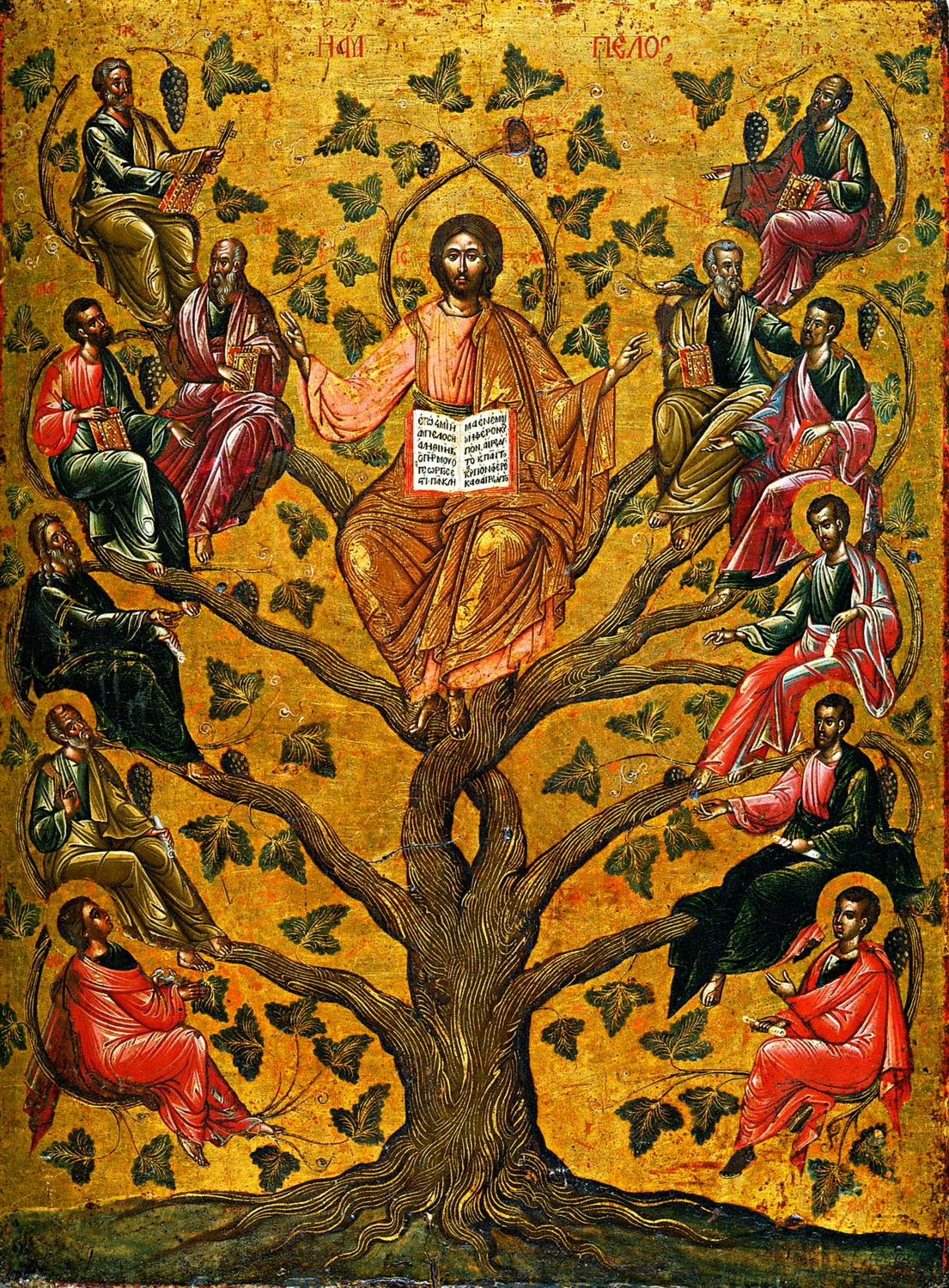
Two Genealogies
It’s easy to gloss over the long genealogies in the Bible, thinking they are just lists of names. However, these passages have a deeper meaning. These names are a reminder that God’s plan for salvation was set in motion long before Christ’s arrival (Luke 24:44-46). When we read of figures like Abraham, Boaz, David, and Solomon, we are invited to see them as part of a greater story, one that culminates in Jesus, the long-awaited fulfillment of God’s promises.
The genealogies of Jesus in the Gospels of Matthew and Luke also provide valuable insights into His identity, mission, and the overarching narrative of redemption. While these genealogies differ in structure and purpose, they work together to affirm Jesus as both the promised Messiah and the Savior of all humanity.
Matthew, writing primarily to a Jewish audience, carefully traces Jesus’ lineage through Joseph, His adoptive father, to establish His legal right to David’s throne. By doing so, Matthew highlights Jesus as the fulfillment of Old Testament prophecies and the continuation of the covenantal promises made to Abraham and David. His genealogy, arranged in three sets of fourteen generations, underscores the divine orchestration of history leading to Christ’s birth.
Luke, in contrast, presents a genealogy with a broader, universal focus, appealing to a Gentile audience. Rather than tracing Jesus’ lineage through Joseph, Luke follows His biological descent through Mary, linking Him all the way back to Adam. This approach underscores Jesus’ role as the Savior of all people, emphasizing His solidarity with humanity and His mission to restore the broken relationship between God and humankind as the second Adam.
Though these genealogies serve different theological functions, together they offer a more complete understanding of Jesus’ identity. Matthew emphasizes Jesus’ royal and legal credentials, fulfilling Jewish Messianic expectations, while Luke highlights His connection to all of humanity, reinforcing the global scope of the Gospel. Far from being contradictory, these genealogies complement each other, revealing Jesus as both the Son of God and the Son of Man.
Tonight, we will take a closer look at both genealogies, beginning with the Gospel of Matthew:
Matthew’s Genealogy (Matthew 1:1-17)
In Matthew’s Gospel, the genealogy serves as its prologue, transitioning the reader from the Old Testament to the New. The opening phrase, “The book of the genealogy of Jesus Christ” (Greek: biblos geneseōs), echoes the language of Genesis, connecting Jesus to the larger biblical narrative. In Genesis, the “toldot” (תּוֹלְדֹת) passages, which introduce genealogies to mark narrative shifts, begin with the phrase “These are the generations of…” These include genealogies for the heavens and the earth (Gen. 2:4), Adam (Gen. 5:1), Noah (Gen. 6:9), the sons of Noah (Gen. 10:1), Shem (Gen. 11:10), Terah (Gen. 11:27), Ishmael (Gen. 25:12), Isaac (Gen. 25:19), Esau (Gen. 36:1, 36:9), and Jacob (Gen. 37:2). These passages give structure Genesis, linking key figures to God’s covenant promises and the unfolding story of salvation.
Keep in mind that Matthew was writing to a Jewish audience. By beginning with a genealogy, Matthew not only ties Jesus to Israel’s history but also frames His story within a theological context of redemption and frames his birth as a new beginning (a second genesis).
Key Figures in the Genealogy (Matthew 1:1-6)
Matthew frames his genealogy around two central Old Testament figures: Abraham and David.
Tracing Jesus’ lineage to Abraham, the patriarch of the Jewish people, not only highlights his Jewish heritage, but also prepares the reader to see Jesus as fulfillment of God’s covenant to bless all nations through Abraham’s offspring (Genesis 12:3; 22:18). By the end of the gospel the audience would have seen that Abraham’s blessing to the nations would be fulfilled by Christ, his descendent, winning salvation to both Jews and Gentiles.
Likewise, tracing Jesus’ lineage through the royal line of David establishes that He is the rightful heir to David’s throne. For the Jewish reader in the first century this would have sparked hopes for the messianic king who would return to redeem Israel. This hope was based on God’s promise to David that through him, a kingdom would be established that would never end (2 Samuel 7:12-16).
Remember that the Kingdom of God is a central theme in Matthew. So while his audience probably expected an earthly kingdom, by the end they would hopefully have come to understand that the Kingdom of God is an eternal and spiritual kingdom that transcends nations and worldly politics.
It is also worth noting that Matthew goes against the customs of the time and includes four women in his genealogy: Tamar, Rahab, Ruth, and “the wife of Uriah” (Bathsheba). This might not seem like a big deal to us, but this was unorthodox and it had to be a deliberate choice.
So we must ask ourselves, “why did Matthew go against custom and include women in his genealogy?” and “why these four women in particular?”
1. Tamar: Tamar’s story, recounted in Genesis 38, is one of scandal and surprising redemption. Deceived and left without justice by her father-in-law Judah after the deaths of her husbands (Judah’s sons), Tamar disguised herself as a prostitute to ensure her place in the family and to secure offspring. Though actions exposed Judah’s own sin and lack of integrity. In a pivotal moment of self-awareness, Judah declares, “She is more righteous than I” (Genesis 38:26). Tamar’s boldness ensured the continuation of Judah’s lineage, a line that would eventually lead to King David and ultimately to Christ.
2. Rahab: Rahab, a Canaanite prostitute living in Jericho, demonstrates extraordinary faith in the God of Israel, despite her pagan background. In Joshua 2, she hides the Israelite spies and makes a bold confession of faith: “The Lord your God, He is God in heaven above and on earth below” (Joshua 2:11). Her actions not only save her and her family but also secure her inclusion in the people of God. Rahab later marries Salmon, becoming the mother of Boaz (Ruth’s future husband) and entering the lineage of Christ (Matthew 1:5). Her story underscores that salvation is not limited by ethnicity, social status, or past sins. It foreshadows the inclusion of Gentiles in God’s redemptive plan, demonstrating that faith in the true God is the ultimate criterion for belonging to His covenant people.
3. Ruth: Ruth, a Moabite widow, provides a beautiful example of loyalty, faith, and God’s covenantal kindness. Despite her foreign origin and bleak prospects, Ruth remains devoted to her Israelite mother-in-law, Naomi, famously declaring, “Your people shall be my people, and your God, my God” (Ruth 1:16). Her decision to leave her homeland and embrace the God of Israel leads her to Boaz, a kinsman-redeemer who marries her in an act of grace and covenantal faithfulness. Through their union, Ruth becomes the great-grandmother of King David. Her story illustrates God’s providential care and His power to use ordinary acts of faithfulness to accomplish extraordinary purposes. Ruth’s inclusion in the genealogy of Jesus (Matthew 1:5) highlights that God’s redemptive plan extends beyond the borders of Israel and operates through acts of love and covenant loyalty.
4. Bathsheba: Bathsheba’s story, recounted in 2 Samuel 11, is one of sin, sorrow, and eventual redemption. Her relationship with King David begins under tragic and sinful circumstances, as David commits adultery with her and orchestrates the murder of her husband, Uriah, to cover up the affair. Yet, despite these dark beginnings, God’s grace shines through. Bathsheba becomes the mother of Solomon, the king who builds the temple and whose reign foreshadows the peace and wisdom of Christ. In Matthew’s genealogy (Matthew 1:6), she is referred to as “the wife of Uriah,” a detail that emphasizes the gravity of the sin involved and the extraordinary nature of God’s grace.
All four women come from backgrounds marked by scandal, suffering, or being outside the covenant people of Israel. Tamar’s story involves deception; Rahab was a Gentile prostitute; Ruth was a foreigner from Moab, a nation often at odds with Israel; and Bathsheba’s union with David began in adultery and murder. Yet, through these women, God demonstrates His power to redeem broken situations and work through unexpected people to fulfill His promises.
Exile and Divine Faithfulness (Matthew 1:7-13)
This section of Matthew’s genealogy follows the peak of Israel’s monarchy under Solomon with its decline into the Babylonian exile. Solomon’s reign symbolized covenantal blessing, but idolatry and sin led to the fracturing of the kingdom and eventual judgment. The exile, a pivotal moment in Israel’s history, reflects both judgment for disobedience and hope through God’s promises of restoration. Prophets like Jeremiah and Ezekiel pointed to a coming new covenant and a Davidic King, sustaining hope amid exile’s sorrow.
Matthew’s deliberate structure of three sets of fourteen generations emphasizes God’s sovereignty. The number 14 symbolizes David in Hebrew through “gematria,” a method where letters are assigned numerical values. In Hebrew, the name “David” (דוד) consists of three letters: “dalet” (ד) = 4, “vav” (ו) = 6, and “dalet” (ד) = 4. Adding these values together (4 + 6 + 4) equals 14. Matthew structures the genealogy into three sets of 14 generations to emphasize Jesus as the promised Son of David, reinforcing His messianic identity and fulfillment of God’s covenantal promises.
This highlights the messianic focus: Jesus is the ultimate Son of David, fulfilling God’s covenant. Despite human failure, God preserved the Davidic line, even through figures like Jeconiah, whose inclusion demonstrates that redemption is based on grace, not merit.
The exile sets the stage for Jesus as the fulfillment of Israel’s story. He embodies God’s faithfulness, bridging judgment and restoration, and bringing the long-awaited redemption. Matthew’s genealogy proclaims that even in the darkest moments, God’s sovereign plan remains unshaken, culminating in Christ, the true King and hope of the nations.
Jesus, the Culmination (Matthew 1:16-17)
The final verses shift focus to Jesus, emphasizing His unique birth and identity. Unlike the preceding names, where each generation is connected by the verb “begat” (gennaō), Matthew describes Jesus as born of Mary. This shift highlights the miraculous nature of His conception, fulfilling Isaiah 7:14 and affirming His divine origin. As Mary’s husband, Joseph serves as Jesus’ legal father, establishing His legitimate claim to the Davidic throne. This detail underscores the legal and covenantal aspects of Jesus’ kingship.
Matthew concludes the genealogy with the climactic declaration that Jesus is “the Christ,” the anointed one, the long-awaited Messiah who embodies the fulfillment of God’s promises to Abraham, David, and all of Israel.
Key Themes in Matthew’s Genealogy
1. God’s Grace: The inclusion of flawed and unexpected individuals in Jesus’ lineage underscores the truth that God works through human brokenness to accomplish His redemptive purposes. The genealogy reminds readers that grace, not merit, is the foundation of God’s work.
2. Universality of the Gospel: The presence of Gentiles in Jesus’ lineage anticipates the global scope of salvation. From the very beginning, Matthew’s Gospel signals that Jesus is the Savior of all nations.
3. Faithfulness of God: Despite Israel’s repeated failures and the seeming hopelessness of exile, God’s covenantal promises remain steadfast. Jesus’ arrival confirms that God’s purposes cannot be thwarted.
4. Messianic Fulfillment: Matthew presents Jesus as the culmination of redemptive history. He is the King from David’s line and the Seed of Abraham through whom all nations are blessed. The genealogy affirms that the Old Testament finds its ultimate fulfillment in Him.
Luke’s Genealogy (Luke 3:23-38)
Positioned between Jesus’ baptism (Luke 3:21–22) and His temptation in the wilderness (Luke 4:1–13), Luke’s genealogy serves as a formal introduction to Jesus’ identity and mission. Unlike the surrounding narrative, which recounts specific events in the life of Jesus, the genealogy operates as a theological bridge, rooting Jesus’ divine commission in historical lineage. The descent of the Holy Spirit at Jesus’ baptism proclaims Him as the beloved Son of God (Luke 3:22), while the genealogy traces His identity through human history, emphasizing His dual nature as fully divine and fully human.
Jesus’ Age and Role in Redemptive History (Luke 3:23)
Luke introduces the genealogy with a note that Jesus was “about thirty years old” when He began His ministry. This age, while approximate, is significant in biblical tradition.
According to Numbers 4:3, priests began their service at thirty, the age of maturity and readiness for sacred duties. By highlighting Jesus’ age, Luke aligns Him with priestly tradition, hinting at His ultimate role as the Great High Priest (Hebrews 4:14–16). Thirty marks the beginning of leadership for key figures like David, who became king at thirty (2 Samuel 5:4), and Joseph, who rose to prominence in Egypt at the same age (Genesis 41:46). These parallels underscore Jesus’ readiness to fulfill His mission as the Messiah and the ultimate King.
Luke notes that Jesus was “the son, as was supposed, of Joseph,” carefully framing Jesus’ lineage within both human and divine perspectives. In the eyes of society, Jesus was seen as Joseph’s son, granting Him legal status within the Davidic line. This legal standing is crucial for establishing His messianic credentials. However, Luke’s earlier narrative (Luke 1:35) clarifies that Jesus’ conception was miraculous, the result of the Holy Spirit’s work. By combining legal sonship with divine origin, Luke bridges the earthly and heavenly aspects of Jesus’ identity. This dual emphasis affirms Jesus’ legitimacy as the Messiah while pointing to His unique nature as the Son of God.
Theological Significance
While Matthew’s genealogy traces Jesus’ lineage to Abraham, emphasizing His role as the fulfillment of Israel’s covenantal promises, Luke presents a broader perspective, extending Jesus’ ancestry back to Adam to highlight His mission as Savior of all humanity. This universal scope reinforces key theological themes in Luke’s Gospel, revealing Jesus’ redemptive work not just for Israel, but for the entire world.
By linking Jesus to Adam, the first human and representative of all people, Luke underscores His solidarity with every nation and culture. Whereas Matthew stresses Jesus as the culmination of Abrahamic promises, Luke portrays Him as the fulfillment of God’s plan for all humanity. This inclusivity reflects God’s covenant with Abraham that all nations would be blessed (Genesis 12:3) and aligns with Isaiah’s vision of a Messiah bringing salvation to the ends of the earth (Isaiah 49:6). Furthermore, by extending the genealogy to Adam, Luke presents Jesus as the “second Adam,” redeeming the failure of the first.
Luke’s genealogy culminates with Adam as the “son of God,” setting up a contrast between Adam’s failed sonship and Jesus’ perfect obedience. Created in God’s image, Adam was meant to reflect divine sonship through faithful stewardship of creation, yet his disobedience brought sin and death, severing humanity’s relationship with God. Jesus, by contrast, embodies true sonship, fulfilling humanity’s original calling through His unwavering obedience, sacrificial death, and resurrection. Where Adam’s fall led to condemnation, Jesus brings justification and life.
Luke also underscores Jesus’ divine nature by tracing His lineage directly to God. While Adam was a son by creation, Jesus is the eternal Son, fully divine and fully human. This dual identity enables Him to mediate between God and humanity, standing in solidarity with fallen humanity while offering redemption through His divine power.
By linking Jesus to Adam, Luke signals a new beginning for humanity. Just as Adam’s disobedience introduced sin and death, Jesus’ obedience inaugurates a new creation, restoring fellowship with God and fulfilling humanity’s original vocation. His genealogy, therefore, invites readers to see Jesus as the key to reconciliation and renewal, rewriting humanity’s story with grace and redemption at its center.
Key Themes in Luke’s Genealogy
1. Humanity and Divinity: Luke emphasizes Jesus’ full humanity by tracing His lineage through Adam, while affirming His divine origin as the Son of God. This dual identity is foundational to His redemptive work.
2. Priestly and Royal Mission: By highlighting Jesus’ age and linking Him to figures like David and Joseph, Luke portrays Him as both priest and king, fulfilling Old Testament types and roles.
3. God’s Sovereignty in History: The genealogy reflects God’s providential hand in preserving the messianic line, working through both prominent and obscure individuals to fulfill His promises.
4. Universality of the Gospel: Extending Jesus’ ancestry to Adam underscores the global scope of salvation, inviting all people into the redemptive story.
Addressing the Critics:
Some confusion arises from Luke’s wording in 3:23, where Joseph is identified as “the son of Heli.” This has led to the interpretation that Heli was Joseph’s father. However, a widely accepted explanation is that Heli was Mary’s father, making Joseph his son-in-law. This understanding aligns with the genealogical tradition in which men’s names were often used to represent family lines, even when biological descent was through a woman. Thus, Luke’s genealogy can be seen as tracing Jesus’ maternal ancestry, providing a biological foundation for his Davidic lineage.
Another key factor in understanding these genealogies is the cultural practice of dual genealogies, which was not uncommon in the ancient world. These genealogies could serve different functions, such as tracing legal or biological descent, and were often adapted for theological or symbolic purposes. For example, Matthew’s selective genealogy omits certain generations to fit his three sets of fourteen structure, which emphasizes key figures like Abraham, David, and Jesus. While this may seem unusual to modern readers, it was a common and accepted practice in ancient Jewish records and does not compromise the genealogy’s accuracy.
Critics have also raised questions about specific details within the genealogies, such as the inclusion of Jeconiah in Matthew’s account. In Jeremiah 22:30, Jeconiah is cursed, with God declaring that none of his descendants would sit on David’s throne. This appears to create a conflict, as Jeconiah is an ancestor of Joseph, and thus of Jesus, in Matthew’s genealogy. However, this issue is resolved in light of God’s later declaration in Haggai 2:23, which indicates that the curse was lifted through Zerubbabel, Jeconiah’s descendant. Additionally, Jesus inherits the throne not by natural descent but by divine appointment and legal adoption, rendering the curse irrelevant to his claim.
 hardincrowder.com