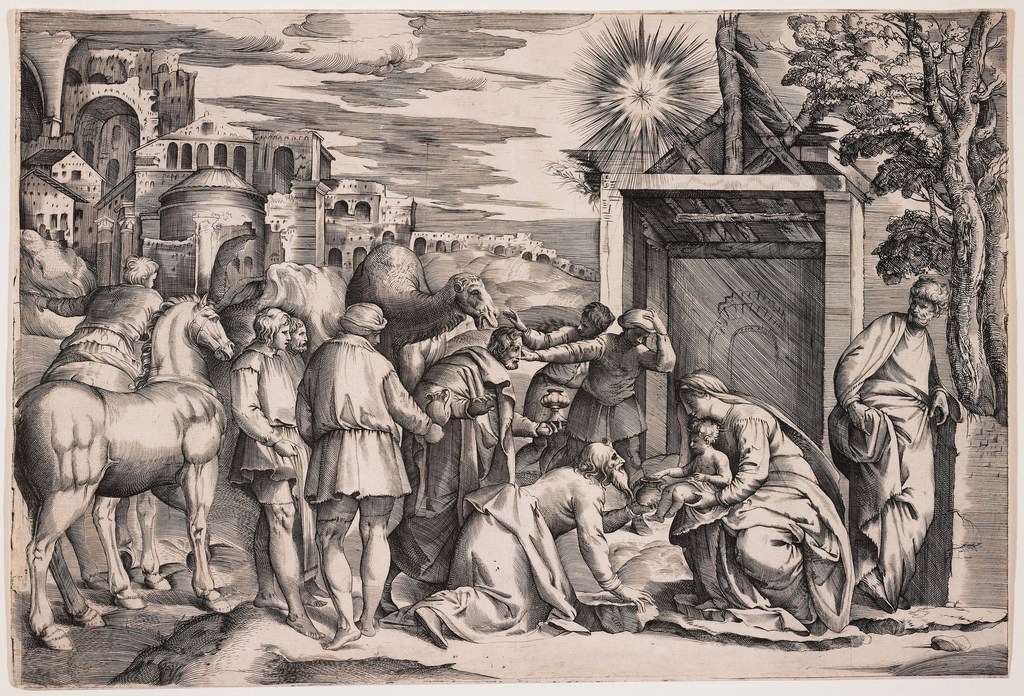
Introduction:
While the Gospel writers provide only a few details about the circumstances surrounding the birth of Jesus, they emphasize two key points. First, they make it clear that his birth really happened. They include family lineages, ancestral towns, historical references to Roman emperors and local rulers, and the testimony of eyewitnesses to confirm its authenticity. Second, the focus is on the significance of Jesus’ birth. Who is this child? What does his miraculous arrival mean? Luke 2:1-20 tells this powerful story, rich with symbolism and foreshadowing.
Over time, the Christmas story has been softened into a sentimental tale, more like a Hallmark movie than a real historical event. But the actual story involves a difficult journey, a baby born with no proper bed, and an infant visited by social outcasts (shepherds). The reality of Jesus’ birth was one of humility and hardship, much like the circumstances of his death. As we study this passage, we must set aside modern, romanticized views of Christmas. Instead, we will explore how Luke presents Jesus’ birth as the beginning of God’s great work of salvation and peace.
Can We Trust Luke’s Account? (Luke 2:1-3)
Luke presents the births of John the Baptist and Jesus as key moments in God’s plan. John’s birth account (Luke 1:57-66) highlights him as the prophet who will prepare the way for the Messiah, while Jesus’ birth account does not just refer to a future hope, but rather the immediate fulfillment of Israel’s messianic expectations and the revelation of God’s glory.
Luke takes great care to place Jesus’ birth within a historical framework. He refers to Caesar Augustus, who ruled from 27 B.C. to A.D. 14, and issued a decree for a census (Luke 2:1, Acts 17:7). At this time Judea, Galilee, and Samaria were under Roman rule after being conquered by Pompey in 63 B.C, and Herod the Great was appointed King of Judea in 37 B.C., ruling until his death in 4 B.C. Later, in Luke 3:1, 23, we read that Jesus was about 30 years old when He began His ministry in the 15th year of Emperor Tiberius. This suggests that Jesus was likely born around 4 B.C., slightly earlier than the traditional dating.
Luke 2:1 states: “In those days a decree went out from Caesar Augustus that all the world should be registered.” This decree required individuals to appear in person for registration, and for Jews, this was likely based on ancestral lineage (Luke 2:4). However, some critics argue that Luke’s mention of a census under Quirinius (Luke 2:2) conflicts with historical records, since the only recorded census under Quirinius took place in A.D. 6, nearly a decade after Herod’s death, and Matthew clearly states that Jesus was born during Herod’s reign (who died in 4 B.C.).
This does appear to be a contradiction, but the solution may be simpler than we imagine. Luke 2:2) contains a phrase commonly translated as “when Quirinius was governor of Syria.” However, the Greek title “hegemon” does not necessarily mean the “official governor” but can refer to someone who is in an administrative leadership role. While we only have one record of a census under Quirinius, there is no reason to doubt that he may have overseen an earlier census before his formal governorship in A.D. 6.
It is also worth noting that Greek word “prōtē” can mean “first” or “before.” With this in mind a very rigid translation would read “This registration first was the governor of Syria Quirinius” or “This registration before was the governor of Syria Quinarius.” So the question is whether Luke was saying “This was the first registration when Quinarious was the governor of Syria” or “This was the registration before Quinarious was the governor of Syria.”
I think it is the latter for two reasons. Firstly, if this was a registration before Quinarious was the official governor then it would fit neatly into the timeline and blend with Matthew’s account without error. Secondly, Luke actually refers to the census of 6 A.D. in the book of Acts which is a sequel or second volume to the book of Luke. Luke references the 6 A.D. census and Jewish revolt in Acts 5:37, showing he was aware of this event. And yet in his account of the birth of Jesus there is no mention of a revolt. To me it makes sense to say that Luke didn’t make a mistake, he was referring to a different census (and actually said so in the text), and we just messed up in the translation).
Now some historians will come back and argue that we do not have a record of this early census, which is true, but that does not mean it didn’t happen. We only have one record to date the 6 A.D. census, so it is very likely that any records kept from this Bethlehem census were lost to time. Remember Bethlehem was a small town that was of little significance other than being the Birthplace of David, which would have meant nothing to Caesar. Augustus conducted several censuses throughout his reign, and a local or preliminary registration may have taken place in Judea before the formal A.D. 6 census.
Given that Luke was a careful historian, had access to eyewitness accounts, and has been proven accurate in many other historical details, I believe that his account should be given the benefit of the doubt. It is also worth noting that Eusebius, an early church historian, also confirms Jesus’ birth took place 42 years into Augustus’ reign, which aligns with this timeline.
So to summarize, the most likely explanation is that Luke 2 records either an earlier phase of an empire-wide census or a local registration in Judea during Herod’s reign, a smaller-scale census that later culminated in the A.D. 6 event.
God Working Through History (Luke 2:4-5)
Luke 2:4 recounts that Joseph traveled from Nazareth to Bethlehem for the Roman census, fulfilling the divine plan foretold centuries earlier. Known as the “City of David,” Bethlehem was not only King David’s birthplace but also the prophesied birthplace of the Messiah (Micah 5:2). Even its name, meaning “House of Bread,” foreshadowed Christ, the Bread of Life (John 6:35), who would satisfy the spiritual hunger of the world.
Luke highlights how God sovereignly orchestrates history, working through human rulers (even those who do not acknowledge Him) to accomplish His will. Caesar Augustus, the most powerful man of his time, issued a decree for a census, unaware that his political decision was merely a tool in the hands of the true King. What seemed like an ordinary bureaucratic act was, in reality, the means by which God ensured the Messiah’s birth in Bethlehem, in perfect fulfillment of prophecy.
This moment was not left to chance. As Galatians 4:4 (ESV) declares, “But when the fullness of time had come, God sent forth his Son.” Every event, from the rise of Rome to the decree of Augustus, was part of God’s meticulous design to bring about His redemptive plan. Even through the actions of unbelieving rulers, He was guiding history to its climax; the arrival of Christ, the Savior of the world.
The Birth of Jesus (Luke 2:6-7)
In Luke 2:6 phrase “the days arrived for her to give birth” echoes Genesis 25:24 in the Septuagint, which describes Rebekah giving birth to Esau and Jacob. Luke’s use of this phrase links Jesus’ birth to the fulfillment of divine timing, much like the patriarchal births that shaped Israel’s history. Additionally, the structure of Luke’s narrative parallels earlier passages, particularly Elizabeth’s delivery in Luke 1:57. By doing so, Luke emphasizes that the birth of Jesus is a continuation of God’s covenantal faithfulness.
Luke 2:7 presents the birth of Jesus with surprising brevity: “And she gave birth to her firstborn son, and she wrapped him in swaddling clothes and laid him in a manger, because there was no place for them in the inn.” This simplicity draws attention to the theological weight of each phrase.
The term “firstborn” has deep biblical significance. Being the firstborn in Jewish society gave you a special legal status in your household under Mosaic Law (Exodus 13:2; Numbers 3:12-13; 18:15-16). His consecration unto God as the firstborn, foreshadows his later identification as “the firstborn among many brothers” (Romans 8:29) and “the firstborn of all creation” (Colossians 1:15). This is important for Jesus being the redeemer of both his church (in his life, death, and resurrection) and all of creation (in his second coming).
Mary’s act of wrapping Jesus in swaddling clothes reflects ordinary maternal care in the ancient world. Some have drawn spiritual significance from these swaddling clothes, however I believe this was included merely to show that he was truly a human infant, one who needed to be kept safe and warm in his early hours.
One of the most recognizable aspect of Jesus’ birth is his placement in a manger, a feeding trough for animals. This is no accident; it serves as a sign. The manger will be the identifying mark for the shepherds (Luke 2:12, 16), highlighting the paradox of divine majesty wrapped in human frailty. It may also be symbolic that Jesus, being placed where animals feed, signifies that he came to nourish humanity as the Bread of Life (John 6:35). The manger thus becomes a symbol of both humility and divine provision.
Luke provides a cryptic reason for Jesus being placed in a manger: “because there was no place for them in the inn.” Palestinian homes often had a single room with a raised platform for the family and a lower section where animals were kept at night. The manger, then, may have been a feeding trough in this section, aligning with his mission to identify with the lowly.
The circumstances of Jesus’ birth create a paradox: the King of Kings is born in the humblest of settings. Ambrose reflects on this mystery: “He had no other place in the inn, so that you may have many mansions in heaven.” His lowly birth is an act of divine condescension, showing that he did not come to rule through earthly power but through sacrificial love.
Jerome paints an even starker picture: “He is not born in the midst of gold and riches, but in the midst of dung, in a stable where our sins were filthier than the dung.” This imagery underscores the radical nature of the Incarnation. Christ enters the brokenness of the world, taking upon himself the full weight of human suffering and sin.
The circumstances of Jesus’ birth foreshadow his entire earthly ministry. Just as there was no room for him at his birth, so too would he later say, “Foxes have dens, and the birds of the air have nests, but the Son of Man has nowhere to lay his head” (Luke 9:58). From the beginning, he is a rejected king, finding his place not in palaces but among the lowly.
The Angelic Message (Luke 2:8-16)
Then in Verse 8 Luke shifts the scene from Bethlehem’s manger to a group of shepherds keeping watch over their flocks at night. The phrase “in that region” establishes a direct link between the shepherds and the birth of Jesus, emphasizing their proximity to the momentous event. The idea that the shepherds were out in the fields suggests that the shepherds were engaged in their routine duty of nighttime vigilance.
Shepherds held a significant place in Israel’s history, particularly in connection with David, who was himself a shepherd before becoming king (1 Samuel 16:11; 17:15). This setting strengthens the messianic link between Jesus and the Davidic lineage. Yet, in contrast to royal expectations, the first people to receive the news of the Messiah’s birth are not kings or priests but lowly shepherds, representatives of the marginalized and the common people. This choice highlights one of Luke’s major themes: “God exalts the humble and brings salvation to the lowly” (Luke 1:52-53).
Then suddenly, “an angel of the Lord stood before them, and the glory of the Lord shone around them” (Luke 2:9). The verb meaning “to appear suddenly” is often used in Luke’s writings to indicate supernatural visitations (Luke 24:4; Acts 12:7; 23:11). This sudden manifestation, accompanied by divine radiance, recalls Old Testament instances where the “glory” of God signified His presence, such as the cloud filling the tabernacle (Exodus 40:34) or His appearance on Mount Sinai (Exodus 24:17).
The shepherds’ reaction is one of overwhelming fear, which is common response to divine encounters (Luke 1:12, 30). However, the angel’s message will soon transform this fear into great joy.
The angel reassures them: “Do not be afraid, for behold, I bring you good news of great joy that will be for all the people” (Luke 2:10, ESV). The phrase here that we translate as “bring good news” is a key term in Luke’s Gospel and the book of Acts, always referring to the message of salvation. This announcement also aligns with Isaiah’s prophetic declaration: “How beautiful upon the mountains are the feet of him who brings good news, who publishes peace, who brings good news of happiness, who publishes salvation.” (Isaiah 52:7)
Importantly, the angel declares that this news is “for all the people,” a phrase that initially refers to Israel but, in the broader context of Luke-Acts, extends to Gentiles as well (Luke 24:47; Acts 10:34-35). Jesus is the fulfillment of God’s promise not just to Israel but to the world.
The angel then proclaims the heart of the gospel message: “Today in the city of David a Savior has been born for you, who is Christ the Lord.” (Luke 2:11) Each of these titles: Savior, Christ, and Lord is deeply significant:
“Savior” is a title often applied to God in the Old Testament (Isaiah 43:11), now explicitly given to Jesus. In the Roman world, emperors were also called “saviors,” but Luke presents Jesus as the true deliverer, not from political oppression, but from sin and death (Acts 5:31).
“Christ” is the Greek equivalent of “Messiah,” meaning “Anointed One.” This affirms Jesus as the promised descendant of David who will fulfill God’s covenantal promises (2 Samuel 7:12-16).
“Lord” is also divine title frequently used for God Himself. In the Greek Old Testament “Lord” is the common translation for the name of God, and many English Bibles today still write “LORD” in all capitalized letters instead of writing the name of God.
Luke’s audience, both Jewish and Gentile, would have recognized the implications of these titles. In contrast to the Roman emperor, who was hailed as “Savior” and “Lord,” the true King had now arrived, born not in a palace, but in a manger.
The angel gives the shepherds a sign: “You will find a baby wrapped in swaddling cloths and lying in a manger.” (Luke 2:12)
Unlike typical royal announcements, which might include visions of grandeur, this sign points to humility. The swaddling cloths are ordinary, not regal; the manger, a feeding trough, is a contrast to a royal cradle. This sign embodies the paradox of the Incarnation: the King of Kings enters the world in lowliness.
Then suddenly, a multitude of angels appears, praising God with the well-known words: “Glory to God in the highest, and on earth peace to those on whom His favor rests” (Luke 2:14). This heavenly doxology echoes Old Testament hymns of praise (Psalm 148:1-2). The phrase “peace on earth” recalls the messianic prophecies of Isaiah: “For to us a child is born… and he will be called Prince of Peace” (Isaiah 9:6).
However, it is important to realize that this peace is not merely political; it is “shalom” peace, the restoration of wholeness between God and humanity. The phrase “on whom His favor rests” suggests divine election, emphasizing that this peace is granted to those who receive Christ in faith.
As soon as the angels depart, the shepherds decide: “Let us go to Bethlehem and see this thing that has happened, which the Lord has made known to us” (Luke 2:15). Their immediate response reflects faith. They do not hesitate or question the message; they obey. The shepherds “went in haste” to Bethlehem, eager to witness the fulfillment of the angelic message. They find “Mary and Joseph, and the baby lying in the manger” precisely as the angel had described.
The Human Response (Luke 2:17-20)
The final section of the birth narrative in Luke 2:17-20 shifts the focus from the angelic announcement to the human response. The shepherds, having received the divine revelation, now become witnesses and evangelists, sharing the good news of Christ’s birth. The response from those who hear them is amazement, while Mary, in quiet contemplation, treasures these events in her heart. The passage concludes with the shepherds glorifying and praising God, mirroring the angelic praise in Luke 2:14.
“When they had seen Him, they spread the word concerning what had been told them about this child.” (Luke 2:17) The shepherds’ role in this passage is not passive. After they find Jesus, they immediately begin proclaiming what they have heard and seen. The verb translated as “having seen” emphasizes that their testimony is based on direct experience, they are eyewitnesses of the fulfillment of the angel’s message.
Their proclamation centers not on what they personally think about the child, but on what was told to them by divine revelation. This reinforces that the gospel is not a human invention but a message from God. The phrase “spread the word” suggests that they shared the message widely, not just with Mary and Joseph but with anyone present in the household or nearby.
This response is an early model of evangelism, those who encounter Christ cannot remain silent. Their natural reaction is to share the good news. This aligns with Jesus’ later command to His followers to be His witnesses (Acts 1:8). The shepherds, though humble and socially insignificant, become the first evangelists of the gospel.
The shepherds’ proclamation parallels the role of the apostles, who would later witness Christ’s resurrection and proclaim it to the world (Acts 4:20). Their willingness to share the news reflects Luke’s theme that the gospel is for all people, not just the elite.
Then in verse 18 we read, “and all who heard it were amazed at what the shepherds said to them.” (Luke 2:18) The verb “were amazed” is a common reaction in Luke’s Gospel to divine intervention (Luke 1:21, 63; 4:22). The crowd is astonished, but Luke does not indicate whether this amazement leads to faith. This is a common pattern in the Gospels. Many marvel at Jesus’ words and works but do not necessarily respond with belief (Luke 4:22-29; 9:43-45).
This verse also highlights the contrast between the shepherds and the audience. The shepherds believe, act, and proclaim.The people hear and are amazed, but their response is not necessarily one of faith.
In contrast to the crowd’s external amazement, Mary’s response is deeply internal. “But Mary treasured up all these things and pondered them in her heart” (Luke 2:19). The verb “treasured” implies that she carefully preserved these events in her memory. The phrase “pondered them in her heart” suggests an ongoing process of reflection and interpretation.
Mary is not merely a passive recipient of divine revelation but someone who actively engages with God’s work. Her pondering is similar to Daniel’s response to visions (Daniel 7:28) and Jacob’s reaction to Joseph’s dreams (Genesis 37:11), indicating a search for deeper understanding. She is witnessing the fulfillment of Old Testament prophecies she likely knew well (Isaiah 7:14; Micah 5:2). She is processing the mystery of the Incarnation. how her child is both fully human and the promised Messiah. She is considering what these events mean for Jesus’ future mission.
In just about every passage that mentions Mary, she embodies faith seeking understanding. Mary is almost always shown to be someone who believes and yet continues to seek deeper insight. Luke will later note that Mary continues this pattern of reflection (Luke 2:51), reinforcing her role as a model disciple.
And the passage concludes with the shepherds’ joyful worship.”The shepherds returned, glorifying and praising God for all the things they had heard and seen, which were just as they had been told.” (Luke 2:20) They have moved through three stages:
1) Hearing the message (Luke 2:8-14).
2. Confirming the message by seeing Christ (Luke 2:16).
3. Responding to the message by glorifying God and sharing the news (Luke 2:17-20).
Their praise mirrors the angelic song in Luke 2:14, showing that heaven and earth are now joined in worship of God’s redemptive work. This moment foreshadows how Jesus’ ministry will lead many to glorify God (Luke 5:25; 7:16; 13:13; 17:15; 18:43).
 hardincrowder.com