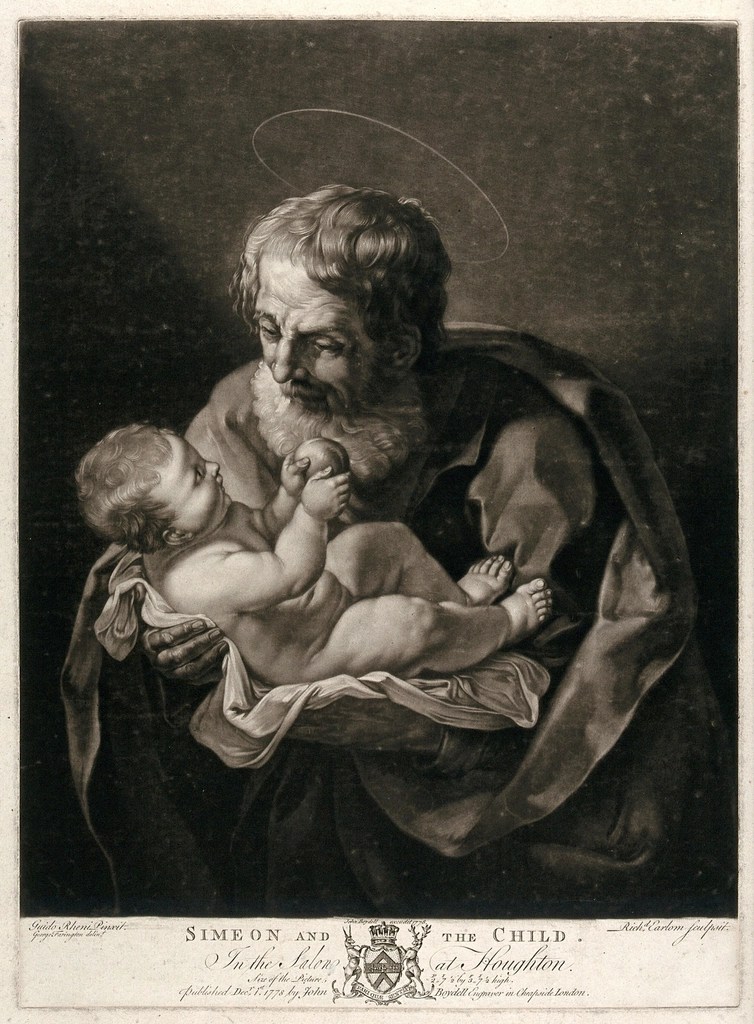
Luke 2:21-38 records the circumcision and naming of Jesus, as well as when the young Jesus was presented in the Temple. It also beautifully illustrates the theme of obedience to God’s law through faith. This passage reminds us that faith is not just about belief but about living in obedience to God. Like those in the story, we are called to trust in His promises, walking in faith as we look to Jesus, the fulfillment of all God’s word.
2:21 The Circumcision and Naming of Jesus
Luke 2:21 captures two significant moments in Jesus’ early life: His circumcision and His naming. Though brief, this verse carries deep theological meaning. It underscores Jesus’ submission to the law, His role in fulfilling God’s covenant, and the power of His name as the Savior of the world.
Circumcision was established in Genesis 17 as a sign of God’s covenant with Abraham and his descendants. Every Jewish male was circumcised on the eighth day as a visible mark of belonging to God’s chosen people. By undergoing this rite, Jesus identified not only with Israel but with all of humanity.
Though Jesus was sinless and had no need for circumcision, He submitted to it. Circumcision originally served as a sign of being set apart for God, a reminder of the need for a pure heart. But as the Son of God, Jesus was already holy. So why did He undergo it?
Paul explains in Galatians 4:4-5 that Jesus was “born under the law, to redeem those under the law.” From infancy, He willingly placed Himself under the requirements of the Mosaic law, not because He needed purification, but to fulfill it completely on our behalf. His obedience in circumcision foreshadowed His ultimate obedience on the cross.
Today, circumcision is no longer a requirement for believers. As Paul teaches in Colossians 2:11-12, baptism has taken its place as the mark of belonging to God under the New Covenant. More than outward signs, however, God calls His people to have circumcised hearts, set apart for Him in faith and devotion (Romans 2:29).
It is worth noting that Jesus participated in both circumcision (a sign of the Old Covenant) and baptism (a sign of the New Covenant). Though sinless, He took on human flesh (Romans 8:3) and submitted to a purification rite. This act of humility was part of His greater mission: to bear the sins of the world and bring salvation to all who believe.
The second key moment in this verse is the naming of Jesus. In Jewish tradition, names carried deep meaning, often reflecting a person’s character or destiny. The name Jesus (Greek: Ἰησοῦς, Hebrew: יְהוֹשֻׁעַ, Yehoshua) means “The Lord saves.” It was not chosen by Mary and Joseph but divinely appointed. In Matthew 1:21, the angel tells Joseph, “You shall call His name Jesus, for He will save His people from their sins.”
The name of Jesus is more than a title, it embodies His mission and authority. Throughout the Gospels and Acts, we see its undeniable power. Peter declares in Acts 4:12, “There is no other name under heaven given among men by which we must be saved.” Salvation is found in Christ alone; no other name has the power to redeem.
The early Christians recognized the authority of Jesus’ name over spiritual forces. Demons fled at its mention, and Scripture records numerous examples of its power. This remains true today. In every trial, battle, or uncertainty, we can call upon the name of Jesus with confidence.
In Acts 3:6, Peter tells a lame man at the temple gate, “In the name of Jesus Christ of Nazareth, rise up and walk!” demonstrating that His name brings healing and restoration. But salvation in Jesus is about more than forgiveness. It is deliverance from sin’s consequences; spiritual death, separation from God, and the brokenness of the world. When we call on His name in faith, we receive not just forgiveness, but transformation, renewal, and the promise of eternal life.
2:22–24 The Presentation in the Temple
In Luke 2:22-24, Mary and Joseph bring Jesus to the temple in Jerusalem to observe two important rites: Mary’s purification and Jesus’ presentation to the Lord. Their actions demonstrate faithful obedience to God’s law while also revealing deeper theological truths about Christ’s mission and identity.
Luke highlights their devotion by repeatedly emphasizing that they acted “according to the law of Moses” (v. 22) and “as it is written in the law of the Lord” (v. 23). This theme of submission to God’s law is central to Jesus’ early life. Though He Himself was the giver of the law, He chose to place Himself under it, foreshadowing how He would ultimately fulfill it on behalf of all humanity.
Beyond simple obedience, Jesus’ presentation at the temple reveals a greater truth. As the Redeemer, God has a rightful claim over all people. Luke references Exodus 13:12, which states, “Every male who first opens the womb shall be called holy to the Lord” (v. 23). This practice reminded Israel of their deliverance from Egypt, when God spared their firstborn but required that they be consecrated to Him (Exodus 13:2, 12). By undergoing this ritual, Jesus symbolically steps into the role of Israel’s ultimate Redeemer, the one who would offer Himself as the true Passover Lamb.
Luke also notes that Mary and Joseph offered “a pair of turtledoves or two young pigeons” (v. 24), the offering prescribed for those who could not afford a lamb (Leviticus 12:8). This small yet significant detail highlights the humble status of Jesus’ earthly family. Their poverty was not incidental but intentional. Jesus, though reigning in heavenly glory, chose to enter the world in poverty for our sake (2 Corinthians 8:9). His humble birth and presentation in the temple reflect the upside-down nature of God’s kingdom, where the greatest becomes the least in order to serve and save others.
Unlike other firstborn sons, Jesus was not simply dedicated and then redeemed back by His parents. He was uniquely set apart for God’s service. Though Luke does not mention the redemption price required by Numbers 18:15-16, his focus remains on Jesus as the one truly consecrated for God’s mission. This echoes Hannah’s dedication of Samuel in 1 Samuel 1:28, foreshadowing Jesus as the ultimate servant of God.
Just as Jesus was consecrated as holy to the Lord, we too are called to live as people set apart for God’s purposes. Paul urges us in Romans 12:1 to “offer [our] bodies as a living sacrifice, holy and pleasing to God, this is [our] true and proper worship.” Just as Christ was wholly dedicated to the Father, we are invited to surrender our lives in obedience and devotion, allowing God to use us for His glory.
2:25–27 Simeon Waits for the Consolation of Israel
In Luke 2:25-27, as Mary and Joseph bring Jesus to the temple, they encounter an elderly man named Simeon. His faith and longing for God’s salvation reflect the hope that had sustained Israel for generations. Simeon’s story highlights three key themes: expectant faith, the role of the Holy Spirit in revealing Christ, and Jesus as the fulfillment of God’s promises.
Luke describes Simeon as “righteous and devout” (v. 25), a phrase that recalls earlier figures like Zechariah and Elizabeth before Jesus’ birth (Luke 1:6) and later Joseph of Arimathea after His death (Luke 23:50). Simeon lived in anticipation of “the consolation of Israel,” a phrase rooted in Isaiah’s prophecies of God restoring His people (Isaiah 40:1; 49:13; 52:9).
While many in Israel had grown spiritually blind, Simeon remained among the faithful who truly longed for the Messiah. Unlike the religious leaders consumed by their own concerns, this otherwise unknown man in Jerusalem waited with sincere faith. His example reminds us that God reveals Himself not to the powerful or prestigious, but to those who seek Him with humility and expectation (Jeremiah 29:13).
Luke also tells us that “the Holy Spirit was upon him” (v. 25) and that he had received a divine promise, he would not die before seeing “the Lord’s Christ” (v. 26). This phrase is significant, linking Jesus to the Old Testament expectation of the Messiah, the anointed one who would bring salvation (1 Samuel 24:7, 11; Psalm 2:2).
Like Zechariah and Elizabeth, Simeon experienced the Spirit’s presence in a unique way. Through this gift of prophecy, he recognized Jesus as the Messiah, even as an infant. Luke also notes that the Spirit guided him to the temple at just the right moment to meet Mary and Joseph (v. 27), demonstrating God’s providence. Simeon’s encounter with Jesus was not a coincidence, it was divinely orchestrated. In the same way, we can only recognize Jesus as the Savior through the work of the Holy Spirit in our lives (1 Corinthians 12:3).
While priests, kings, and rulers ignored Jesus’ arrival, God revealed His Son to a humble, faithful servant. This pattern appears throughout Jesus’ life, those who are lowly and overlooked recognize Him, while the powerful do not (Luke 4:18-19; 10:21-22).
Simeon’s faith recognized Jesus as the Messiah before his physical sight confirmed it. But when he finally held the infant Christ in his arms, his faith was made complete. This moment anticipates the ultimate fulfillment of God’s salvation, when “all flesh shall see the salvation of God” (Luke 3:6; Isaiah 40:5).
2:28–32 Simeon’s Song: The Nunc Dimittis
In Luke 2:28-32, as Simeon takes the infant Jesus into his arms, he bursts into a song of praise, proclaiming that God’s salvation has arrived, not just for Israel, but for all nations. His words highlight three key themes: God’s faithfulness in fulfilling His promises, Christ as the light and salvation for both Jews and Gentiles, and the peace that comes from seeing God’s salvation.
Simeon begins with a powerful declaration: “Now, Lord, You are letting Your servant depart in peace, according to Your word” (v. 29). His words reflect his deep trust in God’s promise. The Holy Spirit had revealed to him that he would not die before seeing the Messiah (Luke 2:26), and now that moment has come.
Simeon speaks as a servant addressing his master, using the image of a watchman who has faithfully stood his post and is now released because the long-awaited moment has arrived. While many face death with fear, Simeon welcomes it with joy because he has seen the Savior. His example reminds us that when we truly encounter Christ, death is no longer something to dread but a transition into God’s presence (1 Corinthians 15:55-57).
Simeon continues, “For my eyes have seen Your salvation” (v. 30). He doesn’t simply say he has seen the Messiah, he declares that he has seen salvation itself. For Simeon, salvation is not just an event or a concept; it is a person, Jesus Christ. This child is not merely the means to salvation; He is salvation (John 14:6).
Simeon then broadens the vision: “which You have prepared in the presence of all peoples: a light for revelation to the Gentiles, and glory for Your people Israel” (vv. 31-32). His statement is groundbreaking. While many in Israel expected the Messiah to come only for the Jewish people, Simeon proclaims that Jesus is not only Israel’s glory but also a light to the Gentiles.
This was God’s plan from the beginning. The mystery of Christ, hidden for ages, was now revealed in God’s perfect timing. The Gentiles, who had been in spiritual darkness, would now see the light of truth through Jesus. Simeon’s words echo Isaiah’s prophecy: “I will also make You a light for the nations, that My salvation may reach to the ends of the earth” (Isaiah 49:6). His declaration also reflects the fulfillment of God’s covenant with Abraham, in which He promised that “all nations will be blessed” through his offspring (Genesis 12:3). Whether Jew or Gentile, all must come to Christ for salvation. In Him alone, God’s promise is fulfilled, and the light of redemption shines for all.
2:33–35 Simeon’s Prophecy
Simeon’s joyful song of salvation is immediately followed by a sobering prophecy in Luke 2:33-35. Turning to Mary, he declares that her Son is “appointed for the fall and rising of many in Israel, and for a sign that is opposed” (v. 34). His words make it clear, Jesus’ coming will not bring universal acceptance. Instead, He will be a dividing line. Some will reject Him and fall into unbelief, while others will rise in faith and salvation.
The imagery of falling and rising echoes Isaiah 8:14-15, where God is described as a stone of stumbling, those who reject Him will fall, while those who trust in Him will stand firm. This division is not incidental; Jesus reveals the true condition of the human heart. Those who reject Him do so not because He pushes them away, but because their own hearts resist His truth. And just as Jesus faced opposition, His followers will also experience rejection. The scribes and Pharisees opposed Him then, and the world continues to resist His truth today. As Taverner reminds believers, those who remain faithful to Christ should expect persecution.
Simeon goes on to say, “so that the thoughts of many hearts may be revealed” (v. 35). Jesus is more than just a dividing sign. He is the one who exposes what is hidden. His presence brings sin into the light. Hypocrisy may remain concealed for a time, but when confronted with Christ’s truth, people’s true character is revealed. The religious leaders of His day appeared outwardly righteous but were inwardly corrupt, and even now, many resist the gospel because it exposes what they would rather keep hidden.
Even those closest to Jesus would face moments of struggle. Peter denied Him in a moment of weakness but later repented and was restored. Mary and the disciples would experience deep sorrow at the cross, but their faith would ultimately be strengthened through the resurrection.
Simeon then speaks directly to Mary: “And a sword will pierce through your own soul also” (v. 35). Many see this as a prophecy of the deep sorrow she would endure as Jesus’ mother, especially as she witnessed His suffering and death. The same child whose birth brought her joy would one day be mocked, beaten, and crucified before her eyes.
Others interpret the “sword” not only as sorrow but as the Word of God itself, which cuts to the heart. This connects to Hebrews 4:12, which describes God’s Word as “sharper than any two-edged sword.” In this view, Mary’s soul was pierced not just by grief but by the weight of divine truth as she came to understand the full scope of Jesus’ mission.
Ultimately, Simeon’s prophecy reminds us that Christ’s coming calls for a response. Some will rise in faith; others will turn away in rejection. Jesus reveals the hidden thoughts of every heart, distinguishing those who truly belong to Him. And just as Mary shared in Christ’s suffering, all who follow Him must be prepared to carry their own cross. May we embrace Him fully, standing firm in faith even when He is opposed.
2:36–38 Anna Waits for the Redemption of Jerusalem
After Simeon’s declaration, Luke introduces another faithful witness to the arrival of the Messiah: Anna, a prophetess devoted to prayer and worship. Luke describes her as “a prophetess, the daughter of Phanuel, of the tribe of Asher” (v. 36), emphasizing her Jewish heritage and spiritual credibility. By mentioning her father’s name and tribe, Luke affirms her reputation, she was well-known and respected among her people.
Anna’s story is one of steadfast devotion. She had been married for seven years before becoming a widow, and rather than remarrying, she dedicated the rest of her life to worshiping God in the temple. Living in continual prayer and fasting, she likely depended on the generosity of those who visited the temple. Some commentators note that her lifestyle of fasting and prayer prepared her heart to recognize God’s work. It was her deep devotion that allowed her to see Jesus for who He truly was. Her story reminds us that spiritual disciplines, prayer, fasting, and worship, are not empty rituals but ways to prepare our hearts to encounter God.
When Anna sees the infant Jesus, her response is immediate and twofold. First, she gives thanks to God, and then she begins speaking about Him to all who were waiting for the redemption of Jerusalem. The phrase “redemption of Jerusalem” (v. 38) echoes Isaiah 59:9, which speaks of God’s saving intervention for His people.
Though Anna’s role in the passage is brief, her life offers powerful lessons. She is an example of unwavering faith, bold proclamation, and expectant hope. She represents all who patiently wait for God’s redemption and reminds us that Christ is the fulfillment of God’s promises. Like Anna, we are called to persevere in faith, trusting that God will fulfill His word in His perfect timing. Her years of prayer and fasting had prepared her to recognize the Messiah. Are we preparing our hearts to see God’s work in our own lives?
Anna’s story also highlights the important role of women in sharing the gospel and bearing witness to Christ. She did not hesitate to proclaim the good news, and neither should we. Even if the world disregards our message, we are called to boldly testify to the salvation found in Jesus. Like Anna, may we remain steadfast in worship, faithful in prayer, and eager to share the hope of Christ, our Redeemer.
 hardincrowder.com