Introduction:
Many years ago, the great preacher Charles Spurgeon, often called the “Prince of Preachers,” wrote these words: “I could say with Job, ‘My soul chooseth strangling rather than life.’ I could readily enough have laid violent hands upon myself to escape from my misery of spirit.” Now, this was not a man who lacked faith. This was not a man unfamiliar with the goodness and grace of God. And yet, he found himself, time and again, descending into what he called “the dark night of the soul.” He was not alone. The pages of Scripture are filled with men and women who walked through deep, dark valleys. Job, sitting in the ashes with nothing left but a scraped body and broken heart. Elijah, praying that he might die beneath the broom tree. Even Paul, who said, “We were so utterly burdened beyond our strength that we despaired of life itself” (2 Corinthians 1:8, ESV).
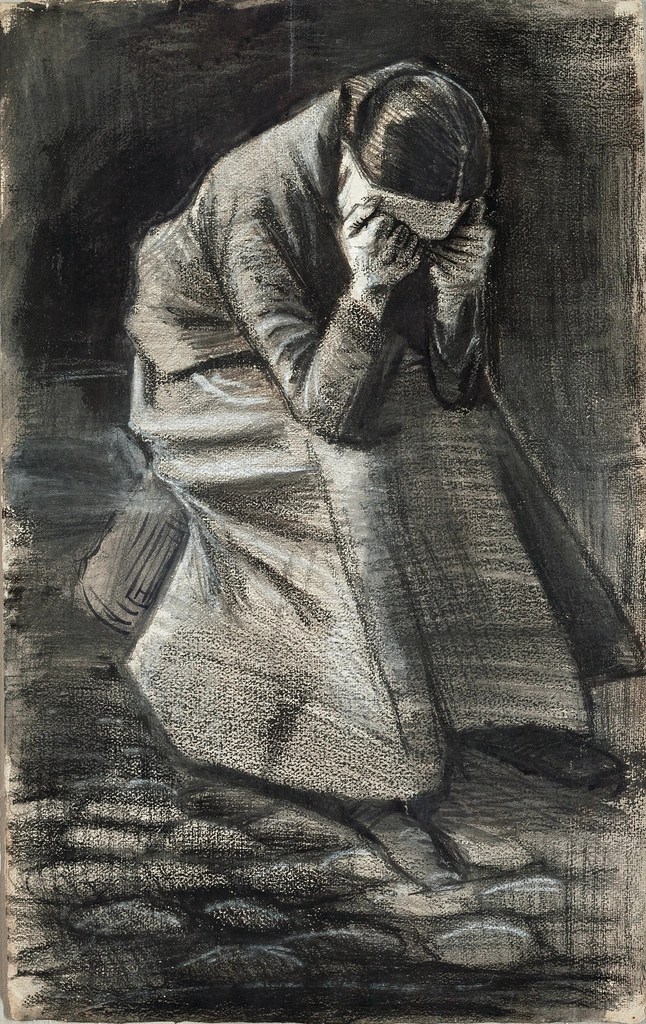
In Psalm 6, we meet another man, David, a warrior, a king, a man after God’s own heart, brought low by grief, guilt, sickness, and the suffocating pressure of life. I’m not talking about having a bad day. I’m not talking about being disappointed because something didn’t go your way. I’m talking about a soul-level unraveling. I’m talking about lying awake at night with tears on your pillow. I’m talking about that deep ache in the bones that no medicine can touch. The moments when you don’t even know what to pray anymore, just a faint whisper: “How long, O Lord?” If you’ve ever walked through a valley like that, or if you’re walking through one today, then Psalm 6 is for you.
Life in the Valley
Psalm 6 is part of a group of psalms known as the “Penitential Psalms” which are songs of confession, songs of brokenness, songs for people who have come to the end of themselves. But Psalm 6 is more than that. It’s not just a confession, it’s also a lament. It is a cry from the heart of someone who is in pain but still turns to God.
In this psalm, we meet David at his lowest point. Physically, he is weak. Emotionally, he is unraveling. Spiritually, he feels distant from God. And relationally, his enemies seem to circle like vultures. Look at how he describes himself:
Verse 2: “Be gracious to me, O Lord, for I am languishing; heal me, O Lord, for my bones are troubled.”
Verse 3: “My soul also is greatly troubled. But you, O Lord—how long?”
Verse 6: “I am weary with my moaning; every night I flood my bed with tears; I drench my couch with my weeping.”
Most Kings would not dare to be seen like this. Kings want to project strength and confidence. Even today most men are not going to be this honest because we understand that we need to project strength and confidence to our wives and children. Many of us might not have ever seen our Dad’s cry, or if we did we knew that something was very wrong.
In David’s life things are very wrong, but in his honesty and his willingness to preserve these words in a psalm, we are invited to see what it looks like when a child of God falls apart in the presence of God. If it were not for psalms like this we might be afraid to come to God in our weakest moments, because we wouldn’t know how a Holy God would respond to our weakness, but thanks to David we know that when we are weak we can go to God and receive compassion, mercy, and strength to face the day.
Ultimately Psalm 6 teaches us how to pray when life is falling apart. It teaches us what to do when the bottom drops out, when your body is failing, when your soul is weary, when your heart is crushed beneath the weight of guilt and grief. In moments like that our one hope is God Himself.
“Lord, Do Not Rebuke Me in Your Anger” (vv. 1–3)
David writes: “O Lord, rebuke me not in your anger, nor discipline me in your wrath. Be gracious to me, O Lord, for I am languishing; heal me, O Lord, for my bones are troubled. My soul also is greatly troubled. But you, O Lord—how long?” (Psalm 6:1–3, ESV)
There is no pretension in David’s voice. No spiritual performance. No effort to dress up his pain in theological polish. There is just a man in anguish, who knows enough about God to know where to take his pain.
David begins his prayer with a request that may surprise us: “O Lord, rebuke me not in your anger, nor discipline me in your wrath.”
David does not come to God with demands. He doesn’t come with credentials or excuses. This is the cry of a man who knows that if God were to give him what he deserved, he would be undone completely.
And what is he asking for? He prays: “Be gracious to me, O Lord, for I am languishing” (v. 2). In other words: “Lord, I know You are holy. I know You are just. But I am weak. I’m not asking You to ignore my sin. I’m asking You not to treat me as my sins deserve.” This is the prayer of someone who knows God not only as a Judge, but as a Father. As one who is righteous, but also rich in mercy.
You’ll notice, David speaks of God’s “anger” and “wrath.” We must be careful not to view God’s anger the way we view human emotion. When the Bible speaks of God’s wrath, it is not describing a loss of control. God’s “anger” is the language of His justice in response to sin. It is measured, not manic. Purposeful, not petty. God’s discipline, even when it feels severe, is an act of mercy with a redemptive goal.
David knows this. That’s why he pleads, “Do not rebuke me in your anger… discipline me, yes, but not in wrath.” He’s not asking to escape discipline. He’s asking that God’s discipline would be tempered by grace, like a father correcting a child, not a judge condemning a criminal.
Now what does this mean for you and me? It means we don’t need to bring a list of excuses. You don’t need to say, “Lord, I’m doing the best I can!” David shows us the better way: Come low. Come honestly. Come empty-handed. And say: “Lord, be gracious to me… not because I’ve earned it, but because I need it.”
And here’s the good news, God loves to meet people there. He is not repelled by weakness. He is not offended by tears. He is near to the brokenhearted. And He delights in mercy.
Because David’s pain is not only spiritual, it is also physical. He says in verse 2: “Heal me, O Lord, for my bones are troubled.” And in verse 3: “My soul also is greatly troubled.” This is suffering on every level. His body is failing. His heart is breaking. His soul is shaking.
This is what it means to be human in a fallen world. Body and soul are not separate compartments, they are woven together. And when one breaks, the other bleeds. David’s prayer shows us that God does not require us to separate our pains into tidy categories. He welcomes us to bring “the whole mess” to Him.
David doesn’t pray to avoid discipline altogether, but he pleads to be disciplined like a father disciplines a child. Not like a judge, but like a physician. Isn’t that beautiful? David says, “Lord, I’m not asking you to ignore my sinfulness, I’m asking you to heal it. I’m asking you to correct me, not crush me. I’m asking you to restore me, not reject me.”
That is how our heavenly Father treats His children. “For the Lord disciplines the one he loves,” the writer of Hebrews says, and chastises every son whom he receives.” (Hebrews 12:6, ESV)
III. The Breaking Point: “How Long, O Lord?” (v.3b)
And now, we come to the climax of his anguish: “But you, O Lord, how long?” (Psalm 6:3b, ESV) This is the cry of patience exhausted and hope tested. This is the voice of someone who has waited and wept and can barely hold on any longer. This prayer is not polished. There’s no introduction. No exposition. David doesn’t even finish the sentence.
Have you ever prayed like that? The tears come faster than the words. The grief outruns your vocabulary. You go to pray, and nothing elegant comes out. This little phrase is not unique to Psalm 6. It echoes all throughout the Psalms:
“How long, O Lord? Will you forget me forever?” (Psalm 13:1)
“How long must your servant endure?” (Psalm 119:84)
“How long shall the wicked exult?” (Psalm 94:3)
This is a prayer for exiles, the persecuted, the suffering saint sitting in a hospital bed, the single mother trying to make ends meet, the grieving widow, the isolated elder, and the one who feels life crashing down around them.
“How long?” is the prayer we pray when we still believe in God, but we’re struggling to wait for Him. Saint Augustine, reflecting on this verse, said this:
“Here, obviously, is a soul wrestling with its own diseases but long untreated by the doctor, in order that it may be convinced how great are the evils into which it has launched itself by sinning.… God … is … a good persuader of the soul with regard to the evil it has occasioned for itself.” – Augustine of Hippo
In other words, this is the cry of a person who has grown weary in the waiting room of God. But even in the waiting, David never turns away from God. He turns toward Him. The very act of asking “How long?” is an act of faith.
If David didn’t believe God was listening, he wouldn’t ask. If David didn’t believe God was good, he wouldn’t plead. If David didn’t believe God could intervene, he wouldn’t bother crying out. So clearly lamenting is not unbelief. Lament is faith on its knees.
The hard truth is that we don’t always get an immediate answer to the “how long” question. David didn’t get a timetable. Job didn’t get an explanation. Even Jesus, in His anguish, cried out, “My God, my God, why have you forsaken me?” (Matthew 27:46). The hard truth is that God may not answer your question immediately, but He always answers your prayer.
Sometimes He answers with strength to endure. Sometimes He answers with peace that surpasses understanding. And always He answers with His presence.
IV. A Desperate Appeal: “Turn, O Lord … Deliver Me” (vv. 4–5)
But now, we come to the turning point in David’s prayer. This is not a turning point because David’s circumstances have changed, but because his focus is shifting.
“Turn, O Lord, deliver my life; save me for the sake of your steadfast love. For in death there is no remembrance of you; in Sheol who will give you praise?” (Psalm 6:4–5, ESV)
Here, David moves from lament to petition. He’s not just asking for the pain to stop. He’s asking for God Himself.
“Turn, O Lord…” (v.4) is a bold and beautiful request. David isn’t asking for circumstances to change, he’s asking for God to come near. This is a cry for presence. He senses, somehow, that God has turned His face away, and so he cries out: “Lord, turn back to me. Don’t stay distant. I don’t just need a solution. I need You.”
The Hebrew word behind “turn” carries rich meaning. It’s the idea of returning, restoring, coming back. This can be read two ways: First, as a request that God would turn toward us, to restore His presence, His favor, His nearness. Second, as a recognition that we need God to help us turn toward Him. Both are true, aren’t they?
We don’t just need God to be near, we need Him to awaken our hearts, to stir our affections, to cause us to turn our eyes away from despair and toward His mercy. Even our turning toward God is only possible if He first turns toward us.
On what basis does David make this request? Not his righteousness. Not his status as king. No, he says; “save me for the sake of your steadfast love.” Or in Hebrew, “save me because of your hesed” your “covenant love,” your “loyal mercy.”
David knows he has no merit to stand on. The ground of David’s hope is not his performance, but God’s character. He’s saying, “Lord, I know You’re good.” Let’s be clear, we are not saved because we are good. We are saved because God is merciful.
But there’s more in David’s words. Look at verse 5: “For in death there is no remembrance of you; in Sheol who will give you praise?” (v.5). To David, Sheol (the grave) was a place of shadow. A place of silence. A place where praise no longer rises. David is saying, “Lord, if I die in this state… if I go down in silence… what glory is there for You in that? Let me live so I can praise You!”
Our culture avoids thinking about death. We push it out of sight. We hide it behind sanitized language. We say, “They passed away,” or “They’re in a better place,” and we move on quickly. But Scripture calls us to remember that life is a vapor. That tomorrow is not guaranteed. David brings death into the conversation. He says, “Lord, save me now. While I still have breath. While I still have time to praise You.”
V. The Depths of Grief: “I Am Weary with My Moaning” (vv. 6–7)
We’ve walked with David through his cry for mercy. We’ve heard his desperate appeal for deliverance. Now, we arrive at what may be the most vulnerable part of the psalm.
“I am weary with my moaning; every night I flood my bed with tears; I drench my couch with my weeping. My eye wastes away because of grief; it grows weak because of all my foes.” (Psalm 6:6–7, ESV)
David doesn’t hold anything back. He describes insomnia, isolation, shame, and despair. Isn’t that how sorrow often works? It comes strongest at night. When the noise of the day fade, when the distractions go silent, when the phone stops buzzing and the world lies still, that’s when the grief, loneliness, regrets, and fears come surging in like a flood.
The early Church father John Chrysostom likened tears to rain that nourishes the earth, sorrow that, when brought before God, does not destroy the soul, but cleanses and softens it. Let’s be clear about something: weeping is not weakness. Too often, especially in church, we feel pressure to “hold it together” to smile when we’re breaking inside, to say “I’m fine” when our heart is anything but fine.
But Psalm 6 gives you permission to feel deeply and cry honestly. It reminds us that our tears are not wasted. They are seen. They are heard. They are gathered by the God who keeps them in His bottle (Psalm 56:8). So when the nights grow long and the tears fall freely, turn those hours into prayer. Let your bed become an altar. Let your weeping be your worship. Because God is not repelled by your sorrow. He is drawn to it. “The Lord is near to the brokenhearted and saves the crushed in spirit.” (Psalm 34:18, ESV)
VI. The Restoration of Hope: “The Lord Has Heard My Plea” (vv. 8–10)
Suddenly, in verses 8-10, the tone changes. It makes you wonder what happened between verse 7 and verse 8? Personally, I do not think David’s situation has changed. His enemies haven’t disappeared. His body is still aching. But his heart is now more firmly anchored in the assurance that God has heard him.
“The Lord has heard the sound of my weeping. The Lord has heard my plea;the Lord accepts my prayer.” (vv. 8b–9)
This is the confidence of someone who hasn’t yet seen the outcome, but knows the One who has already determined it. David doesn’t say, “The Lord has healed me.” He says, “The Lord has heard me.” And that’s enough.
Sometimes, all we want is a change in our situation. But more often, what we need is a change in our confidence. David’s peace does not come from an answer. It comes from the knowledge that our prayers have been heard. He says, “The Lord accepts my prayer.” You may not feel better immediately, but you can know that God hears. That assurance, that anchor, is where peace begins.
David then says, “Depart from me, all you workers of evil…” (v. 8a). The enemies that intimidated David in verse 7 are now being dismissed in verse 8. Why? Because when God draws near, the enemy loses his leverage. Fear loses its power. Shame loses its grip. Guilt loses its voice.
The message is clear: Victory comes not from our strength, but from our confidence in God. When we know the Lord has heard, we no longer need to fear the whispers of guilt or the shadows of accusation.
Conclusion:
When we are in the pit of sorrows, we can have confidence that the same God has drawn near to us in Jesus Christ, the “Man of Sorrows.” Jesus knows what it is to weep in the night. He prayed like David in Gethsemane. He was forsaken on the cross so that you and I would never be. He took the wrath David feared, bore the wounds we needed healed, and now offers us real, lasting, eternal life. As the prophet Isaiah declared, “He was despised and rejected by men; a man of sorrows, and acquainted with grief.”(Isaiah 53:3, ESV)
So wherever you find yourself today, whether still in the night or standing in the light, know that “The Lord has heard your plea; the Lord accepts your prayer.” (Psalm 6:9, ESV). And because of Christ, who wept in the garden and rose from the grave, you are never alone in your sorrow. The dark night of the soul may last long, but joy comes in the morning.
 hardincrowder.com