Welcome:
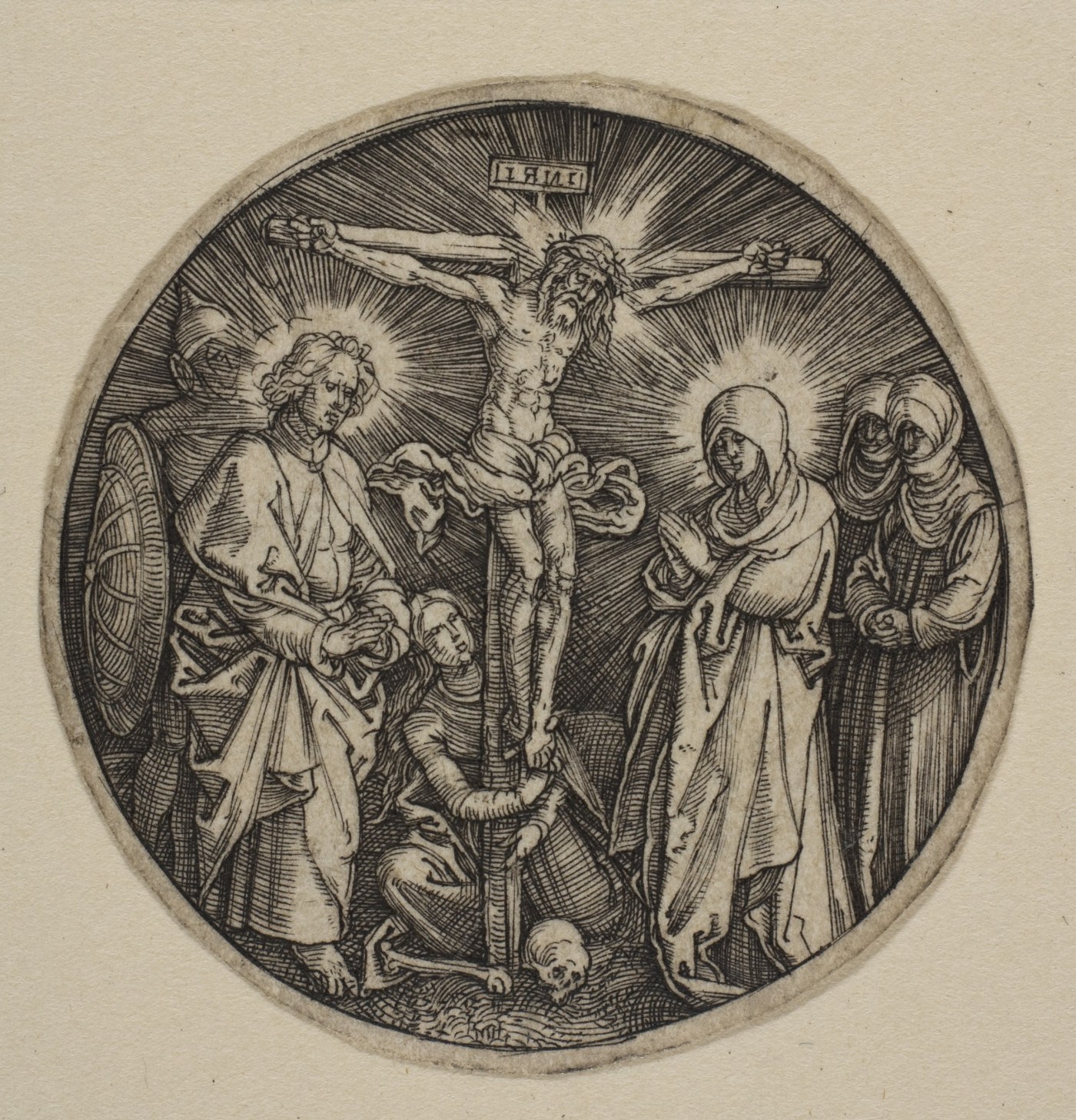
Tonight, as we gather in the shadow of the cross, I want to invite you not to rush past it. There is a temptation to become so familiar with an image that it loses its power, but I want to invite you not to sanitize or sterilize the cross. As we hear the cross of Christ preached, I want us to behold it fully, honestly, reverently. The story we’re about to walk through is not comfortable. It isn’t neat or sentimental. It is violent and painful, but it is also the center of our faith. Every blow, every word of mockery, every drop of blood is telling the story of our redemption. So I invite you, not just to listen, but to look. Look at Jesus as He is mocked, as He suffers, as He dies. And as you look, consider the love of God on display for us.
Opening Prayer:
Let’s begin tonight with prayer:
Heavenly Father, tonight, we gather in the shadow of the cross. We come with quiet hearts and humbled spirits, remembering the suffering of Your Son, Jesus Christ. As we reflect on His final hours, open our eyes to see the weight of the sacrifice. Help us to slow down, to listen well, and to remember deeply. Let this service draw us closer to Christ, who was wounded for our transgressions and crushed for our sins. Thank You for loving us with such costly love. Thank You that the story does not end in darkness. Open our ears to hear the truth of Your Word. Open our hearts to respond with reverence, repentance, and awe. Be glorified in every word, every moment, every heart tonight. In the name of Jesus, our suffering Savior and risen King, Amen.
Scripture Reading:
Matthew 27:27-54, ESV
Then the soldiers of the governor took Jesus into the governor’s headquarters,and they gathered the whole battalion before him. And they stripped him and put a scarlet robe on him, and twisting together a crown of thorns, they put it on his head and put a reed in his right hand. And kneeling before him, they mocked him, saying, “Hail, King of the Jews!” And they spit on him and took the reed and struck him on the head. And when they had mocked him, they stripped him of the robe and put his own clothes on him and led him away to crucify him.
As they went out, they found a man of Cyrene, Simon by name. They compelled this man to carry his cross. And when they came to a place called Golgotha (which means Place of a Skull), they offered him wine to drink, mixed with gall, but when he tasted it, he would not drink it. And when they had crucified him, they divided his garments among them by casting lots. Then they sat down and kept watch over him there. And over his head they put the charge against him, which read, “This is Jesus, the King of the Jews.” Then two robbers were crucified with him, one on the right and one on the left. And those who passed by derided him, wagging their heads and saying, “You who would destroy the temple and rebuild it in three days, save yourself! If you are the Son of God, come down from the cross.” So also the chief priests, with the scribes and elders, mocked him, saying, “He saved others; he cannot save himself. He is the King of Israel; let him come down now from the cross, and we will believe in him. He trusts in God; let God deliver him now, if he desires him. For he said, ‘I am the Son of God.’” And the robbers who were crucified with him also reviled him in the same way.
Now from the sixth hour there was darkness over all the land until the ninth hour.And about the ninth hour Jesus cried out with a loud voice, saying, “Eli, Eli, lema sabachthani?” that is, “My God, my God, why have you forsaken me?” And some of the bystanders, hearing it, said, “This man is calling Elijah.” And one of them at once ran and took a sponge, filled it with sour wine, and put it on a reed and gave it to him to drink. But the others said, “Wait, let us see whether Elijah will come to save him.” And Jesus cried out again with a loud voice and yielded up his spirit.
And behold, the curtain of the temple was torn in two, from top to bottom. And the earth shook, and the rocks were split. The tombs also were opened. And many bodies of the saints who had fallen asleep were raised, and coming out of the tombs after his resurrection they went into the holy city and appeared to many. When the centurion and those who were with him, keeping watch over Jesus, saw the earthquake and what took place, they were filled with awe and said, “Truly this was the Son of God!”
I. The Mocking of Jesus by the Roman Soldiers
Our passage tonight begins with Jesus being made a public spectacle of scorn. In verse 27, He is taken into the praetorium, the Roman governor’s headquarters, likely Herod’s old palace. There, “the whole battalion” gathers. Possibly hundreds of soldiers, far more than needed for one bound prisoner.
Why so many? Because this isn’t merely execution, it’s a Roman show of power. Cruelty becomes spectacle. Humiliation becomes theater. And at the center stands the Son of God, surrounded not by honor, but by mockery. Today, people still gather around the cross, not to worship, but to scoff. The costumes have changed. media, culture, even our own hearts, but the sneer remains. Yet mockery does not diminish His majesty. He is no less King because some refuse to see Him as King. No less Savior because some refuse to believe.
In verses 28–29, the soldiers mock Him. They place a scarlet robe on His torn back, crown of thorns pressed into His brow, and a reed for a scepter. They kneel in a mocking gesture proclaiming, “Hail, King of the Jews!” These Romans intend parody, but they proclaim the truth. A robe for royalty. A crown for glory. A scepter for rule. Prophecy is being fulfilled in real time. Every detail meant to mock instead affirms who He truly is. They are mocking the King, but also coronating Him.
Jesus had said it plainly: “My kingdom is not of this world. If it were, my servants would fight to prevent my arrest by the Jewish leaders. But now my kingdom is from another place” (John 18:36, ESV). His throne isn’t propped up by violence, but by truth. His glory isn’t marked by gold, but by grace. His victory comes not by sword, but by sacrifice.
And the cruelty escalates. “They spit on Him. They took the reed and struck Him on the head” (Matthew 27:30, ESV). Isaiah had foretold it: “I did not hide my face from disgrace and spitting” (Isaiah 50:6, ESV). And Jesus endures it silently. No retaliation. No curse. No calling down of angels. Just silence. The One who spoke galaxies into existence stays quiet before His tormentors.
Why? Because this is the mission. This is the path. This is the cup He came to drink. He’s not just suffering, He’s standing in our place. Not just mocked, He’s bearing our shame. Not just struck, He’s taking the blows meant for us. As Isaiah prophesied: “He was pierced for our transgressions. He was crushed for our iniquities” (Isaiah 53:5, ESV).
II. The Crucifixion of Jesus (27:32-37)
After these cruel pagans had their fun with the Son of God, we read that, “they led him away to crucify him.” (Matthew 27:31, ESV). From this point forward we will see where the path of suffering reaches its dreadful climax. The cross is no longer a looming threat. It is now a physical reality upon his back. And Jesus, though fully God, bears the full weight of human weakness.
Jesus, beaten and scourged, is too weak to carry the instrument of His death. So the soldiers find a man, Simon of Cyrene, a traveler from North Africa, and they force him to carry the cross. Roman law allowed soldiers to conscript civilians on the spot. If a Roman told you to carry something, you carried it, no questions asked. Jesus Himself referenced this law in Matthew 5:41: “If anyone forces you to go one mile, go with him two miles.” And here, in the shadow of that brutal system, Simon is yanked from the crowd and given a burden he never asked for. And yet, what an honor.
He is the first, quite literally, to take up a cross and follow Jesus. At first glance, Simon looks like an accident of history. Wrong place, wrong time. But Church history says something different. Mark 15:21 mentions that Simon was the father of Alexander and Rufus, names known to the early church. And in Romans 16:13, Paul sends greetings to a man named Rufus, “chosen in the Lord,” and to his mother, whom Paul calls a mother to him as well.
What does this mean? Simon began the day as a bystander. But carrying that cross may have carried him, and his whole family, straight into the kingdom of God. Sometimes discipleship begins with an interruption. Following the Lord can be difficult, burdensome, and painful. And yet, if you let it, God can turn that burden into a blessing.
After a long and burdensome walk, they reach Golgotha. the “Place of a Skull.” A place of death. A place without mercy. And before they raise the cross, the soldiers offer Jesus wine mixed with gall. A bitter concoction, possibly poisonous. Some think it was a crude painkiller, designed to dull the senses. And Jesus tastes it, but then refuses to drink. Why?
Because Jesus will face this moment with full clarity. No shortcuts. No numbing of the pain. No dulling of obedience. Psalm 69:21 had already spoken: “They gave me poison for food, and for my thirst they gave me sour wine to drink.” Jesus doesn’t turn away from the bitterness of the cup. He embraces it. He embraces every drop of suffering. And in doing so, He reverses the story of Eden. Where Adam tasted sweetness and brought death, Jesus tastes bitterness to bring us life. He suffered evil and returned good. He accepted death and gave life. What He sipped for a moment, we were spared from for eternity.
While Jesus is hanging on the cross, Matthew records that the soldiers are at His feet, gambling for His clothes. Cold-hearted and oblivious, they are dividing up His last possessions while He gives up His very life. The Psalmist had foreshadowed this moment long ago: “They divide my garments among them, and for my clothing they cast lots.” (Psalm 22:18, ESV).
What a contrast. They play games beneath the cross. They gamble for garments while the Son of God is giving up His life to give them the kingdom. He is stripped so that we may be clothed in righteousness. He is emptied so that we may be filled with grace. And they don’t even see it. They stand within arm’s reach of salvation, and remain spiritually blind. Let that be a warning. You can be close to Jesus and still miss Him. You can stand at the foot of the cross and walk away unchanged. Don’t let that be your story.
Finally, above Jesus’ head, they place a sign: “This is Jesus, the King of the Jews.” (Matthew 27:37, ESV). It’s meant as a joke. A final jab. Rome’s way of mocking not just the man, but the entire people He represented. But the joke’s on them. Because that sign speaks truth. In fact, it says more than they ever meant it to. This is Jesus. He is King. Not just of the Jews, but of all.
In Roman tradition, the charge of the condemned was written and nailed above the cross. His “crime” was kingship. But that “crime” was also His calling. Whether in mockery or in truth, Christ is proclaimed. The irony of the cross is that every attempt to shame Jesus only reveals more of His glory. The crown of thorns? A true crown. The purple robe? A true symbol of royalty. The reed? A false scepter that points to real authority. And the charge of kingship? The truest statement in the whole scene.
III. The Mocking of the Crucified One (Matthew 27:38–44)
And now we come to one of the most heart-wrenching sections in all of Scripture, not only because of the physical pain Jesus endured, but because of the verbal and spiritual assault that surrounded Him. Matthew tells us that Jesus was crucified between two insurrectionists. They are often called “thieves” but that translation does not do it justice. These were not petty thieves or burglars. They were rebels, possibly violent men, crucified for threatening Roman peace. And Jesus; sinless, holy, and perfect, is placed between them.
Once again, this detail was already spoken of long before this moment. In Isaiah 53:12, the prophet had already declared, “He was numbered with the transgressors.” The innocent One is planted in the middle of the guilty. The sinless Savior hung where sinners belong. It is an image that could be a sermon in and of itself: Christ stands in solidarity with the condemned, not from a distance. Not from a throne. But from a cross.
Next, the crowd joins in. Passersby begin to blaspheme Him “shaking their heads,” Matthew says, a direct echo of Psalm 22:7: “All who see me mock me; they make mouths at me; they shake their heads.” But listen closely to what they say: “You who would destroy the temple and rebuild it in three days, save yourself! If you are the Son of God, come down from the cross.”
Do you hear that phrase, “If you are the Son of God…”? It should sound familiar. That’s exactly what Satan said to Jesus in the wilderness in Matthew 4: “If you are the Son of God, command these stones…” “If you are the Son of God, throw yourself down…” The crowd is using the very words Satan used at the beginning of Christ’s earthly ministry. Like Satan in the wilderness, the masses mock the Messiah, assuming that suffering disproves His identity. If you are the Son of God, they say, “prove it by avoiding pain.”
If it wasn’t enough to be mocked by the crowd, Jesus is now taunted by the religious elites, very people who should’ve recognized Him first. “He saved others,” they say, “but he cannot save himself.” Let that sink in. The very truth of the gospel is in their mouths, and they don’t even realize it. The truth is He cannot save himself, not because he is unable, but because he is unwilling. He came to save others. If Jesus had come down from the cross, He could have spared Himself, but He would have forfeited us. He could’ve silenced the mockers. but He would’ve left sin undefeated. His refusal to come down is not a weakness. It is strength.
Matthew has already told us who this Jesus is: “He will save his people from their sins.” (Matthew 1:21, ESV). And how will He do that? “The Son of Man came… to give his life as a ransom for many.” (Matthew 20:28, ESV). He is saving others by not saving Himself. That is true kingship. Not in conquering others for your sake, but in suffering for theirs.
In verse 43, the mockery becomes even more pointed: “He trusts in God; let God deliver him now, if he desires him. For he said, ‘I am the Son of God.’” That’s a direct quotation of Psalm 22:8. They are using Scripture, God’s Word, to mock the Word made flesh. Can you imagine? They quote David’s psalm of suffering as if it were proof of Jesus’ failure. But in doing so, they fulfill it. What they see as rejection is actually redemption. What looks like abandonment is the very act of atonement. Jesus is not being forsaken because God has no delight in Him. He is being forsaken because He is bearing our curse.
And finally, even the two criminals beside Him join in the chorus of mockery. Matthew tells us plainly: “And the robbers who were crucified with him also reviled him in the same way” (Matthew 27:44, ESV). We know from Luke’s Gospel that one of them would eventually repent, but not yet. At this moment, Jesus is truly alone.
He is mocked by Gentiles and Jews. By commoners and elites. By strangers and by criminals. Even His disciples have fled. He is surrounded by scoffers and suspended between sinners. But He stays. He doesn’t call for angels. He doesn’t summon fire from heaven. He doesn’t speak a word of defense. Why? Because this is the price of redemption. “He was despised and rejected by men; a man of sorrows, and acquainted with grief” (Isaiah 53:3, ESV).
Jesus was mocked by all so that we might be welcomed by God. He was forsaken so we could be forgiven. He was surrounded by hatred so we could be embraced in love. And He did it all for you.
IV. The Death of Jesus (Matthew 27:45–50)
Matthew then tells us that “from the sixth hour there was darkness over all the land until the ninth hour” (Matthew 27:45, ESV). That is, from noon to 3 p.m. (the brightest part of the day) the sky went black.Some want to say that this must have been a solar eclipse, but it couldn’t have been. The Passover was celebrated during the full moon, and solar eclipses don’t happen then. This was not a coincidence of nature, it was a declaration from heaven.
The prophet Amos had spoken of such a day long ago: “I will make the sun go down at noon and darken the earth in broad daylight” (Amos 8:9). The heavens were not silent, they were grieving. The Light of the World was being extinguished, and creation itself responded in sorrow. Darkness is often a symbol of divine judgment. But here, it is also mourning. The Creator hangs on a tree, and creation itself shrouds the scene in black.
Then in verse 45, we read one of the most haunting verses in the entire Bible. “And about the ninth hour Jesus cried out with a loud voice, saying, ‘Eli, Eli, lema sabachthani?’ which means, “My God, my God, why have you forsaken me?” Here Jesus is quoting Psalm 22:1, the psalm of the suffering servant. This is not a cry of confusion. This is not a lapse in faith. This is a moment of sacrificial substitution. Jesus, the sinless One, is now standing in the place of sinners. He bears our guilt. He absorbs the full weight of our shame. And in doing so, He experiences what no one else ever has: the dreadful reality of being forsaken by God, not because of His sin, but because of ours. Paul would later write, “For our sake he made him to be sin who knew no sin, so that in him we might become the righteousness of God” (2 Corinthians 5:21). And again, “Christ redeemed us from the curse of the law by becoming a curse for us” (Galatians 3:13).
At that moment, the Son cries out, and the Father is silent. That silence speaks volumes. It speaks of the cost of our redemption. It speaks of the weight of our sin. But it also speaks of the depth of divine love. Because Jesus was forsaken, you and I never have to be.
As the puritan writer Thomas Watson once noted, “The Lord Jesus, he is the quintessence of all good things. To give us Christ is more than if God had given us all the world. God can make more worlds, but he has no more Christs to bestow; it is such a golden mine that the angels cannot dig to the bottom.”
But even in this sacred moment, the crowd misunderstands. “This man is calling Elijah,” they say. They hear “Eli” and think He’s asking for God to send a prophet for help. They think they are spectators of a failure. But they are standing in the center of prophecy. God’s Word is unfolding in perfect detail, even in their confusion. And let this be a reminder to us: God’s purposes are not dependent on human understanding. Even when people are blind to the truth, God’s Word marches forward; sure, steady, unfailing.
Finally, Matthew says: “And Jesus cried out again with a loud voice and yielded up his spirit” (Matthew 27:50, ESV). Let those words ring in your ears: “He yielded up His spirit.” No one took His life from Him. He laid it down willingly. Just as He said in John 10:17–18, “I lay down my life… No one takes it from me, but I lay it down of my own accord.” Jesus does not go out with a whimper, but with a cry of victory. “It is finished,” He said, according to John’s Gospel. The work is done. The ransom is paid. The sacrifice is complete.
V. The Aftermath and Revelation (Matthew 27:51–54)
The good news is that the cross is not the end of the story, in many ways it is only the beginning. The moment Jesus dies, all of creation begins to respond. In verse 51 Matthew writes, “And behold…” (which is a Biblical way of saying “pay attention”) “… the curtain of the temple was torn in two, from top to bottom.”
This was no ordinary curtain. It was the veil that separated the Holy of Holies from the people of God, the veil that said “You may not come any closer” and yet it was torn “from top to bottom” because it was God, not man, who made the way.
Hebrews 10:19–22 puts it plainly: “We have confidence to enter the holy places by the blood of Jesus, by the new and living way that he opened for us through the curtain, that is, through his flesh…” At the moment Jesus died, the old covenant ended, and the new covenant began. No more separation. No more sacrifices. No more barriers. Through the torn body of Christ, we now have full, free, eternal access to the Father.
But the curtain is only the beginning. We read that “The earth shook, and the rocks were split” (Matthew 27:51). The sky went dark, the earth quaked, the rocks cracked open, not in destruction, but in declaration. Nature itself seemed to groan under the weight of what had just taken place.
And then, “The tombs also were opened” (Matthew 27:52, ESV). Can you imagine? At the very moment death tried to celebrate, life broke loose. “Many bodies of the saints who had fallen asleep were raised.” This is no ghost story. This is a resurrection preview. Matthew makes sure to note that: “they came out after his resurrection.” Christ is still the firstborn from the dead. But these saints, these early signs, are the proof that His death was not defeat, but divine victory. Christ’s death did not end in silence. It echoed into the grave and shook it loose. The cross is not the end of life, it’s the beginning of new life. The grave was broken open before Jesus even left His own.
Finally, the narrative shifts from the heavens to the hardened hearts of Roman soldiers. “When the centurion and those who were with him… saw the earthquake and what took place, they were filled with awe and said, ‘Truly this was the Son of God!’” (Matthew 27:54, ESV). Don’t skip past that. These were Gentile soldiers. Men trained to kill. Men desensitized to death. But at the cross, their eyes were opened to glory.
“Truly this was the Son of God.” The irony is rich. Those who were supposed to know God rejected Him. And those who were far off confessed Him. It’s the gospel in miniature: “While we were still sinners, Christ died for us.” (Romans 5:8)
Conclusion:
We’ve seen tonight what the world did to Jesus… and what Jesus did for the world. He was mocked, but He remained silent. He was rejected, but He still reached out. He was forsaken, so we could be forgiven. He gave up His spirit, so we could be filled with His Spirit. And so we are left with the voice of a Roman soldier, trained to kill, unmoved by violence, but undone by the cross. “Truly, this was the Son of God.” That is the confession that changes everything. That’s the cry of faith. May it be ours, not just with our mouths, but with our lives. Tonight, may we look to the cross and see not just what Jesus endured, but who He is. And may we say with full hearts and reverent awe: “Truly, this was the Son of God.” Amen.
 hardincrowder.com