I. THE STRUCTURE: A THEOLOGICAL DIPTYCH
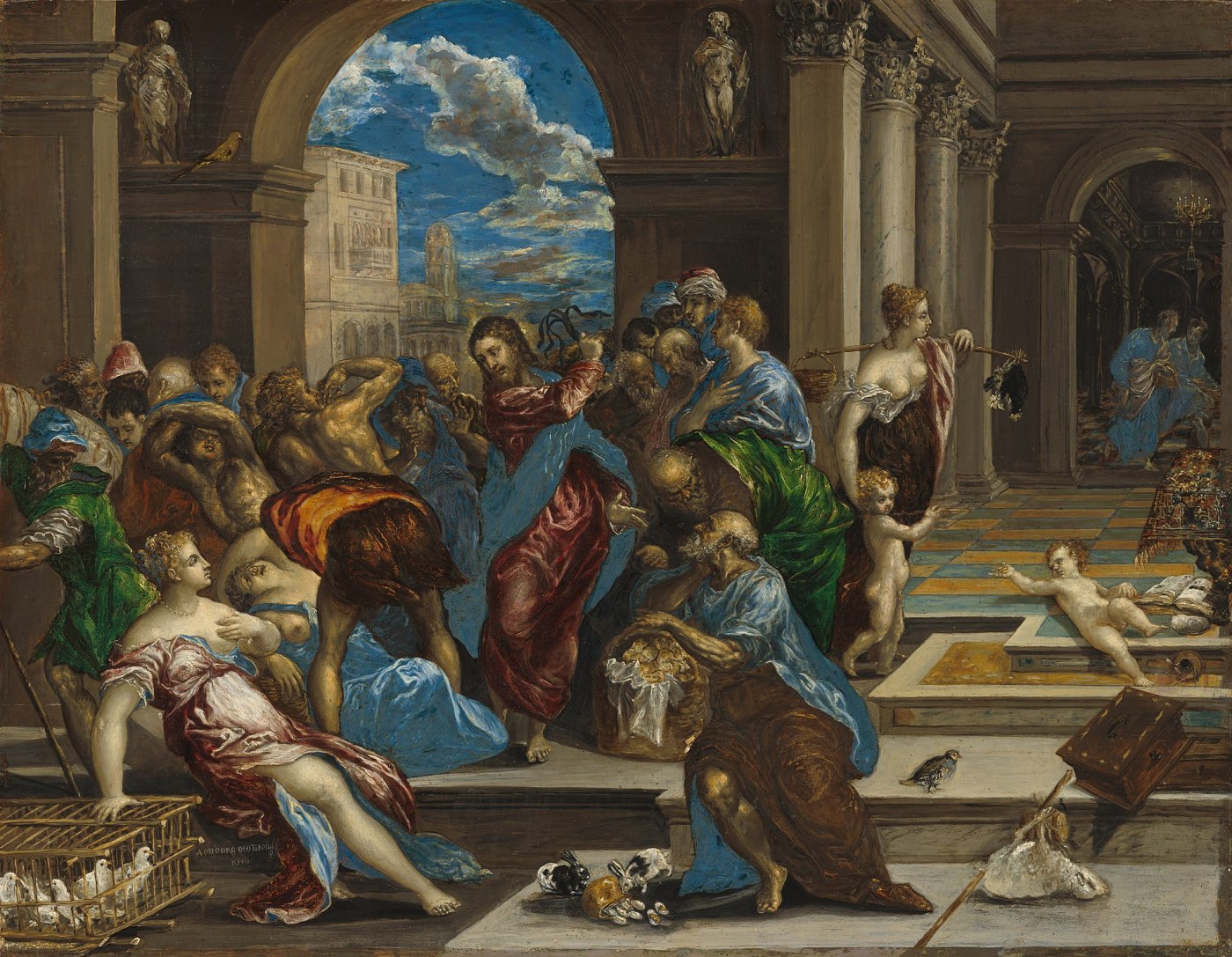
John 2:14–22 presents two scenes that together unveil a deeper truth about Jesus’ identity and mission.
In verses 14–17, Jesus storms the temple courts. He makes a whip, drives out livestock, scatters coins, and flips tables. “Take these things away,” He commands. “Do not make my Father’s house a house of trade” (v. 16). His actions are deliberate, confrontational, and unapologetically messianic. Then John inserts a crucial note: “His disciples remembered that it was written, ‘Zeal for your house will consume me’” (v. 17). This remembrance isn’t incidental; it interprets the act. Jesus is not merely cleansing corruption, He is fulfilling Scripture and revealing who He is.
In verses 18–22, the Jewish leaders confront Him: “What sign do you show us for doing these things?” (v. 18). Jesus answers with a cryptic claim: “Destroy this temple, and in three days I will raise it up” (v. 19). They miss the point, fixated on architecture: “It took forty-six years to build this temple…” (v. 20). But John clarifies: “He was speaking about the temple of his body” (v. 21). Only later, after the resurrection, do the disciples understand. They remember and believe. The cleansing wasn’t just protest, it was prophecy. Jesus wasn’t fixing the temple. He was replacing it.
This is the pattern John highlights: Jesus acts, then speaks, and later the disciples remember and believe. The movement from sign to understanding shows that this moment isn’t about temple reform. It’s about temple fulfillment. Jesus is ending the old order and revealing Himself as the new center of worship.
This also raises a question. In Matthew, Mark, and Luke, the temple cleansing occurs at the end of Jesus’ ministry. But John places it at the beginning. Is this a contradiction? That’s unlikely. The temple cleansing is recorded by all four Gospels, which underscores its importance. It would be odd for John to misplace it by mistake.
The better explanation is that there were two cleansings: one at the start of Jesus’ ministry, as John records, and one near the end, as the Synoptics describe. This fits Jesus’ pattern. He often repeated messages and actions; preaching similar sermons in different places and performing similar miracles (e.g., feeding the 5,000 and the 4,000).
But John’s placement isn’t just historical. It’s theological. By positioning the cleansing early, he signals from the outset that Jesus did not come to reform the religious system. He came to fulfill and replace it.
Luke opens Jesus’ public ministry with His rejection in Nazareth (Luke 4:16–30), setting the tone for the resistance He will face. Likewise, John uses the temple cleansing to foreshadow conflict and redefine sacred space. Jesus is not a reformer within the temple; He is the new temple.
Jesus is declaring the end of an age: temple, sacrifices, priesthood are all are passing away. He Himself is now the meeting place between God and humanity. “Destroy this temple,” He says, “and in three days I will raise it up.” John tells us plainly that He meant His body (v. 21). Jesus is the eternal High Priest (Hebrews 7), the only way to the Father (John 14:6), and the true and final temple.
This theme echoes across John’s Gospel. To the Samaritan woman, Jesus says the time is coming when worship will not be tied to a mountain or a temple but will be “in spirit and truth” (John 4:21–24). At the Gospel’s start, we read, “The Word became flesh and dwelt among us” (John 1:14), the presence of God now resides in Jesus Himself.
The disciples didn’t fully grasp it in the moment. But after the resurrection, the meaning became clear. Memory became revelation. They saw that Jesus wasn’t just a teacher. He was the fulfillment of the temple, the embodiment of God’s promise, and the beginning of a new way to approach Him.
II. THE ACTION: CLEANSING AS SIGN AND JUDGMENT (vv. 14–17)
The temple cleansing in John 2:14–17 is not a spontaneous outburst. It is a calculated, theologically loaded act. It is a sign and a judgment wrapped into one. Jesus is not losing control; He is asserting it. He enters the most sacred place in Judaism and overturns everything, literally and symbolically.
John sets the scene: “The Passover of the Jews was at hand, and Jesus went up to Jerusalem” (v. 13). That phrase “of the Jews” is telling. John is writing to believers who no longer keep these feasts the same way. Not because of rejection, but because of fulfillment. Jesus chooses Passover, the feast of deliverance, to stage this confrontation. Pilgrims have filled the city. The temple is packed. There is no more visible moment to declare a new beginning.
“In the temple he found those who were selling oxen and sheep and pigeons, and the money-changers sitting there. And making a whip of cords, he drove them all out… he poured out the coins… and overturned their tables” (vv. 14–15).
This is not rage. It’s revelation. Jesus fashions a whip. That takes time. This is intentional, not impulsive. He drives out animals, not people, yet His authority is unmistakable. Every action preaches: the temple has become a market, and He is shutting it down.
Why this force? Why now? Because Jesus is not just confronting corruption. He’s exposing a deeper failure. The temple was meant to be a place where God met His people in mercy. Instead, it had become a machine for profit. Worshippers were being squeezed. Sacrifices were commodified. Grace was being sold.
Jesus doesn’t just clean house. He lays claim to it. “Do not make my Father’s house a house of trade” (v. 16). That possessive matters. This is His Father’s house. That makes Him the Son. It echoes His words as a boy in Luke 2:49: “Did you not know I must be in my Father’s house?”
And then, the key moment: “His disciples remembered that it was written, ‘Zeal for your house will consume me’” (v. 17; Psalm 69:9). This memory didn’t strike in the moment, but later, after the resurrection, when the Spirit connected the dots. They saw that this zeal would cost Jesus everything. His public challenge to temple leadership was a death sentence in motion.
As theologian Wolfgang Musculus observed, zeal is like the love of a husband for his bride: jealous, consuming, protective. Jesus is not angry because the temple is busy; He’s angry because it’s been hijacked. The place meant for prayer has become a place of spiritual betrayal.
And yet even in this act of cleansing, there’s a hint of coming transformation. The temple system Jesus purifies is the one He will soon replace. Sacrifice is ending. The veil will tear. And in three days, a new temple will rise, not made of stone, but flesh and glory.
III. THE DIALOGUE: SIGN, MISUNDERSTANDING, AND REVELATION (vv. 18–22)
The temple has been shaken. The religious authorities demand an explanation. “What sign do you show us for doing these things?” (v. 18). This is a legal challenge. According to Deuteronomy 13 and 18, a prophet must prove his authority with a sign. In that sense, their question makes sense. But their posture betrays them. They’re not seeking truth; they’re looking for grounds to condemn. Their system has been disrupted, their pride exposed, and their profits threatened.
Jesus doesn’t give them a miracle. He gives them a riddle: “Destroy this temple, and in three days I will raise it up” (v. 19). It’s not a threat. It’s a prophecy. He doesn’t say, I will destroy it. He says, You destroy it. The irony is sharp. The very people demanding a sign will become the sign’s fulfillment. They will destroy the true temple, His body, and God will raise it.
They scoff: “It has taken forty-six years to build this temple, and will you raise it up in three days?” (v. 20). They miss the point entirely. This is a theme in John’s Gospel: Jesus speaks of spiritual realities, and people latch onto the literal. Nicodemus thinks of physical birth (John 3). The woman at the well thinks of plumbing (John 4). The crowd thinks of lunch (John 6). And here, the leaders think of Herod’s temple.
But John clears it up for the reader: “He was speaking about the temple of his body” (v. 21). Jesus is the new dwelling place of God. The old temple was only a shadow. Jesus is the substance. In Him, the presence of God no longer sits behind a veil. It walks, speaks, suffers, and rises.
This moment is the hinge. The temple cleansing begins with Jesus as prophet, exposing corruption. It ends with Jesus as temple, offering Himself as the new meeting place between God and humanity.
The disciples don’t get it at first. But later, after the resurrection, they remember. “When therefore he was raised from the dead, his disciples remembered that he had said this, and they believed the Scripture and the word that Jesus had spoken” (v. 22). Memory becomes understanding. The pieces fall into place, and their faith deepens. This is often how revelation works. The truth comes first in word or action. Comprehension comes later. The Spirit stitches together memory and meaning. And what once seemed confusing becomes the cornerstone of belief.
IV. CHRIST THE NEW TEMPLE
Too often, the temple cleansing is read as moral outrage. Jesus protesting corruption, flipping tables to make a point about greed. But that misses the deeper reality. Jesus wasn’t just correcting the temple. He was announcing its expiration. His actions weren’t reform, they were replacement. A new way to access God was being unveiled, and the old system was running out of time.
This is why the moment is so charged. Jesus doesn’t just clear space. He redefines it. The temple, with its priests, sacrifices, and rituals, had always pointed forward. Jesus steps into that space and declares, in effect, It pointed to Me.
John has already framed this shift. “Behold, the Lamb of God who takes away the sin of the world” (John 1:29). The temple needed a lamb; Jesus is the Lamb. The temple held the presence of God; Jesus is the presence of God. The temple was where heaven met earth; now it is Christ, in flesh and blood, who bridges the divide.
When John writes, “The Word became flesh and dwelt among us” (John 1:14), he’s using temple language. The word for “dwelt” literally means “tabernacled.” The glory of God has moved, not to a new building, but to a Person. The Shekinah is no longer hidden behind a veil; it is visible in Jesus’ face, voice, tears, and scars.
So when Jesus says, “Destroy this temple, and in three days I will raise it up,” He is saying far more than the crowds hear. He’s declaring that He is the new and final temple. His body will be destroyed, but it will rise; glorified, indestructible, and open to all who believe.
This changes everything. Worship no longer revolves around a holy mountain or a sacred building. It centers on Christ. In Him, sacrifice is fulfilled, and access to God is secured, not through blood on an altar, but through His once-for-all atonement on the cross.
The Church, then, is not a replacement temple. It is the Body of the true Temple, indwelt by His Spirit. We are holy only because He is present in us. We are priests only because He is our High Priest. Everything we are as God’s people radiates from Christ.
Jesus isn’t improving the old system. He’s ending it. The cross is the new altar. The resurrection is the new dedication. And Jesus is the living Temple. He is forever open, forever holy, forever sufficient.
 hardincrowder.com