Sermon Audio: LINK
I. SAMUEL’S PUBLIC ACCOUNTABILITY (1 Samuel 12:1-5)
Before Saul wore the crown, Israel stood apart. Surrounded by nations that bowed to thrones of gold and marble, Israel bowed to the Living God. While others trusted in chariots and kings, Israel trusted in the voice of the Lord. God Himself was their King, speaking through prophets whose words burned with holy fire. He raised up Judges by His own hand for His own glory. These leaders did not interpret laws by the winds of the world. They upheld divine decrees written in the very courts of Heaven. Israel’s identity was not political. It was sacred. They were a covenant people, and their King was invisible, eternal, and enthroned above every earthly power.
Yet how easily the human heart trades the holy for what is common. In 1 Samuel 8:5 (ESV), the people cry out, “Now appoint for us a king to judge us like all the nations.” That cry was not just a request. It was a rejection. It pierced the heart of Samuel, and it grieved the heart of God. It was the sound of a people forgetting who they were. They did not want to be set apart; they wanted to blend in. They exchanged intimacy with God for the illusion of control. They traded covenant for conformity.
Still, in both justice and mercy, God answered them. He gave them Saul, the son of Kish, a man who wore the crown but carried the weight of their misplaced hope. A man anointed by God, yet burdened by a nation’s compromise.
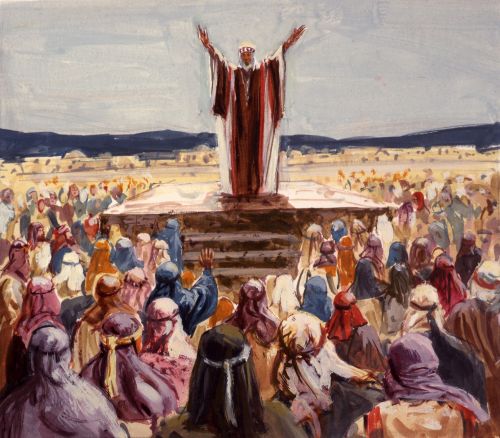
And now, in 1 Samuel 12, Samuel stands before the people for the final time as their leader. But he does not leave quietly. He does not disappear into the shadows. He steps forward, not to defend himself, but to be examined. “Here I am,” he says. “Testify against me before the Lord and before his anointed. Whose ox have I taken? Or whose donkey have I taken? Or whom have I defrauded? Whom have I oppressed?” (1 Samuel 12:3, ESV). This is not pride. This is prophetic courage. This is the voice of a man who walked in integrity when no one was watching. He does not run from the light. He stands in it.
Then Samuel does what prophets must do. He draws a line in the sand. He had led with open hands. The king they demanded would rule with clenched fists. Samuel had listened for the voice of God. The king would bow to the noise of the people. Samuel had given. The king would take sons, daughters, fields, and freedom. And the people saw the truth and said with one voice, “He is witness” (1 Samuel 12:5, ESV).
So what is the Spirit saying to us? What do we learn from this ancient scene?
We learn that integrity still matters even when no one is clapping. We learn that faithfulness still speaks even when the world demands a crown. Samuel’s life asks us hard questions: Are we led by conviction or convenience? Do we crave the approval of man or the commendation of God? Do we reach for power or do we reach for purity?
The world will always be eager for kings. Let us be eager for righteousness. Let us not be seduced by the visible throne when we serve an invisible King. Let us hunger not for crowns but for clean hearts. Let us walk with the same courage and clarity as Samuel and say with boldness, “Here I am.”
II. GOD’S LAWSUIT AGAINST ISRAEL (1 Samuel 12:6-15)
With the echo of Samuel’s integrity still hanging in the air, the prophet lifts his voice again to declare the word of the Lord. Here the tone shifts. The crowd now become defendants before their covenant King. The prophet becomes prosecutor. The assembly becomes a courtroom. And the Lord God, holy and righteous, takes His rightful seat as both Witness and Judge.
What unfolds is what the prophets of old called a “rib,” a covenant lawsuit. Israel is not simply being scolded; they are being summoned. Charged not with breaking a rule, but with breaking covenant with God.
And yet, before the accusations fall, God does something astonishing. Through Samuel, He does not begin with a record of their rebellion. Instead, He begins with a reminder of His faithfulness.
“The Lord is witness,” Samuel declares, “who appointed Moses and Aaron and brought your fathers up out of the land of Egypt” (1 Samuel 12:6, ESV). God’s case does not begin with their failure, but with His grace. He says, in essence, “Before I confront your unfaithfulness, let Me remind you of My faithfulness toward you.”
Samuel urges the people to stand still, to listen, to reflect. “Now therefore stand still, that I may plead with you before the Lord concerning all the righteous deeds of the Lord that He performed for you and for your fathers” (1 Samuel 12:7, ESV). The pattern of the words that follow is undeniable. They forget. God disciplines. They cry out. God delivers. Again and again. He raised up Moses and Aaron. He rescued through Jerubbaal, through Barak, through Jephthah. He delivered through Samuel himself. Their victories were not achievements; they were gifts. Not the triumph of the people’s strength, but the testimony of God’s steadfast love.
However, when Nahash, king of the Ammonites, rose to threaten them, Israel did not fall to their knees in prayer. They ran to human power. “We want a king to rule over us,” they said, “even though the Lord your God was your King” (1 Samuel 12:12, ESV). In fear, they did not turn to faith. Though Israel had seen the Red Sea part, manna fall, and enemies scattered by the breath of God, they demanded a substitute for God, and earthly king.
Yet even in that failure, God answers with mercy. Samuel does not denounce Saul. “Behold the king whom you have chosen, for whom you have asked; behold, the Lord has set a king over you” (1 Samuel 12:13, ESV). The crown is not a curse; it is a classroom. God grants their request, not to crush them, but to teach them.
So Samuel declares with urgency: “If you will fear the Lord and serve Him and obey His voice and not rebel against the commandment of the Lord, and if both you and the king who reigns over you will follow the Lord your God, it will be well” (1 Samuel 12:14, ESV).
But what if the people rebel? What if they reject His voice? “Then the hand of the Lord will be against you, as it was against your fathers” (1 Samuel 12:15, ESV).
Salvation does not come from man made systems. Peace is not secured by policies. No king, no president, no human throne can provide what only the throne of Heaven supplies. And yet, how often do we place our hope in the hands of men? How often do we repeat the sin of Samuel’s generation?
Even so, mercy still calls. The offer remains: fear the Lord, serve Him, obey His voice. That is the path to peace. In a world of shifting sand and fragile kingdoms, only His covenant stands unshaken. Only His Word endures. And only His grace is enough to carry a people back to faithfulness.
III. THE SIGN FROM GOD (1 Samuel 12:16-19)
Now, having reminded the people of God’s faithfulness and confronted them with the weight of their rebellion, Samuel prepares the congregation to hear from God directly. Words carry power, but what is about to happen will leave no doubt. The truth will be confirmed not only by prophetic proclamation, but by divine demonstration.
Samuel lifts his voice again, calling for their attention. “Now then, stand still and see this great thing that the Lord will do before your eyes” (1 Samuel 12:16, ESV). Then Samuel points to the season. “Is it not wheat harvest today?” he asks. They all know the answer. It is the dry season, the time when rain does not fall. Skies remain clear. What is about to happen will defy natural law and expose spiritual truth. This will be confirmation that Samuel has not spoken from emotion or imagination, but from the very mouth of God.
He continues, “I will call upon the Lord, and He will send thunder and rain. Then you shall know and see that your wickedness is great, which you have done in the sight of the Lord, in asking for yourselves a king” (1 Samuel 12:17, ESV). This is a divine object lesson. God will interrupt the regular rhythms of creation to highlight the chaos Israel has introduced into their covenant relationship.
And then it happens. In a season meant for reaping, the Lord sends a great storm of reckoning. The message is unmistakable. Israel’s sin was not a small misstep. It was a deep betrayal of the One who had delivered them, sustained them, and chosen them. And the people finally see it.
They do not respond with excuses or defiance. They respond with fear, with reverence, with brokenness. “All the people greatly feared the Lord and Samuel” (1 Samuel 12:18, ESV). The storm does what sermons sometimes cannot. It breaks through pride and awakens the conscience. The people cry out in repentance: “Pray for your servants to the Lord your God, that we may not die, for we have added to all our sins this evil, to ask for ourselves a king” (1 Samuel 12:19, ESV). The people fear the weight of their guilt. They recognize the storm is not just in the sky, but in their souls. And in this sacred moment, Samuel reveals the heart of a true spiritual leader.
Like Moses before him, and Christ the true intercessor who comes after him, Samuel does not turn away. He does not condemn and walk off. He intercedes. He prays. He takes the cry of the people and carries it to the throne of grace. He stands between judgment and mercy, pleading for forgiveness on behalf of those who have just acknowledged their sin.
This is the ministry the Church needs. Faithful leaders who speak truth with boldness and plead for mercy with tenderness. Prophets who confront sin without compromise, and who also weep for the sinner. Not voices filled with anger, but hearts full of prayer. In a world drowning in outrage, what we need is intercession. What we need is truth that wounds in order to heal.
IV. SAMUEL’S FINAL CHARGE(1 Samuel 12:20-25)
The people are shaken. The storm fades, but its voice lingers in their hearts. Conviction has taken root. And now, Samuel stands as prophet, shepherd, and intercessor, ready to speak one last time. His voice is steady, not condemning. His tone carries both weight and warmth.
“Do not be afraid,” he says. “You have done all this evil, yet do not turn aside from following the Lord, but serve the Lord with all your heart” (1 Samuel 12:20, ESV). This is grace in motion. The sin is real, but so is the invitation. There is no denial, no excuse, only the open door of return. The way forward is not shame or retreat, but wholehearted pursuit of God.
Samuel warns them against chasing illusions. “Do not turn aside after empty things that cannot profit or deliver, for they are empty” (1 Samuel 12:21, ESV). These are idols, promises that echo but never speak, shadows that offer no shelter.
Why does God not cast them off? Why does mercy still reach? Samuel answers with wonder: “The Lord will not forsake His people, for His great name’s sake, because it has pleased the Lord to make you a people for Himself” (1 Samuel 12:22, ESV). This is covenant love. God remains faithful, not because His people deserve it, but because His name is at stake. He delights in what He has chosen.
Then Samuel makes a vow: “Far be it from me that I should sin against the Lord by ceasing to pray for you, and I will instruct you in the good and the right way” (1 Samuel 12:23, ESV). Though the people rejected his leadership, he will not abandon his calling. He will pray. He will teach. He will remain faithful even if they do not.
As we marvel at Samuel’s faithfulness, let us remember that we have someone far greater than Samuelinterceeding for us. Though we have sinned against Christ, Heremembers us in mercy, He works ever for our good, and continues to instruct us through His Word and His Spirit. Israel was blessed to have Samuel,but how much more so are we blessed to have Christ!
Samuel then brings it all to a point: “Only fear the Lord and serve Him faithfully with all your heart. For consider what great things He has done for you” (1 Samuel 12:24, ESV). This is the heart of the matter. Fear God. Serve Him. Not out of obligation, but from gratitude. Let remembrance lead to reverence. Let history fuel holiness.
And let me say this, the greatest thing we can consider is that Christ suffered and died so that we might be redeemed by his blood and receive eternal life. Even if nothing else from this moment forward went well for you, if there was nothing left in your life but trials and pain, you could consider yourself blessed beyond measure because if you have found salvation in Jesus Christ.
But Samuel does not end with comfort alone. He adds a warning: “If you still do wickedly, you shall be swept away, both you and your king” (1 Samuel 12:25, ESV). Grace does not erase accountability. Mercy does not remove the reality of justice. The covenant carries both blessing and consequence.
Israel’s story would prove Samuel right. Saul would falter. The people would stray. The kingdom would crumble. Yet through it all, God’s faithfulness would endure. His mercy would shine even through judgment. His word would not fail.
This final charge still calls to every generation. Fear the Lord. Serve Him with all your heart. Remember what He has done. Walk in His ways. In obedience, there is hope. In rebellion, there is ruin. But always, there is a God who speaks, who calls, and who loves with an everlasting love.
Conclusion
Like Israel, we often turn from the fountain of living waters to dig broken cisterns that hold nothing. And yet, God does not turn away. He warns, He acts, and He calls. Why? Because His love is rooted in His name. His justice is unblemished, and His mercy endures forever.
Ultimately, this is not about Samuel. Neither is it about Saul or David. It prepares the way for a better King. Jesus is the King we truly need. He came not because we got it right, but because we got it wrong. He bore the storm we deserved. He stood in the gap we created. He poured out the mercy Samuel only foreshadowed.
Today, the call of Samuel is fulfilled in the voice of Christ. “Fear the Lord and serve Him faithfully with all your heart. For consider what great things He has done for you.” And in Christ, what He has done is everything. He has defeated sin. He has conquered death. He has offered peace through His blood. He now reigns with grace in one hand and truth in the other.
So turn to Him. Trust in Him. Follow Him. Let your life declare what your lips believe: Jesus Christ is Lord. Not just of Israel. Not just of history. But of you. Let that be your testimony. Let that be your joy. Let that be your song forever.
Closing Prayer:
Father, thank You for speaking to us through Your Word today. Like Israel, we confess how often we turn from You to things that cannot satisfy. Yet You remain faithful. You warn, You call, and You offer grace.
Lord Jesus, You are the King we truly need. You bore the storm we deserved and now reign with mercy and power. Help us to fear You, serve You with all our heart, and remember the great things You have done.
Send us out today with renewed trust, deeper obedience, and hearts full of worship. In Your name we pray, amen.
Daily Devotionals
Monday: The Power of Integrity
Scripture Reading:
And Samuel said to all Israel, “Behold, I have obeyed your voice in all that you have said to me and have made a king over you. And now behold, the king walks before you, and I am old and gray; and behold, my sons are with you. I have walked before you from my youth until this day. Here I am; testify against me before the Lord and before His anointed. Whose ox have I taken? Or whose donkey have I taken? Or whom have I defrauded? Whom have I oppressed? Or from whose hand have I taken a bribe to blind my eyes with it? Testify against me and I will restore it to you.” They said, “You have not defrauded us or oppressed us or taken anything from any man’s hand.” And he said to them, “The Lord is witness against you, and His anointed is witness this day, that you have not found anything in my hand.” And they said, “He is witness.” – 1 Samuel 12:1–5 (ESV)
Devotional:
Samuel stood in front of the people and opened his life for all to see. He had led them for years, and now, before stepping down, he asked if anyone had anything against him. “Whose ox have I taken? Whom have I oppressed?” He wasn’t being proud. He was being honest. His leadership wasn’t perfect, but it was clean. He had nothing to hide.
This kind of integrity is rare. We’re used to people protecting their image, hiding mistakes, and avoiding hard questions. But Samuel’s example shows us that real strength comes from living in the light. He didn’t wait for people to dig up his past. He invited them to look. His confidence came from a clear conscience, not a perfect record.
God is still calling us to this kind of life. Whether you lead in a home, a church, a school, or a job, integrity matters. Your reputation is not what people say about you. It’s what God sees in you. When we live with honesty, we become trustworthy. When we walk in truth, our lives point to Him.
Reflection Questions:
- Could you say to others what Samuel said: “Here I am”?
- Are there any parts of your life you are hiding or avoiding?
- What steps can you take to grow in integrity this week?
Prayer:
Lord, help me to live with honesty and courage. I don’t want to hide or pretend. Make my heart clean and my actions true. Teach me to do what is right, even when no one is watching. I want to reflect Your character in everything I do. In Jesus’ name, amen.
Tuesday: The Pattern of Grace
Scripture Reading:
And Samuel said to the people, “The Lord is witness, who appointed Moses and Aaron and brought your fathers up out of the land of Egypt. Now therefore stand still, that I may plead with you before the Lord concerning all the righteous deeds of the Lord that He performed for you and for your fathers. When Jacob went into Egypt, and the Egyptians oppressed them, then your fathers cried out to the Lord, and the Lord sent Moses and Aaron, who brought your fathers out of Egypt and made them dwell in this place.” – 1 Samuel 12:6–8 (ESV)
Devotional:
Samuel reminds the people that before anything else, they need to remember what God has done. God brought their ancestors out of slavery in Egypt. He raised up Moses and Aaron. He answered their cries and gave them freedom. Before pointing out their failures, God points to His faithfulness.
This is how God works. He doesn’t start by shaming us. He starts by reminding us of His goodness. That’s because remembering God’s kindness is what softens our hearts. When we forget what God has done, we start depending on ourselves. We make poor choices when we lose sight of His help in the past.
Samuel tells the people to “stand still.” In other words, slow down and think. Before moving forward, take time to remember God’s grace. That’s something we need too. In the middle of our schedules, fears, and decisions, we need to pause and reflect. When we remember how God has cared for us, it helps us trust Him again.
Reflection Questions:
- What are some ways God has been faithful to you in the past?
- Are you moving too fast to stop and remember what God has done?
- How would your attitude change today if you took time to reflect on His grace?
Prayer:
God, thank You for never forgetting me. Help me to stop and remember all the ways You’ve been good to me. Teach me to trust You, not just when things go well, but when I’m unsure of what’s next. Your grace has brought me this far, and I believe it will carry me forward. In Jesus’ name, amen.
Wednesday: Fear or Faith?
Scripture Reading:
“But they forgot the Lord their God. And He sold them into the hand of Sisera, commander of the army of Hazor, and into the hand of the Philistines, and into the hand of the king of Moab. And they fought against them. And they cried out to the Lord and said, ‘We have sinned, because we have forsaken the Lord and have served the Baals and the Ashtaroth. But now deliver us out of the hand of our enemies, that we may serve You.’ And the Lord sent Jerubbaal and Barak and Jephthah and Samuel and delivered you out of the hand of your enemies on every side, and you lived in safety. And when you saw that Nahash the king of the Ammonites came against you, you said to me, ‘No, but a king shall reign over us,’ when the Lord your God was your king.” – 1 Samuel 12:9–12 (ESV)
Devotional:
Samuel keeps going with the story of Israel’s past. God had rescued them again and again. When they forgot Him and turned to idols, He let their enemies rise up. But when they cried out, He answered. He sent judges and leaders to bring them peace. Still, when Nahash came against them, they panicked. Instead of trusting God, they demanded a king they could see.
Fear pushed them to forget. Even after all God had done, they didn’t believe He would help again. So they looked for a human solution. They didn’t just want help. They wanted control. It wasn’t a small decision. It was a rejection of God as their King.
We do the same. When fear rises, it’s easy to reach for something we can manage. We want safety, certainty, a plan we can hold in our hands. But faith means remembering that God is better than any shortcut we could take. He has delivered us before. He will do it again.
Reflection Questions:
- What fears are you facing right now that make it hard to trust God?
- Are you asking God for help, or just trying to fix things yourself?
- How has fear led you to forget His past faithfulness?
Prayer:
Lord, I don’t want to let fear control my choices. Remind me of who You are and what You’ve done. Teach me to trust You more than I trust my own plans. You are still my King. Help me to live like that today. In Jesus’ name, amen.
Thursday: The Choice Ahead
Scripture Reading:
“And now behold the king whom you have chosen, for whom you have asked; behold, the Lord has set a king over you. If you will fear the Lord and serve Him and obey His voice and not rebel against the commandment of the Lord, and if both you and the king who reigns over you will follow the Lord your God, it will be well. But if you will not obey the voice of the Lord, but rebel against the commandment of the Lord, then the hand of the Lord will be against you and your king.” – 1 Samuel 12:13–15 (ESV)
Devotional:
Samuel tells the people that their new king is in place. God has given them what they asked for. But now, something more important lies in front of them: the choice to obey. If they and their king fear the Lord, serve Him, and listen to His voice, things will go well. But if they turn away and rebel, they will face consequences. It’s simple and serious.
God is not against leadership. He is against hearts that refuse to follow Him. The real issue isn’t the crown. It’s the condition of the people’s hearts. The king can’t save them. Only God can. Their future depends on their willingness to listen and obey. That’s still true for us today.
Every day, we face this same choice. Will we follow God’s voice or our own? Will we honor Him or chase what we think we need? God’s blessings are tied to trust and obedience. It’s not about being perfect. It’s about being faithful. Obedience is not a rule to keep. It’s a relationship to walk in.
Reflection Questions:
- Are there any areas where you’re resisting God’s voice?
- How do you respond when you feel pulled between obedience and comfort?
- What would it look like to serve God with your whole heart today?
Prayer:
God, help me to choose You today. I don’t want to just go through the motions. I want to follow Your voice and walk in Your ways. Teach me to obey You with love and trust. Lead me and guide me, even when it’s hard. In Jesus’ name, amen.
Friday: A Storm That Speaks
Scripture Reading:
“Now therefore stand still and see this great thing that the Lord will do before your eyes. Is it not wheat harvest today? I will call upon the Lord, that He may send thunder and rain. And you shall know and see that your wickedness is great, which you have done in the sight of the Lord, in asking for yourselves a king.” So Samuel called upon the Lord, and the Lord sent thunder and rain that day, and all the people greatly feared the Lord and Samuel. And all the people said to Samuel, ‘Pray for your servants to the Lord your God, that we may not die, for we have added to all our sins this evil, to ask for ourselves a king.’” – 1 Samuel 12:16–19 (ESV)
Devotional:
Samuel tells the people to stand still and watch. It’s the dry season, harvest time. No one expects rain. But Samuel says that God will send thunder and rain as a sign. This storm isn’t just about weather. It’s a message. God is showing the people that their sin (asking for a king to replace Him) is serious.
Then it happens. Thunder crashes, rain falls, and the people are shaken. They suddenly understand. This wasn’t a small mistake. They hadn’t just made a bad decision. They had pushed God aside. And now, the storm wakes them up. They’re afraid, not of the storm itself, but of what it means. They ask Samuel to pray for them, realizing their guilt.
Sometimes, we need storms too. Not because God wants to scare us, but because He wants to get our attention. He loves us enough to interrupt our comfort and call us back. Conviction isn’t cruelty. It’s a gift that can lead us back to grace.
Reflection Questions:
- Has God ever used a difficult situation to wake you up spiritually?
- How do you respond when you feel convicted about your actions?
- What is one area where you need to ask God for forgiveness today?
Prayer:
Lord, thank You for speaking to me, even when it’s hard to hear. When I wander, wake me up. Let me see my sin clearly, and bring me back to You. Help me not to run from conviction, but to turn to You in repentance. Thank You for loving me enough to correct me. In Jesus’ name, amen.
Saturday: Grace That Stays
Scripture Reading:
And Samuel said to the people, “Do not be afraid; you have done all this evil. Yet do not turn aside from following the Lord, but serve the Lord with all your heart. And do not turn aside after empty things that cannot profit or deliver, for they are empty. For the Lord will not forsake His people, for His great name’s sake, because it has pleased the Lord to make you a people for Himself. Moreover, as for me, far be it from me that I should sin against the Lord by ceasing to pray for you, and I will instruct you in the good and the right way. Only fear the Lord and serve Him faithfully with all your heart. For consider what great things He has done for you. But if you still do wickedly, you shall be swept away, both you and your king.” – 1 Samuel 12:20–25 (ESV)
Devotional:
Even after the storm and the fear, Samuel tells the people not to be afraid. Yes, they had sinned. But God was still calling them to come back to Him. This is what grace looks like. It does not ignore sin, but it does not push us away. God offers a way forward, not based on what they had done, but based on who He is.
Samuel tells them to stop chasing things that are empty. These things might look helpful, but they have no power to save or protect. They are distractions that lead us away from God. But God stays faithful. He does not leave His people. Not because they deserve it, but because He made a promise and He keeps His word.
Samuel ends with a strong reminder. He says he will keep praying for them and teaching them the right way to live. Then he gives them a clear command: fear the Lord, serve Him with all your heart, and remember everything He has done. This is how we respond to grace. Not with guilt or shame, but with faith and devotion.
Reflection Questions:
- What distractions or false promises are pulling your attention away from God?
- How has God stayed faithful to you, even when you have fallen short?
- What is one step you can take today to serve the Lord with your whole heart?
Prayer:
God, thank You for staying with me even when I have made mistakes. I want to turn away from the things that cannot help me. Teach me to follow You with all of my heart. Help me to remember what You have done and live in a way that honors You. In Jesus’ name, amen.
 hardincrowder.com