Sermon Audio: LINK
Introduction:
What do you do when a leader you trusted fails you? It happens everywhere: in boardrooms, in churches, in families. One moment you are inspired by their vision, the next you are left picking up the pieces of disillusionment. That sense of betrayal stings. It feels like grief. And it clouds the future with uncertainty.
This is the emotional landscape of 1 Samuel 16. Samuel had anointed Saul with hope in his heart and oil in his hands. Saul was the embodiment of Israel’s longing, tall, charismatic, and kingly. But by chapter 15, his disobedience had disqualified him. God speaks a chilling word: “I regret that I have made Saul king” (1 Samuel 15:11, ESV).
Samuel is crushed. He isn’t just sad, he is in mourning. The prophet who once poured out oil now pours out tears. But then God speaks again: “How long will you mourn for Saul, since I have rejected him as king over Israel?” (1 Samuel 16:1, ESV). In other words, “Samuel, I know your heart is broken. But I have already moved on. My plan has not stalled.”
This is the divine pivot. Saul’s fall, as tragic as it is, does not interrupt God’s purposes. His kingdom agenda is never hostage to human performance. He does not just work around failure, he works through it. Saul’s collapse becomes the stage for David’s calling. And often, that is exactly how God moves in our lives too. Disappointment is not the end; it may actually be the birthplace of something better.
God’s Choice Is Not About Appearance (1 Samuel 16:1–7)
Now, as we step into 1 Samuel 16, I want you to feel the tension. Imagine being told to choose a national leader based solely on a single glance. What would catch your eye? Height? Charisma? The aura of command? That is the crossroads Samuel faces as he walks into Bethlehem. His hands carry a horn full of oil, but his heart carries the weight of uncertainty. He knows the pain of failed leadership. He remembers Saul. And now, God is sending him out again.
“Fill your horn with oil and go,” God commands, “for I have provided for myself a king among Jesse’s sons” (1 Samuel 16:1, ESV). Those words are rich with meaning. The command to fill the horn with oil is not just a practical instruction; it is a powerful symbol. The horn, filled to the brim, represents the overflowing abundance of God’s grace. What is about to occur is a continuation of God’s redemptive plan. He is not salvaging a broken story. He is writing a new chapter.
Still, Samuel hesitates. “How can I go? If Saul hears it, he will kill me” (1 Samuel 16:2, ESV). The threat is real. Saul is still on the throne. Anointing a new king while the old king still reigns could be seen as an act of treason. But God answers. “Take a heifer. Offer a sacrifice. Trust me.” And Samuel obeys. He walks forward without knowing the outcome. That is faith in motion.
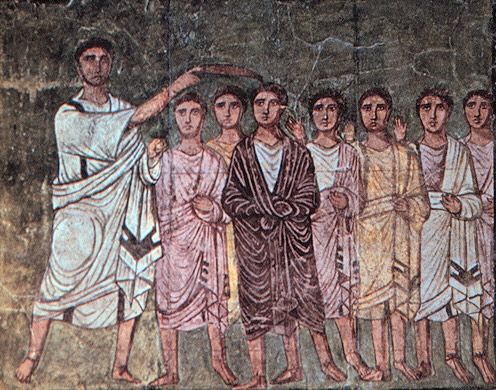
When he arrives, the tension thickens. Then Jesse’s sons begin to pass by. First comes Eliab who is tall, poised, and impressive. In many ways he is like King Saul. Samuel’s heart leaps. “This must be him,” he thinks. “Surely the Lord’s anointed is standing right here” (1 Samuel 16:6, ESV). But heaven interrupts.
“Do not look on his appearance or on the height of his stature, because I have rejected him. For the Lord sees not as man sees. Man looks at outward appearance, but the Lord looks at the heart” (1 Samuel 16:7, ESV).
This is more than a correction. God is reordering our instincts. Before we judge Samuel, let’s ask ourselves: How often do we do the same? How often do we chase charisma and ignore character? How often do we settle for charm and miss the call?
In the pulpit, in politics, in friendships and families, we are easily drawn to the surface. But God looks deeper. He always has. Proverbs 15:11 declares, “Sheol and Abaddon lie open before the Lord. How much more the hearts of the children of man!” Hebrews 4:13 adds, “No creature is hidden from his sight. All are naked and exposed to the eyes of him to whom we must give account.”
So we echo the psalmist’s plea: “Search me, O God, and know my heart” (Psalm 139:23, ESV). God does not seek perfection. He seeks surrender. Not prestige, but pliability. Not sparkle, but substance.
The church does not need more celebrities. It needs more servants. Leaders who bend the knee in prayer before they stand to lead. Men and women whose anointing is not about applause, but about obedience. When God chooses a leader, He is not looking for the one who appears strongest. He is searching for the one who is most surrendered to His will.
God Chooses the Overlooked (1 Samuel 16:8–13)
One by one, Jesse’s sons stand before the prophet. Strong. Capable. Impressive. In human terms, the lineup looks complete. Seven sons, the number of fullness, are presented. Surely one of them must be the Lord’s chosen. But heaven is not swayed by what earth puts on display. Abinadab. Shammah. Then four more. Each passes before Samuel. And each is passed over. God says no, again and again. Their strength did not qualify them. Their presence did not persuade God.
Then comes a pause. A holy silence. Samuel senses something is missing. He asks, “Are all your sons here?” (1 Samuel 16:11, ESV). Jesse answers with hesitation, almost dismissal: “There remains yet the youngest, but behold, he is keeping the sheep” (1 Samuel 16:11, ESV).
The Hebrew word for “youngest,” qatan, doesn’t just mean last-born. It carries the sense of being insignificant, unimportant. David wasn’t forgotten by accident. He was intentionally excluded. In Jesse’s eyes, David didn’t belong in the room. But God had already been at work. The pasture had been David’s training ground. The solitude had shaped a heart tuned to God’s voice.
Psalm 78 gives us some additional insights:
“He chose David his servant and took him from the sheepfolds; from following the nursing ewes he brought him to shepherd Jacob his people, Israel his inheritance” (Psalm 78:70–71, ESV).
David was never peripheral to God’s plan. He was central. Just not visible yet. And Samuel, unwilling to proceed without him, waits. When David enters, God speaks. “Arise, anoint him, for this is he” (1 Samuel 16:12, ESV). In that moment, the oil flows and the Spirit rushes upon him (1 Samuel 16:13, ESV).
Yes, Scripture notes that David was “ruddy, with beautiful eyes, and handsome” (1 Samuel 16:12, ESV), but appearance was never the point. His calling was not about how he looked, but how he listened. God chose David for his heart, not his image. This is how God works. He calls from the margins. He anoints the overlooked. Joseph from prison. Moses from exile. Esther from hiding. And ultimately, Jesus from Nazareth.
The story of David’s anointing does not only echo forward. It points directly to Christ. As G. K. Beale writes, “the anointing of David foreshadows Christ, the ultimate anointed one, whose kingship was not by worldly appearance but divine appointment” (Commentary on the New Testament Use of the Old Testament, p. 313). David was chosen because of his heart. Christ, too, came without form or majesty that we should desire Him. Yet He was filled with the Spirit, beloved of the Father, and appointed to rule forever. Even His title “Christ” literally means “the anointed one.”
David’s rise from obscurity to royalty whispers of a deeper redemption. Jesus, the true Shepherd-King, came not to seek position but to save. His path also ran through rejection and hiddenness. In Him, the fullness of God’s choosing is revealed.
So what does that mean for us? If you feel passed over, you are not alone. If you are serving in silence, God sees. The pasture is not beneath you. It is preparing you. The sheepfold is not a place of delay. It is where God forges leaders, deepens trust, and roots calling.
Faithfulness in hidden places is never wasted. Jesus Himself spent thirty years in obscurity before three years of public ministry. The hidden seasons are not the absence of calling. They are where calling matures.
Do not despise your pasture. Because when God says, “This is the one,” no rejection, no résumé, and no gatekeeper can stand in the way. And remember this: every true anointing points to Christ. He is the true King, the better David, the one who reigns not only from a throne but from a cross, and now from glory.
God Calls Before the World Recognizes (1 Samuel 16:14–23)
David has been anointed. The oil has run down his head. The Spirit of the Lord has rushed upon him with power. This should be his moment, his rise, his unveiling. But nothing happens, at least not visibly. There is no crown placed on his head. No royal robe laid on his shoulders. No public announcement or national recognition. Only a return to the pasture. The one chosen by God slips back into obscurity, unseen and unknown. As strange as it may seem, this is not without purpose. God often calls before the world is ready to notice. His anointing is real even when the platform is absent. David has not been forgotten. He is being formed.
Meanwhile, the winds shift in the palace. “Now the Spirit of the Lord departed from Saul, and a harmful spirit from the Lord tormented him” (1 Samuel 16:14, ESV). As David is rising in the shadows, Saul is unraveling under the lights. What David quietly receives, Saul tragically loses.
Tormented and desperate, Saul reaches for relief. His servants suggest music, something soothing to quiet the unrest in his soul. One advisor speaks up. He remembers a young man, not for his lineage, but for his life. “I have seen a son of Jesse… skillful in playing, a man of valor, a man of war, prudent in speech, and a man of good presence, and the Lord is with him” (1 Samuel 16:18, ESV).
David comes to the palace, not as a king, but as a musician. He enters the palace with only a harp in his hand and worship in his heart. “David took the lyre and played it… and the harmful spirit departed from Saul” (1 Samuel 16:23, ESV). Where did David learn to play the harp that brought him to the palace? He learned it in the pastures where he labored. He learned the harp to pass the time as he watched over his father’s sheep. Do you see what God is showing us? What was cultivated in the solitude of the fields now brings peace to a restless throne. The pasture was not a mistake. The quiet shepherding years were essential for God’s plan to unfold at the right time.
David’s story echoes forward. Jesus, too, was anointed in quiet. He grew up in Nazareth, far from the eyes of power. For thirty years He walked in faithfulness, hidden from acclaim. When His moment came, filled with the Spirit, He stepped into history not to conquer with force, but to redeem with love.
Gregory the Great once wrote, “The Lord often keeps in obscurity those whom He has chosen for great things, preparing them in humility before revealing them in power” (Pastoral Rule, II.6). Obscurity is not punishment. It is where God forges deep roots. It is where pride is broken and strength is born.
So if you find yourself in a hidden season, do not despise it. God sees you. You do not need a spotlight to carry His Spirit. Be faithful where you are. Serve with joy. Worship in the quiet. Trust the process. The God who anointed you in the secret place will appoint you in His perfect time.
Conclusion:
So where are you today? Maybe you are in a quiet field, doing the kind of work no one notices. There is no spotlight. No applause. Just steady obedience. And you wonder if it matters. Let me assure you, it does. And it is seen. God saw David in the field, long before anyone else did. He called him at the right moment. David did not push his way to the throne. He waited for God to open the door. And when God moved, nothing could stand in the way.
So keep going. Keep serving. The field is not a sign of failure. It is the place where God forms His servants. Obscurity is not rejection. It is preparation. Do not measure your worth by applause. Measure it by the condition of your heart before God. “For the Lord sees not as man sees… the Lord looks on the heart” (1 Samuel 16:7, ESV).
Stay faithful. Stay ready. God sees. God knows. And God is not finished with you.
CLICK HERE FOR DAILY DEVOTIONALS TO ACCOMPANY THIS MESSAGE
Works Cited:
The Bible. English Standard Version, Crossway, 2016.
Beale, G. K., and D. A. Carson, editors. Commentary on the New Testament Use of the Old Testament. Baker Academic, 2007.
Gregory the Great. Pastoral Rule. Translated by G. Demacopoulos, St. Vladimir’s Seminary Press, 2007.
Works Consulted:
Simonetti, Manlio, editor. 1–2 Samuel, 1–2 Kings, 1–2 Chronicles. Ancient Christian Commentary on Scripture: Old Testament Vol. 4. InterVarsity Press, 2001.
Firth, David G., and Paul R. House, editors. 1 Samuel, 2 Samuel. Reformation Commentary on Scripture: Old Testament VII. IVP Academic, 2020.
Tatum, W. Brian. 1 Samuel. Word Biblical Commentary, Vol. 10. Thomas Nelson, 2008.
 hardincrowder.com