The Healing Begins At Home
There are few places more personal than our homes. This is where life unfolds. The home is where we eat, rest, laugh, argue, pray, and carry our burdens. It is where we are most ourselves. When someone is coming over, we usually take a moment to straighten things up. Not just to make things look nice, but because we know our home tells a story. It reflects our routines, our values, and the people we hold close.
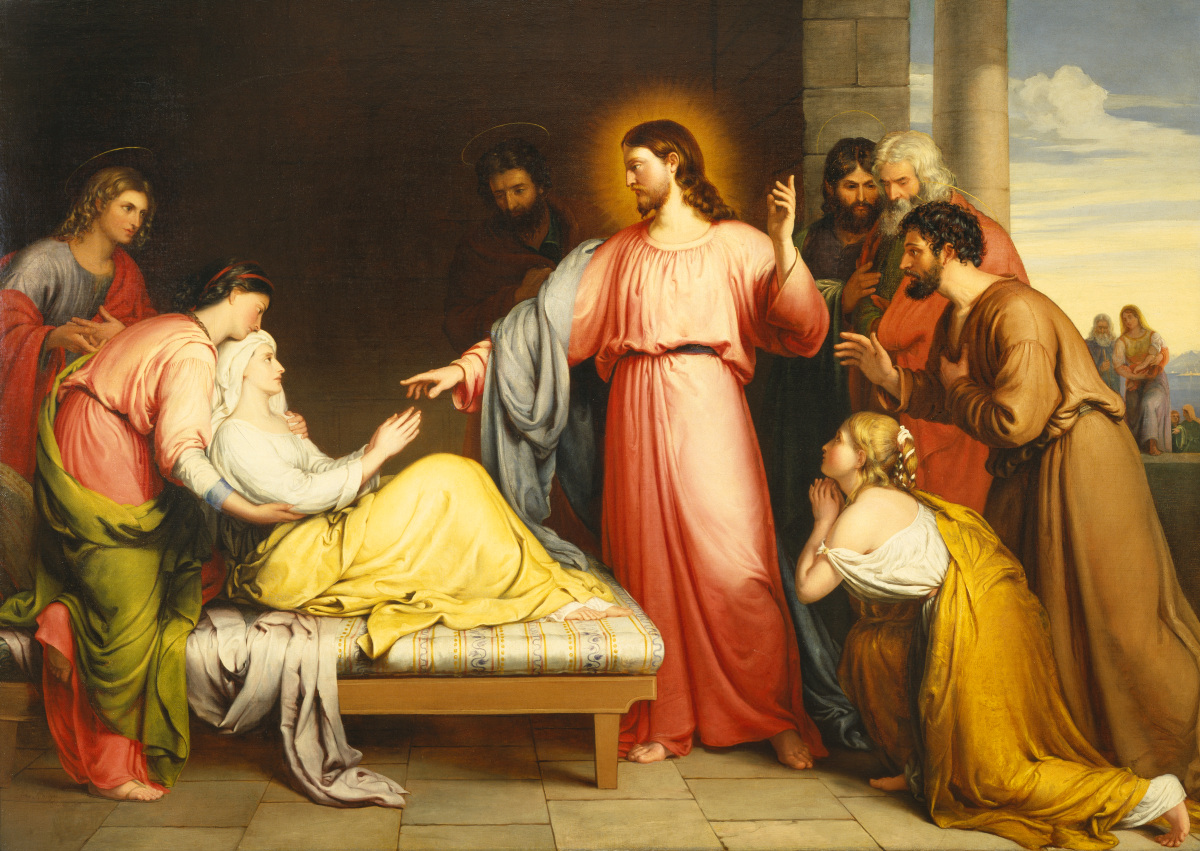
And it is into this deeply personal space that Jesus steps. After speaking with power in the synagogue, He does something surprisingly ordinary. He walks into Peter’s house. He moves from the public place of worship to the private space of daily life.
“And immediately he left the synagogue and entered the house of Simon and Andrew, with James and John.” (Mark 1:29)
This is more theological than we might imagine at first glance. Here we see that Jesus is not limited to religious buildings or sacred ceremonies. He does not wait for you to come find Him in the sanctuary. He walks right into the kitchen. He pulls up a chair at the table. He steps into the places that feel too small, too messy, or too mundane to matter. He brings holiness into the everyday.
In fact, the early Church deeply understood the home as a sacred space. Before basilicas rose in Roman cities, believers met in homes, breaking bread and sharing the gospel in the most personal of settings. The household was the early Church’s first sanctuary. It was a place of community, worship, and witness. When Jesus stepped into Peter’s home, He affirmed this truth: the divine does not wait for ornate spaces. He sanctifies kitchens, bedrooms, and living rooms by His presence. Wherever Christ is welcome, that place becomes holy ground.
Inside the house, Peter’s mother-in-law lies in bed with a fever. Today, that might not seem like a crisis. But in the ancient world, a fever could be a death sentence. She is not just unwell; she is helpless. She cannot rise. She cannot even cry out for help. Yet Jesus comes anyway.
Matthew tells us that Jesus does not wait to be asked. He sees her and moves toward her. Luke adds that the fever was “great,” suggesting it was severe and oppressive. Still, Jesus does not require an invitation. He responds not to a request but to the reality of her suffering. His compassion moves Him into action.
“And he came and took her by the hand and lifted her up, and the fever left her, and she began to serve them.” (Mark 1:31)
He takes her hand. That simple act is significant. In that time, religious leaders would avoid the sick to stay ritually clean. But Jesus is not afraid of her illness. He moves toward it. His touch does not make Him unclean, by contrast he makes her clean and transforms her sickness into health.
This tender touch reveals both the compassion of Christ and the theological mystery of the Incarnation. Jesus is not merely acting in divine power from afar. He is the God-Man whose human hand communicates divine mercy. The doctrine of the personal union means that in Christ’s touch, the fullness of God meets human frailty. It is in His fully human, fully divine person that healing is not only possible, it is deeply personal.
Every act of Christ, including something as seemingly simple as taking a hand, is a theandric act: one that is fully human and fully divine. This means that when Jesus reaches out, He is not just touching in compassion; He is revealing the heart of God. In the Incarnation, His human touch becomes an act of divine mercy. The same hand that shaped galaxies now lifts a fevered woman from her bed.
Ultimately, every healing by Jesus is a sign that the kingdom of God has broken into the present age. Peter’s mother-in-law rising from her bed is a small glimpse of resurrection life, a foretaste of what the new creation will look like when sickness and death are no more. Her restored strength and immediate service mirror the vocation all believers will fulfill in the kingdom: to worship and work in wholeness before God.
And she does not just feel a little better. She rises. Fully. Immediately. And what does she do? She begins to serve. Her first instinct is not to savor her healing in private. It is to use her strength for others. Her healing leads directly to purpose. Her restoration becomes an act of worship.
That is what Jesus does. He steps into our everyday lives, sometimes without invitation, and meets us in our mess. He does not just bring comfort. He brings calling. He lifts us up so we can walk in new purpose. He heals not just to ease our pain but to send us into meaningful service.
He comes near. He brings life. And He invites us to rise and follow.
The Healing Spreads Throughout the City
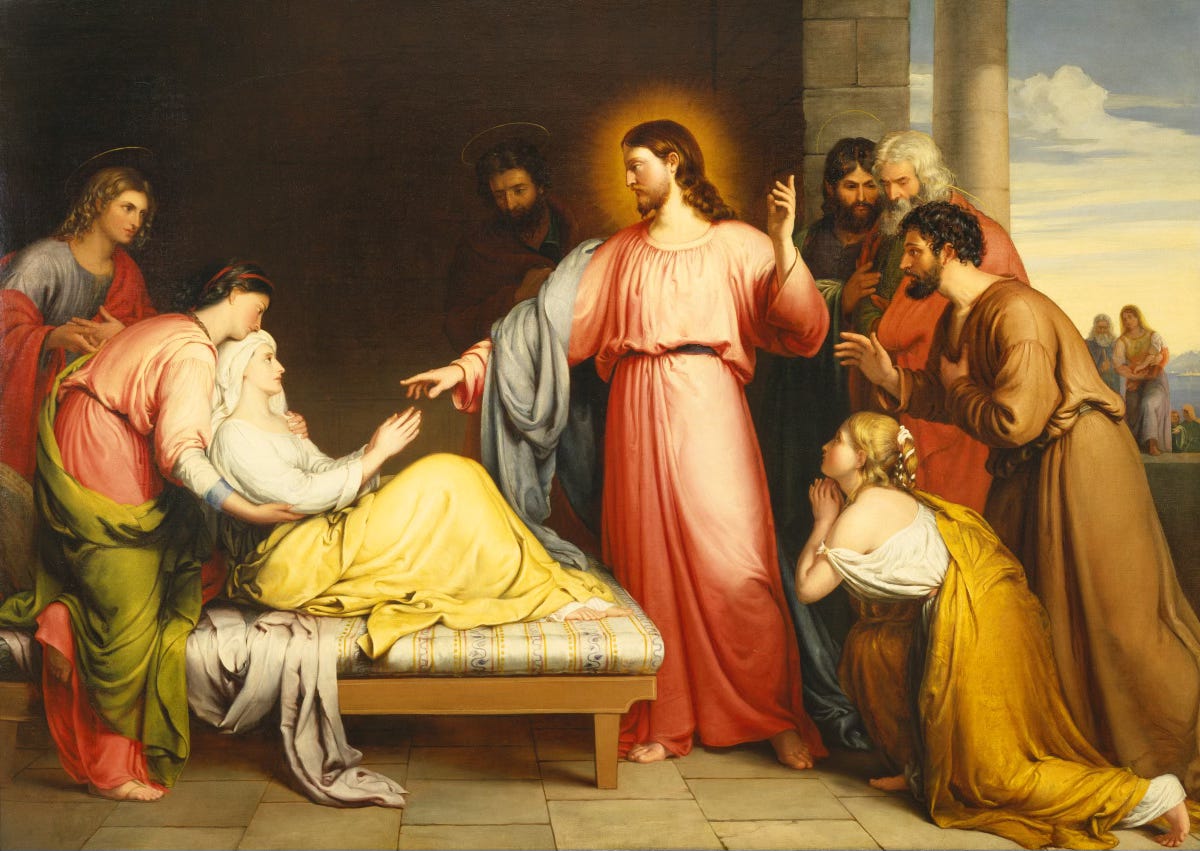
As the Sabbath draws to a close and the first stars appear over Capernaum, the quiet begins to lift. Word has spread quickly. The one who taught with authority in the synagogue has also healed a woman in her own home. People are beginning to understand. He is not distant. He is near.
“That evening at sundown they brought to him all who were sick or oppressed by demons.” (Mark 1:32)
The timing is significant. According to Jewish tradition, the Sabbath ended at sundown. Until that moment, carrying burdens (including carrying the sick) was not permitted. So the people waited. And when the sun finally dipped below the horizon, their hope found its feet. Households gathered what strength they had. Loved ones carried the weak. Neighbors guided the blind. Friends came alongside the broken. A regular home, an ordinary threshold, became sacred space. Jesus did not hide behind doors. He did not say, “Come back tomorrow, I need to rest.” He stood in the doorway and welcomed every need that came to Him.
The word Mark uses for “brought” is in the imperfect tense. It tells us they kept bringing people. Again and again. And Jesus kept receiving them. Again and again. The line never seemed to end, and neither did His compassion. Simon’s house became a sanctuary where grace kept flowing.
“And the whole city was gathered together at the door.” (Mark 1:33)
That phrase is striking. The whole city. This speaks to the depth of desperation and longing among the people. The door became a place where public pain met personal mercy. This foreshadows what the Church would become. In its early centuries, Christians were known not just for preaching but for healing, physically and spiritually. The Church became, in the words of early theologians, a “field hospital for sinners.” From that Capernaum doorstep to the rise of Christian hospitals in the fourth century, believers saw healing as an extension of ministry. Just as Simon’s home became a sanctuary, so the Church has long been a place where the weary are carried and where suffering meets compassion.
Jesus met people where they lived, where they suffered, where they waited for help.
“And he healed many who were sick with various diseases, and cast out many demons.” (Mark 1:34)
Matthew’s account adds an important detail. He healed all who were sick. There were no restrictions. No one was turned away. No illness was too small. No oppression was too dark. Whether the burden was physical or spiritual, Jesus met it with complete authority.
This was not a healer who specialized in one kind of affliction. This was the Redeemer, overflowing with mercy. His power did not falter. His love did not thin out. No one was overlooked. No one was beyond His reach.
But then comes a curious detail.
“And he would not permit the demons to speak, because they knew him.” (Mark 1:34b)
This may seem odd at first glance. Why would Jesus silence those who spoke the truth? Why would He stop a public declaration of His identity? Because Jesus does not need truth from twisted sources. The demons may have known who He was, but their voices were not welcome. Their knowledge was mixed with deceit. Their words could not be trusted to lead others into genuine faith.
Jesus chooses when and how He will be revealed. He wants hearts drawn to Him in trust, not in terror. He desires followers who respond in love, not curiosity or fear. This moment reminds us of something important. Not every miracle is meant for public spectacle. Some of Jesus’ greatest works happen quietly. His authority is not flashy. It is firm and faithful. He is more than a healer who answers when called. He is the Redeemer who invites us to surrender.
Jesus does not come to impress. He comes to save. He is not a healer on demand. He is the Holy One who commands our trust and offers us eternal mercy.
Jesus Heals to Reveal the Cross
After watching Jesus step into a home and bring healing to one woman, and then seeing Him welcome a whole city of hurting people, we are invited to take a step back and ask a deeper question. What does all this mean? These are not just impressive moments. They are glimpses of something greater. Each act of healing is part of a bigger story. It is not just about making people feel better. It is about showing us who Jesus is and what He came to do. Let us look at Matthew’s record of these events:
“He touched her hand, and the fever left her, and she rose and began to serve him.” (Matthew 8:15)
We have seen this healing before, but Matthew gives us a detail worth noticing. While Mark says she served them, Matthew says she served Him. That small difference carries a big message. Her healing did not just restore her health. It redirected her life. She got up and gave herself to Jesus. Her gratitude turned into worship. Her recovery became her response.
That is what true healing looks like. It moves us from being helped to being sent. It shifts our focus from comfort to calling. When Jesus touches your life, He does more than fix what is broken. He gives you a new reason to live. You are not just healed for your own sake. You are healed so you can serve.
But Matthew does not stop there. He points us beyond that house and invites us to look at the crowd that came later that evening.
“That evening they brought to him many who were oppressed by demons, and he cast out the spirits with a word and healed all who were sick.” (Matthew 8:16)
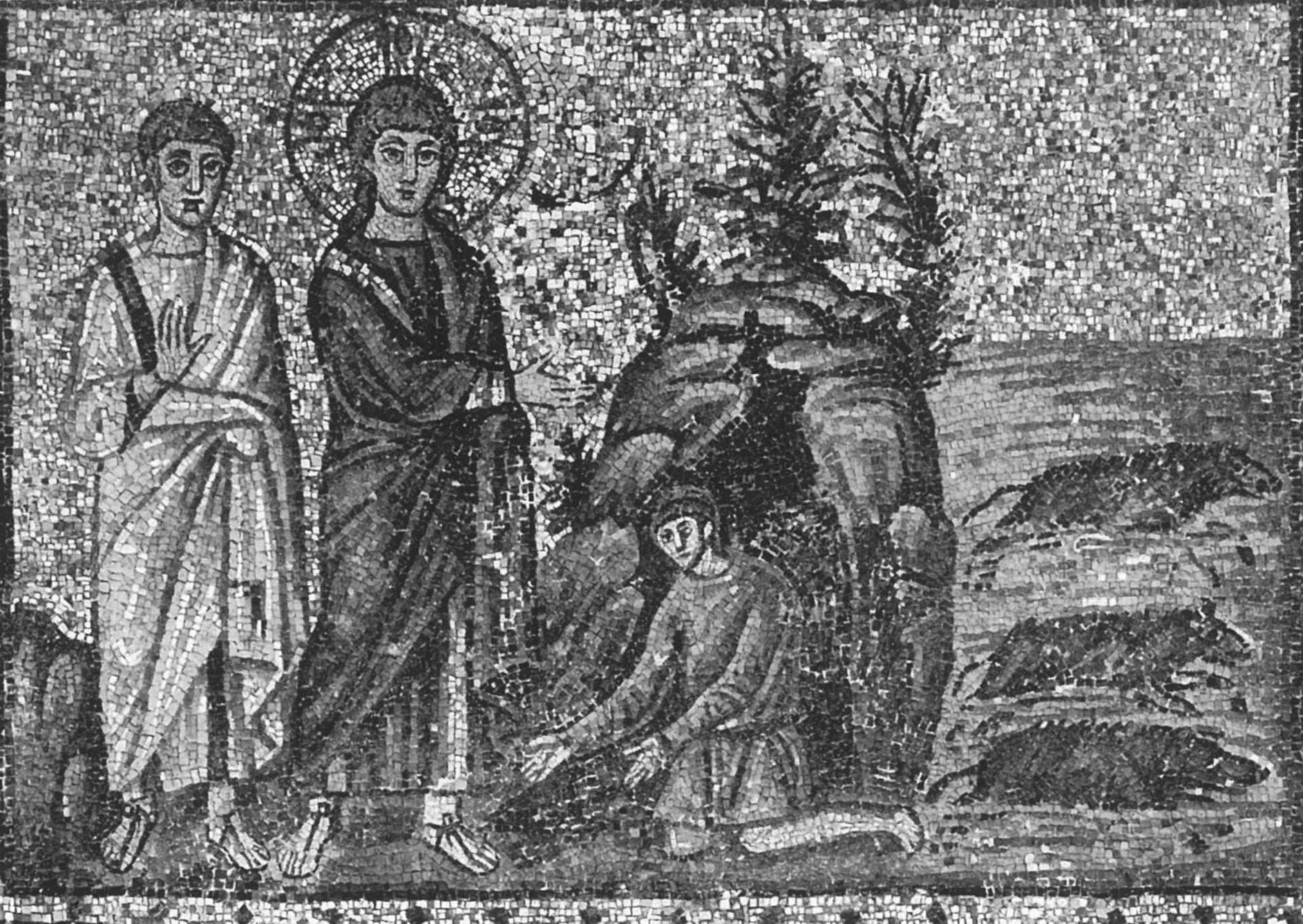
In Christ, every healing was more than an act of kindness. It was a glimpse of God’s heart. The reference to Isaiah 53 in Matthew’s Gospel is theologically rich. Jesus’ healing ministry fulfills the prophecy not just by relieving symptoms but by bearing the entire burden of the fall. Jesus’ actions are a signpost to the suffering servant of Isaiah, one who would carry both our diseases and the full curse of sin itself. In every healing, we see both divine compassion and also substitutionary intention, the cross is already in view.
And then Matthew connects it all to something even deeper.
“This was to fulfill what was spoken by the prophet Isaiah: ‘He took our illnesses and bore our diseases.'” (Matthew 8:17)
With that one verse, Matthew helps us see what is really going on. These miracles are not just about immediate needs. They are fulfillments of prophecy.
In the view of the early Christians, every healing pointed not just to physical restoration but to the deeper reality of the kingdom. Church historian Justo González notes that the first believers saw Jesus’ miracles as signs that the reign of God had already begun breaking into the present age. These weren’t isolated acts of kindness; they were previews of a new creation. Every fever driven out, every demon silenced, was a down payment on the redemption of all things.
Jesus is not just a healer. He is the suffering servant Isaiah described. He does not simply relieve pain. He takes it upon Himself. He does not avoid the burden. He carries it.
These healings point to the cross. They are signs of the greater healing to come. Jesus does not just deal with outward symptoms. He goes to the root. He steps into our pain. He takes on our sickness. He absorbs the curse of sin.
This is the heart of the gospel. We are all sick in a deeper way. Sin is the affliction that weighs us down and separates us from God. And Jesus came not to make life easier but to bring lasting healing. He came to carry what we could not carry. He came to take our place, to bear the judgment we deserved, and to offer us new life through His death and resurrection.
The cross is where the healing happens. That is where the divine Physician becomes the wounded Healer. That is where love bears the full cost of mercy.
So the question for us is this: are we only coming to Jesus for short-term relief, or are we receiving the gift of eternal restoration? Are we content to enjoy what He gives, or are we surrendering our lives to the One who gave Himself for us?
The gospel does not promise a life free from pain; it promises a heart redeemed by grace. Jesus came not merely to assist us in hardship, but to rescue us for eternity. Through His Church, the body of Christ, He continues to bring healing to a hurting world. As Simon’s house once became a sanctuary, so now the gathered Church and individual believers become sacred spaces where divine mercy intersects with human need. The Church both proclaims Christ and incarnates His compassion. Our homes, our tables, and our lives become altars of welcome, where the weary find rest and the broken find restoration.
Works Consulted:
Davies, W. D., and Dale C. Allison Jr. Matthew 8–18. Vol. 2 of A Critical and Exegetical Commentary on the Gospel According to Saint Matthew. Word Biblical Commentary 2. Dallas: Word Books, 1991.
Marcus, Joel. Mark 1–8. Vol. 1 of A Critical and Exegetical Commentary on the Gospel According to Mark. Word Biblical Commentary 34A. Grand Rapids: Zondervan, 2000.
Evans, Craig A. Luke. Vol. 1 of A Commentary on the Gospel of Luke. Word Biblical Commentary 35A. Nashville: Thomas Nelson, 1990.
 hardincrowder.com