Introduction:
Have you ever watched a professional athlete dominate a game and wondered, “How do they do that?” It could be a quarterback completing every pass, or a marathon runner crossing the finish line with energy to spare. From the outside, it looks easy, but we know it’s not. It takes hours of training, early mornings, repetition, and discipline, especially when nobody’s watching.
I once heard a story about a world-class concert pianist. After an impressive performance, someone approached him, visibly amazed, and said, “I’d give anything to play like you.” The pianist smiled and replied, “No, you wouldn’t.” This response surprised the man, but the pianist continued to explain. What the man really meant was, “I wish I could perform like you without having to go through everything it took to get there.” This admirer was not thinking about the long nights, the constant practice, and the countless sacrifices that the pianist made to play at this level.
It’s the same in our walk with God. We admire the visible moments of ministry: the impact, the service, the inspiring stories. However, real spiritual strength starts in the hidden places. That’s where Jesus began. That’s where the power behind His mission was formed. If we want to follow Him in public, we first need to meet Him in private.
The Power Behind the Mission
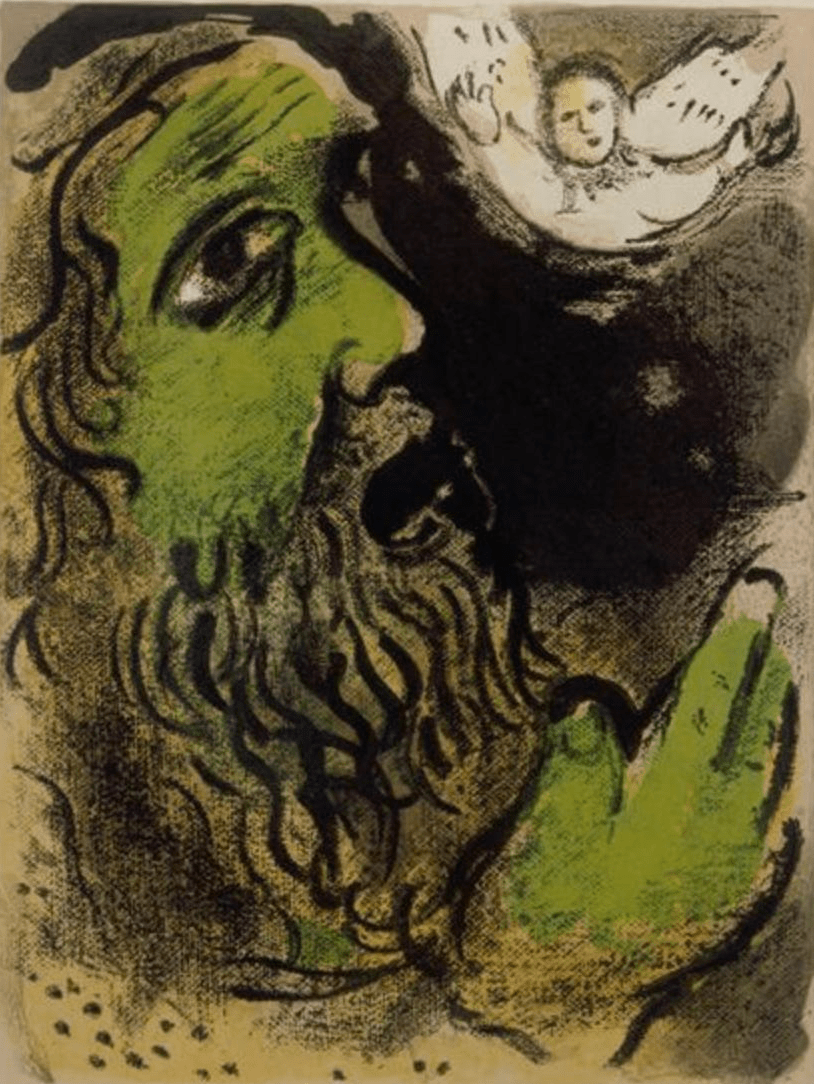
Let’s take a moment to picture the scene. It’s still dark outside. The town of Capernaum is quiet. The streets are empty, the fires from last night have cooled, and everyone is still fast asleep. But Jesus is already awake. He gets up early, slips out of the house, and heads for a place where he can be alone.
Mark tells us, “And rising very early in the morning, while it was still dark, he departed and went out to a desolate place, and there he prayed” (Mark 1:35, ESV).
Now, think about that for a second. The day before had been packed. Jesus taught in the synagogue, healed Peter’s mother-in-law, and then ministered to a massive crowd outside the door that evening. The entire town showed up, bringing people who were sick and suffering, and Jesus poured himself out to serve them.
So if anyone deserved to sleep in the next morning, it was him. But he doesn’t. Instead, he wakes up before the sun even rises and goes off to be alone with the Father.
That simple line, “while it was still dark,” says a lot. Before the busyness of the day, before the crowd shows up again, Jesus makes time for prayer. He knew what was coming. He knew people would have needs. But he also knew that his first need was to be with his Father.
And notice where he goes. Mark says it was a “desolate place.” In other words, a quiet, out-of-the-way spot where he could be still. Not just to escape people, but to connect with God. It wasn’t about isolation as much as it was about intimacy. He was making room for quiet, undistracted time with the Father.
In the past, whenever I’ve taught about Jesus taking time to go off alone and pray, I used to say things like, “Even Jesus needed to take breaks and spend time alone with the Father.” And while that idea isn’t completely off-base, I’ve come to realize that those quiet moments were about so much more than just spiritual refreshment.
Through my studies on prayer, I’ve started to really understand that Jesus’ prayer life was vital for His obedience and a way to align with what the Father wanted each day. I no longer see that quiet time in solitary prayer as merely a nice spiritual practice to follow. I now see it as a fundamental part of being a faithful Christian. That rhythm of stepping away to pray isn’t a timeout from the mission. If anything, it is an essential part of the mission.
And honestly, that’s something all of us need. It’s so easy to start our days with the noise, the news, the notifications. But Jesus shows us a better way. Before we speak to others, we speak to God. Before we serve, we sit. Before we act, we align our hearts with his. If Jesus, the Son of God, made time to be alone with the Father, how much more should we?
But because this is Jesus, there’s even more going on under the surface. When Jesus prays, particularly in moments of solitude, we are not merely witnessing a devout human engaging in religious practice. Because Jesus is both fully God and fully man, his prayers reveal the eternal communion between the Son and the Father, in the power of the Spirit, brought into the realm of time and space. Jesus’ prayer life is not simply a pattern for believers to imitate, but a manifestation of the eternal inner life of the Trinity. The incarnation does not sever the Son’s communion with the Father and the Spirit. Instead, it allows that communion to be expressed and perceived within the temporal world (Sanders, The Triune God, 147–149).
In this way, Jesus’ prayers are not a departure from his divine nature. Instead, they reveal what has always been true of him. He is the Son who eternally lives in fellowship with the Father and the Spirit. Through his incarnate life, especially his moments of prayer, Jesus reveals the relational reality of the Triune Godhead. The same Son who prays on the mountain is the eternal Son of the Father, praying in the Spirit, now within human history and in the form of a servant (Sanders, 149).
The Temptation to Stay
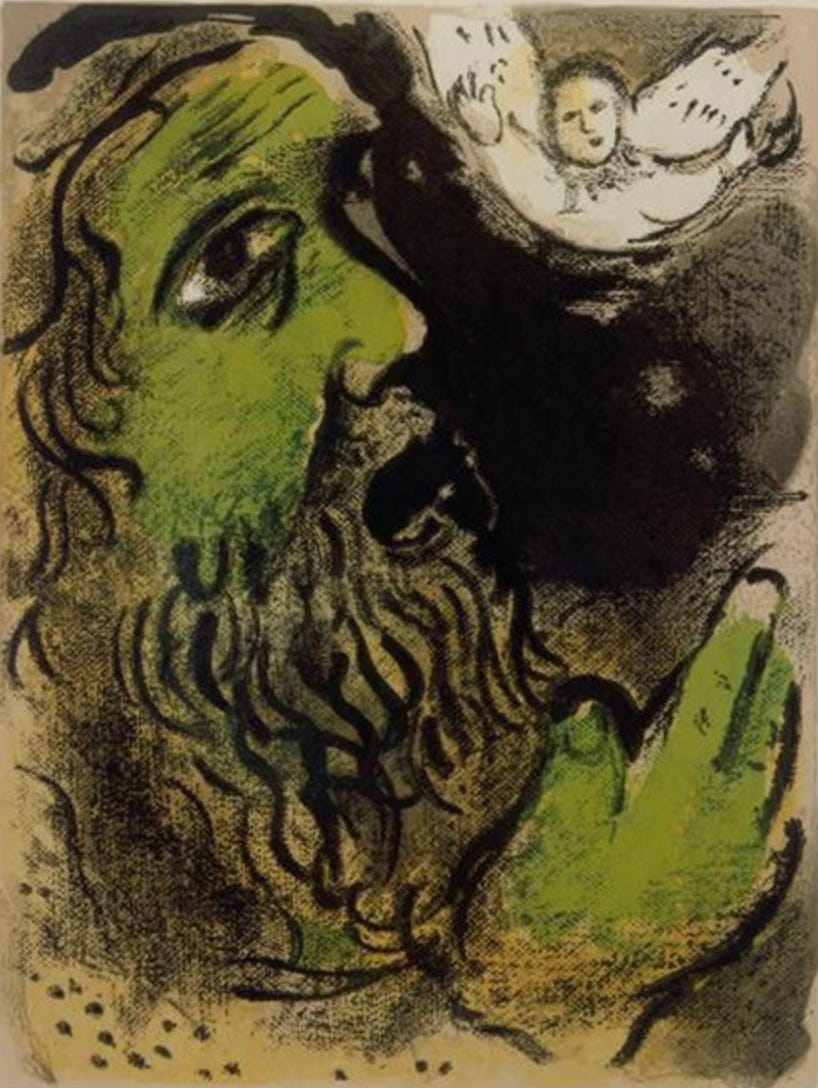
And right in the middle of this sacred moment, Simon and the others come looking for him. Mark tells us they “searched for him.” That phrase carries urgency. They weren’t just casually wandering around. They were trying to track him down. And when they find him, they say, “Everyone is looking for you” (Mark 1:37).
You can almost hear the tone in their voice. “Jesus, what are you doing out here? People are waiting. You’ve got a crowd back in town. You’re needed.”
This is a significant moment. The ministry in Capernaum wasn’t struggling. It was flourishing. From a strategic standpoint, everything pointed to staying. Set up base. Build the movement. Expand the platform. But Jesus surprises them.
He replies, “Let us go on to the next towns, that I may preach there also, for that is why I came out” (Mark 1:38). Luke adds more detail: “The people sought him and came to him, and would have kept him from leaving, but he said to them, ‘I must preach the good news of the kingdom of God to the other towns also, for I was sent for this purpose’” (Luke 4:42–43).
Let that sink in. Jesus walks away from success. He resists the temptation to stay not out of rejection or frustration, but out of divine conviction. His mission wasn’t to anchor in one place. It was to go. To proclaim. To reach those still waiting. Jesus’ words, “I must,” reveal divine necessity. He was not driven by whims or needs. He was sent. His every move flowed from the Father’s will.
That’s hard for us. We often equate God’s will with comfort, consistency, and applause. But Jesus shows us otherwise. Sometimes, the greatest enemy of our calling isn’t failure. It’s comfort. Jesus did not confuse popularity with purpose. He refused to trade the breadth of the kingdom for the security of a crowd.
How did He remain so clear-minded? How did He resist the pressure to conform or become complacent? The answer lies in what He was doing before the crowd arrived: He was praying. In that quiet space, He heard the still voice that urged Him to “Keep going.”
This has significant implications for us. Faithfulness is not about settling down; it’s about following. Following Jesus requires movement, which is discerned through prayer and empowered by firm conviction.
Mark 1:39 concludes the scene: “And he went throughout all Galilee, preaching in their synagogues and casting out demons.” Jesus kept going. He didn’t explain himself. He didn’t defend his decision. He simply obeyed.
So here’s the real question: What’s fueling your direction? Are your choices guided by the expectations of others, or by time spent with the Father? Because Jesus didn’t start His day with people. He started it with God. And that one decision shaped everything that followed.
The Gospel That Goes Everywhere
We’ve seen Jesus in a quiet place, early in the morning, praying alone. And now, as we follow him from solitude into the streets, we see what happens when a life rooted in communion with God begins to overflow.
Matthew gives us a snapshot of this in Matthew 4:23: “And he went throughout all Galilee, teaching in their synagogues and proclaiming the gospel of the kingdom and healing every disease and every affliction among the people.”
First, notice the movement. Jesus moved intentionally, “throughout all Galilee.” That detail matters. Galilee was a large and diverse region, filled with Jewish towns, Gentile communities, rural villages, and trade cities. It wasn’t a religious center like Jerusalem. It was mixed, messy, and often overlooked. And yet, that’s where Jesus spends much of His earthly ministry. Jesus doesn’t just go where he’ll be celebrated. He goes where people are hurting, hungry, and forgotten. His kingdom starts not in temples of power, but in places of need.
And when He enters these communities, Matthew says he “taught in their synagogues.” As we’ve seen in previous weeks, the synagogue wasn’t just a place of worship. It was the heartbeat of Jewish community life. It was where people gathered to learn, debate, pray, and process life together. This approach became a model for Paul and the early Church as well: “Paul’s first missionary strategy was to go to the synagogue… [where] he found not only a place where he could be heard, but also a group of Gentiles who were already interested in Judaism” (The Story of Christianity, Vol. 1, p. 41).
But Jesus didn’t stop at teaching. Matthew says he was “proclaiming the gospel of the kingdom.” This was a bold, clear declaration: that the reign of God had come. That God’s justice, healing, truth, and mercy were no longer distant hopes; they were breaking in, here and now, in the person of Jesus.
We should remember that the kingdom is revealed not only in what Jesus said but in what he did. As Dr. Michael Horton notes, ministry “occurs through both the announcement and demonstration of God’s reign… The miracles were not just proof texts of divinity but signs of the restoration that the kingdom brings” (Pilgrim Theology, pp. 318–319). In other words, the gospel wasn’t just heard in Jesus’ words. It was seen in His actions and in His person.
Which brings us to the final piece of this verse: healing.
Matthew says Jesus healed “every disease and every affliction among the people.” Jesus didn’t just touch the visible or the obvious. He addressed the full range of human suffering: physical illness, mental torment, spiritual oppression, chronic conditions, and social isolation. He saw people’s pain and moved toward it, not away from it.
Dr. Thomas Schreiner puts it like this: “Jesus’ miracles are eschatological signs of the kingdom’s arrival. They point to the reversal of the curse, the undoing of brokenness, and the restoration of creation under God’s reign” (Faith Alone, p. 126). Every healing was more than a mercy; it was also a message. The kingdom of heaven was no longer a future idea. It had arrived, and it brought wholeness.
And as you’d expect, people noticed.
Matthew tells us, “So his fame spread throughout all Syria, and they brought him all the sick…” (v. 24). The ripple effect of Jesus’ ministry extended far beyond Galilee. It reached Syria, which was Gentile territory with different languages, customs, and cultures. But the news still spread. Why? Because people were desperate for real hope, and they had heard about a man who healed everything.
The crowd that came wasn’t uniform. It included people with chronic pain, mental illness, spiritual torment, physical disabilities, and all kinds of affliction. And Matthew tells us simply, “He healed them.” No qualifiers. No filters. He didn’t ask for credentials. He didn’t only respond to religious insiders. He welcomed all who came.
This is what it looks like when the gospel moves. It doesn’t stay in one place. It doesn’t stay in theory. It moves toward pain. It steps into suffering. It speaks truth and brings healing—body and soul.
And the result? Crowds began to follow.
Matthew writes, “Great crowds followed him from Galilee and the Decapolis, and from Jerusalem and Judea, and from beyond the Jordan” (v. 25). This list is stunning. It stretches from the rural regions of Galilee to the Roman-influenced cities of the Decapolis, from the religious epicenter in Jerusalem to the borderlands beyond the Jordan. It’s a diverse, boundary-crossing gathering of people from every kind of background. And they all came, not for a show, but for a Savior.
So what does this mean for us?
First, the gospel is meant to move. It doesn’t stay confined to quiet times or church buildings. It moves through neighborhoods, cities, workplaces, and cultures. Jesus didn’t wait for people to come to him. He brought the good news to them. If we follow him, we don’t wait for the hurting to find us; we go to them.
Second, ministry is both word and action. Jesus taught and healed. He proclaimed and restored. The gospel is not just spoken, it’s embodied. We’re called to reflect that same kind of holistic love, addressing both the spiritual and physical needs around us. As the early Church did, our witness should be seen as much as heard.
Third, the kingdom is for all people. Jesus crossed boundaries. So must we. The gospel tears down dividing walls: ethnic, cultural, economic, or religious. No one is too far, too broken, or too different. The kingdom reaches across every border and extends open arms to all who come.
Conclusion:
As we wrap up tonight, let’s take a step back and remember where we’ve been. We started in the quiet. Before the sun was up, before the crowds came knocking, Jesus slipped away to be with the Father. That wasn’t just a nice morning routine. It was the power behind the mission. Prayer wasn’t a pause; it was preparation. And if Jesus needed that space, how much more do we?
Then we saw what happened when the noise returned. Everyone was looking for Jesus, pulling at Him, expecting Him to stay. But Jesus didn’t stay. He said, “Let’s go.” He chose calling over comfort. He didn’t let success anchor Him. He moved forward because He knew why He was sent.
And finally, we followed Him into the streets. He didn’t just talk about the kingdom. He brought it. Teaching, healing, crossing boundaries, drawing people from everywhere. The gospel didn’t stay quiet. It moved. And it still does.
So here’s the question we’ve got to ask ourselves tonight: What’s shaping our direction? Are we starting with the Father or just starting with our phones? Are we staying where it’s comfortable or going where we’re called? Are we waiting for people to show up or bringing good news to them? Jesus shows us a rhythm. Solitude that leads to movement. Prayer that leads to purpose. That same rhythm is open to us.
This Blessed Plot is a reader-supported publication. To receive new posts and support my work, consider becoming a free or paid subscriber.
Works Cited:
Barrett, Matthew. The Reformation as Renewal: Retrieving the One, Holy, Catholic, and Apostolic Church. Grand Rapids: Zondervan Academic, 2023.
González, Justo L. The Story of Christianity, Volume 1: The Early Church to the Dawn of the Reformation. Revised and updated ed. New York: HarperOne, 2010.
Horton, Michael. Pilgrim Theology: Core Doctrines for Christian Disciples. Grand Rapids: Zondervan, 2013.
Sanders, Fred. The Triune God. Grand Rapids: Zondervan Academic, 2016.
Schreiner, Thomas R. Faith Alone: The Doctrine of Justification. Grand Rapids: Zondervan, 2015.
The Holy Bible, English Standard Version. Wheaton, IL: Crossway Bibles, 2016.
 hardincrowder.com