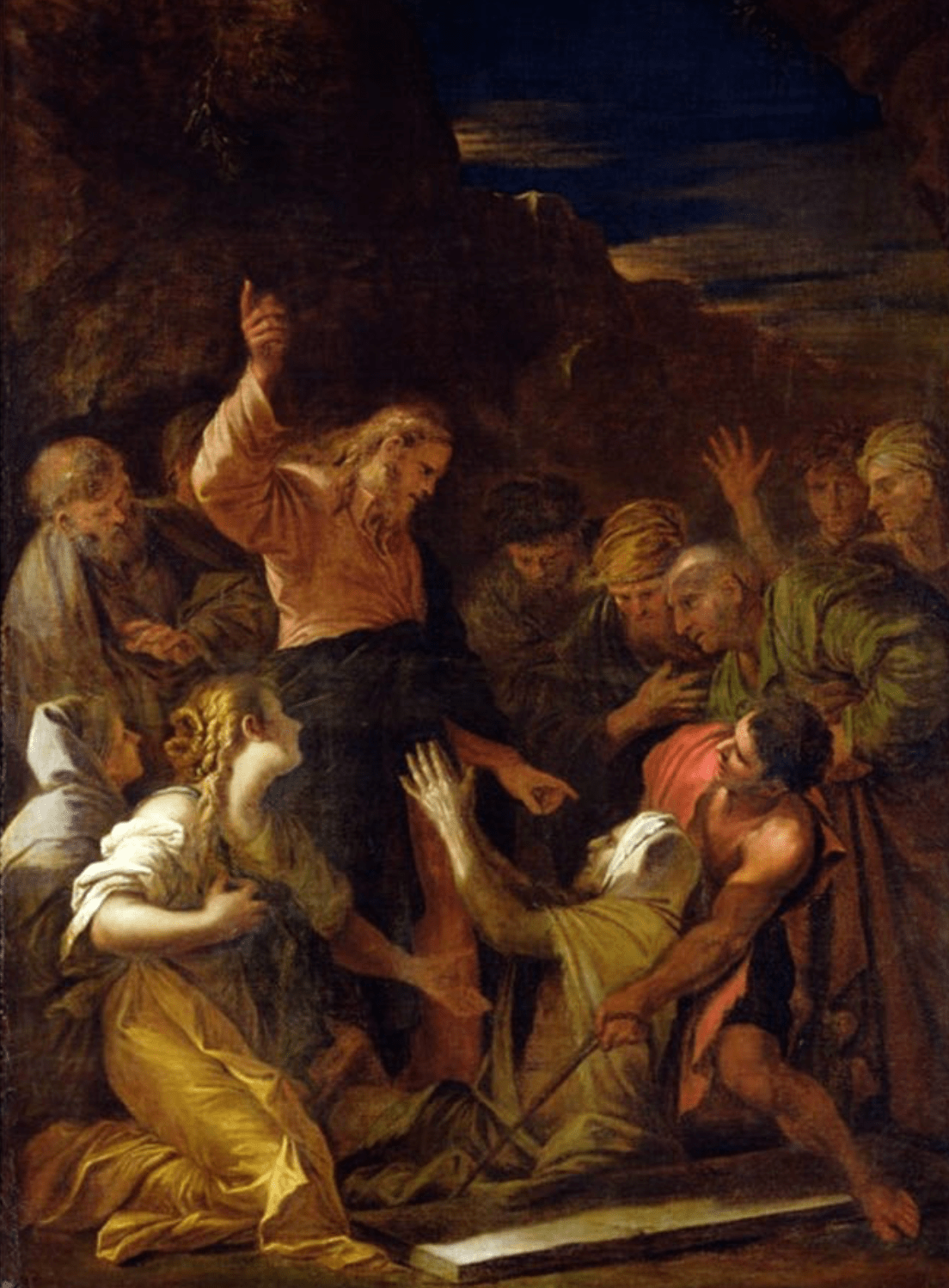
The Boldness of Desperate Faith
This evening, we’re looking at two different encounters with Jesus. Both involve men who were seriously ill. Both men had conditions that isolated them from society. Both were beyond medical help. If they were going to be healed, it would have to come through a miracle. And both found their way to Jesus, one way or another. One man came on his own, even though society said he had no business being near anyone, much less a holy teacher. The other couldn’t move at all, so his friends carried him.
Luke introduces us to the first man. He says the man was “full of leprosy” (Luke 5:12, ESV). His disease had consumed him. And in that world, leprosy wasn’t just a skin condition. It was a death sentence for your social and spiritual life. Lepers were pushed out of their homes, excluded from temple worship, and forced to live outside the city. But that wasn’t all. If anyone came close to a leper, the leper had to call out a warning, “Unclean! Unclean!” like a walking siren reminding everyone, “Stay away from me.”
Can you imagine that kind of life? Years without a hug. No handshake. No gentle hand on your shoulder when you’re struggling. And then, one day, he sees Jesus. Luke tells us the man “fell on his face and begged him, ‘Lord, if you will, you can make me clean’” (Luke 5:12, ESV). He doesn’t say, “Heal me.” He says, “Make me clean.” That word, “clean” had a deep meaning. To be clean meant more than just healing. It meant he could go home again, he could worship again, and be part of society again. This wasn’t just about his body. It was about his whole identity. And listen to his words: “If you will…” That’s where many of us find ourselves. We don’t question God’s ability. We know He can. We just wonder if He will. But like this man, we always come and bow before the Lord with our requests.
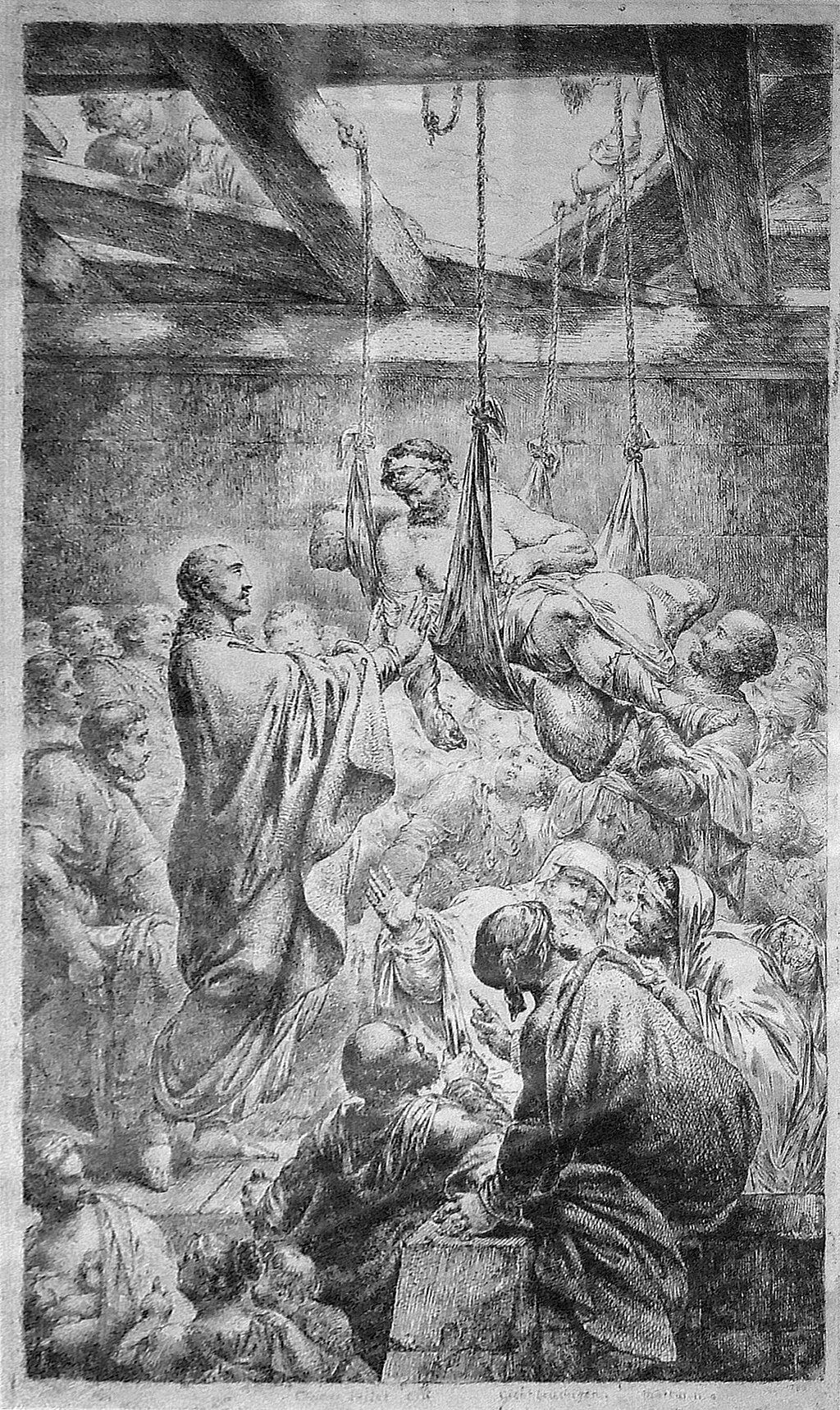
Then, in Mark chapter 2, we meet another man. He’s also sick, but in a different way. He’s paralyzed. And he can’t get to Jesus by himself. But he has friends who love him enough not to let that stop them. They each grab a corner of his mat and carry him. When they get to the house where Jesus is, the place is packed. There’s no room to get in.
Now, this is where most people would turn back, but they are determined. They climb onto the roof, start pulling apart the tiles and clay, and make an opening. Then they lower their friend down into the room, right in front of Jesus.
Mark tells us, “When Jesus saw their faith, he said to the paralytic, ‘Son, your sins are forgiven’” (Mark 2:5, ESV). Notice it wasn’t just the paralytic’s faith that Jesus saw. It was “their faith.” The whole group.
That’s what faith can look like. Sometimes it means taking a risk and stepping out on your own. Sometimes it means being carried by the people around you when you’re too tired, too hurt, or too stuck to move.
In the end, both men reached Jesus. One with his own courage. The other through the strength of his friends. But both of them ended up in the right place, face to face with the one who could make them whole.
The Compassionate King Brings Healing
We’ve just seen what desperate faith looks like. A man full of leprosy, willing to fall on his face in front of a crowd, and friends climbing a roof and tearing it open to get their paralyzed companion to Jesus. But now we come to something even more beautiful. When we come with bold faith we find a compassionate King.
Mark tells us something powerful: “Moved with pity, Jesus stretched out his hand and touched him and said, ‘I will; be clean’” (Mark 1:41). That word for “pity” in the original language is not a shallow kind of sympathy. It is gut-deep compassion. His response came from the deepest part of who He was. Some ancient manuscripts even say that Jesus was moved with anger. Not at the man, of course. But at the brokenness itself. At the disfigurement of God’s good creation.
But as moving as His emotion is, what comes next is even more stunning. Jesus touches the leper. That one gesture would have shocked the crowd. You simply did not touch a leper. Everyone knew that. To touch a leper was to risk becoming unclean yourself. It was to invite suspicion and rejection. It was to cross a boundary that society had reinforced for centuries. You avoided them. You moved away from them. You certainly didn’t reach for them.
But Jesus does. Without hesitation, He places His hand on the man’s diseased body. And here’s the miracle behind the miracle: Jesus is not defiled. The man is cleansed. After years of being untouchable, after a lifetime of rejection, this man feels the warmth of the hand of the Son of God.
And then Jesus says, “I will. Be clean.” Simple. Direct. Authoritative. Like in Genesis, when God spoke and light appeared, Jesus speaks and healing comes. The skin obeys. The leprosy vanishes. Dignity returns.
I believe that this question, “If you will…” still echoes in the soul of every human being who feels broken. And the voice of Jesus still answers. He does not delay. He does not draw back. He says, “I will. Be clean.”
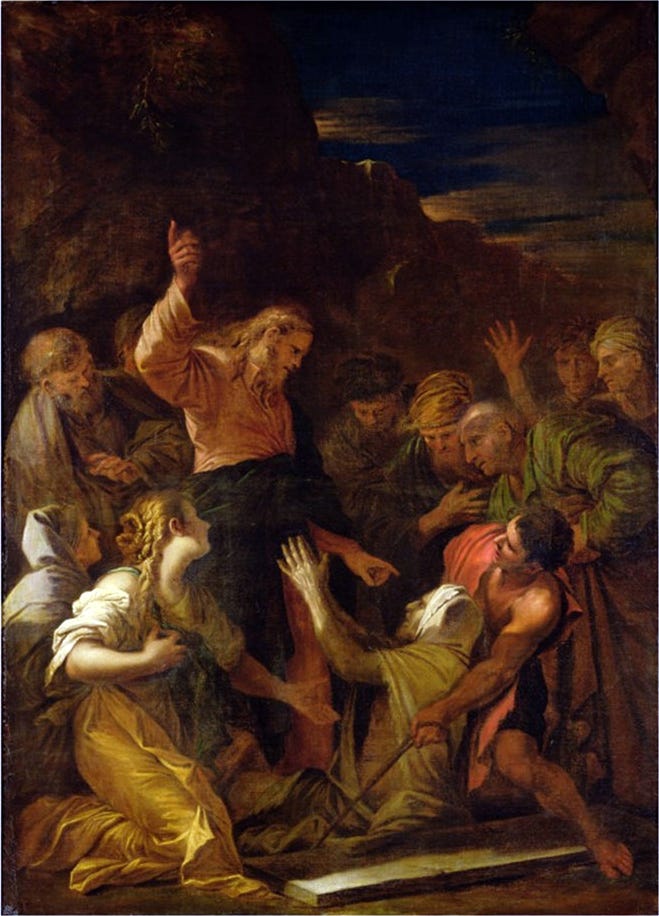
The Power of Cleansing and Forgiveness
One second, the man is full of leprosy. The next second, he is clean. Not halfway healed. Not slowly recovering. He is clean. Mark records it plainly: “Immediately the leprosy left him, and he was made clean” (Mark 1:42). Luke says it too, using that same word “immediately.” The Greek term carries weight. It signals a sudden shift, a divine interruption.
But don’t forget that this isn’t just a change in his physical health. This man is now “clean” in the ritual sense as well as the physical sense. He is no longer an outcast. He can return to the temple. He can reenter society. He can pray alongside others instead of outside the gates. He can embrace his family. He is no longer defined by what kept him apart. Jesus doesn’t just heal the body. He restores the person.
We see the same pattern unfold in the story of the paralyzed man. He’s lowered through a roof by friends who won’t take no for an answer. The crowd is watching. Everyone assumes Jesus will do what He’s known for. They expect to heal the man and to help him walk again. But Jesus doesn’t start with the man’s legs. He starts with his soul. “Son, your sins are forgiven.”
That had to be confusing for the people in the room. Their expectation was clear. He can’t walk. Fix that. But Jesus goes deeper. He addresses the brokenness that can’t be seen. Because He knows that the deeper pain isn’t physical. It’s spiritual. The real wound isn’t in the body. It’s in the heart. Separation from God is the greater sickness. So Jesus forgives first. Then He heals.
In both cases Jesus does not just address the physical problem. He did more than heal the leper, he restored him to his people. He didn’t just heal the paralytic, he forgave his sins.His healing still works the same way today. Jesus doesn’t just improve your condition. He restores your wholeness. He brings you back into the presence of God.
The Controversy of Forgiveness and Authority
Now Jesus has just said something no ordinary rabbi would dare say. Not without a scroll, a priest, and a temple sacrifice. He told the paralyzed man, “your sins are forgiven.” This was problematic for several reasons.
Firstly, this was not the way one was to find atonement for their sins. Sins needed to be confessed at the temple, priests needed to mediate between God and the sinner, and sacrifices needed to be made. Jesus skipped over this whole process.
Secondly, what makes something sinful is that it is an offense against God. This means that only God can forgive sins. We understand this on a human level. If you wrong someone then you owe an apology to the person you wronged, and it is the person who was wronged who gets to decide if they will forgive you.
And yet here is Jesus, speaking forgiveness out loud. No altar. No ritual. Just grace, freely spoken from His own lips. He is forgoing the whole sacrificial system and speaking as if He were God Himself.
The scribes are in the crowd there. They don’t speak, but their thoughts are loud enough for Scripture to record them: “Why does this man speak like that? He is blaspheming! Who can forgive sins but God alone?” (Mark 2:7). They aren’t just wrestling with Jesus’ theology. They are wrestling with His identity. In their minds, this is a violation that, under the law, could carry the weight of death. Mark says Jesus perceived in His spirit what they were thinking.
“Which is easier,” He asks, “to say to the paralytic, ‘Your sins are forgiven,’ or to say, ‘Rise, take up your bed and walk’?”
It is easier to say your sins are forgiven, because no one can physically see your sin and guilt leaving your body. Healing, on the other hand, is measurable. If I told a paralyzed man to walk, he would either walk or he would not. Either way, the result would be clear to everyone.
Jesus is insinuating that His authority to heal is the evidence of His authority to forgive. So He says it clearly: “But that you may know that the Son of Man has authority on earth to forgive sins…” and He turns to the man lying before Him. “I say to you, rise, pick up your bed, and go home.”
And the man rises. Just like that. No hesitation. No struggle. He stands. He bends down. He picks up the very mat that once carried him. Thus what happened was not merely a healing. It was a declaration. Jesus has divine authority. The kind that forgives sin, restores dignity, and invites people back into life.
This is the first time in Mark’s Gospel that Jesus calls Himself the “Son of Man.” That title comes straight from Daniel 7, a vision of a heavenly figure, clothed with glory, given authority over all nations and peoples. The scribes knew that passage. And they knew what Jesus was saying. He was claiming the right to stand in God’s place.
The Commands and the Consequences
Now let’s go back to the leper. The miracle had just taken place. A man once covered in leprosy now stands whole and clean. You would expect the next moment to be filled with celebration, maybe a public shout of praise, but instead, Jesus speaks a quiet, almost surprising instruction:
“See that you say nothing to anyone, but go, show yourself to the priest and offer for your cleansing what Moses commanded, for a proof to them” (Mark 1:44).
It seems counterintuitive, but Jesus sends the man to the priest, pointing him back to Leviticus 14. That was the chapter that laid out the painstaking process of verifying that a leper had been cleansed. Sacrifices were offered. Rituals were performed. The process was long, but it was important. Leprosy was so dangerous that even if a leper was seemingly miraculously healed, he needed to be inspected by a priest to ensure that he posed no risk to the public.
Sometimes people read the New Testament and mistakenly think that Jesus rejected God’s Law, but that is simply not the case. Jesus sometimes disputed man’s interpretation or application of the law, but He never says that God’s Law was wrong or unnecessary. Here we see that Jesus honors the Law and affirms the man’s full reintegration into worship and community. He isn’t just healed physically. He is certified clean spiritually and socially. The priest would declare it. The community would recognize it. The man could return, as a restored brother.
However, this man doesn’t stay quiet. Mark tells us, “he went out and began to talk freely about it, and to spread the news…” (Mark 1:45). He had lived in isolation, denied even the simple dignity of human touch. His voice, long silenced by shame and societal rules, now explodes with joy. The word used for “talk freely” is the same word often used for preaching. He wasn’t merely chatting. He was proclaiming to everyone.
And yet, this leads to an unexpected twist. The one who had lived in desolate places is now free to walk in community. But Jesus, the one who brought him back, now finds Himself outside.
“Jesus could no longer openly enter a town, but was out in desolate places…” (Mark 1:45).
They switched places. This is why Jesus asked him to keep quiet, but the man simply could not help himself. In a way this is a foreshadow of substitution. Jesus takes our place, our exile, our rejection, so we can be brought home.
Now let’s go back to Mark chapter 2 and the paralytic. Jesus, having just silenced His critics with grace and power, now turns to the man on the mat and says simply, “I say to you, rise, pick up your bed, and go home” (Mark 2:11).
It is interesting that the mat, which was the symbol of his helplessness, now becomes a reminder of healing. What once carried him, he now carries. That is also the nature of true healing. Jesus speaks, and healing happens. But He also speaks, and obedience is required.
In both stories, the rhythm is clear. The leper is told to show before he can speak. The paralytic is told to rise before he can go. The miracle opens the door, but the command leads the way. And the same is true for us.
We want healing, but are we ready to move? We long for miracles, but will we obey the voice that calls us forward? Jesus speaks, and then He watches for our response. “Show yourself.” “Pick up your mat.” “Go home.” Each command invites us not just into healing, but into witness. When mercy finds us, it never leaves us the same.
The Aftermath
People didn’t quite know how to process what they had seen. So they did what people often do when they’re overwhelmed by something holy. They worshiped. Luke says, “Amazement seized them all, and they glorified God and were filled with awe, saying, ‘We have seen extraordinary things today’” (Luke 5:26). Matthew adds a small but important detail. He says they glorified God because He had given this kind of authority to men (Matthew 9:8). That might sound a little off. They didn’t yet understand that Jesus wasn’t just any man. He was God in the flesh. But they weren’t completely wrong either.
Because what happened that day wasn’t just about one moment. It was the beginning of something much bigger. Later, in John 20:23, the risen Jesus breathes on His disciples and tells them, “If you forgive anyone’s sins, they are forgiven.” That means the authority to speak forgiveness didn’t stay in the temple or with the priesthood. It didn’t even stay only with Jesus. He was preparing to share it with His followers. Forgiveness would no longer be tied to a sacred place or a religious system. It would flow through the gospel of grace spoken by ordinary people who had been with Jesus.
The crowd didn’t fully understand what they were witnessing. But they were seeing the start of a new chapter in God’s story. The rules were changing. Forgiveness had come close. And even if they couldn’t yet explain it, their hearts knew enough to respond in praise.
Conclusion:
Both the leper and the paralyzed man came to Jesus with nothing to offer. No status. No solutions. No strength. Just desperate need and a little bit of faith. But that was enough. Because Jesus didn’t respond to them based on how worthy they were. He responded out of love and mercy. He didn’t back away from their condition. He came close. He touched them. He forgave. He healed.
And in doing that, Jesus pointed to something even deeper. These miracles weren’t just about physical healing. They were a picture of what He came to do for all of us. Jesus didn’t just heal people. He took their place. He entered their pain. The leper got to walk back into the city. Jesus had to stay outside. The man who was carried on a mat walked away forgiven, while Jesus carried the full weight of sin to the cross.
That’s the gospel. Jesus, the Son of Man, has the authority to forgive sins because He paid the price for them. He touched what was unclean, and instead of becoming dirty, He made us clean. He gave up His place so we could be brought home.
The good news is, Jesus sees you. He’s not afraid of your situation. He’s already done everything needed to rescue you. And His voice is still speaking today: “I want to. Be clean.” “Your sins are forgiven.” “Get up and walk.”
This Blessed Plot is a reader-supported publication. To receive new posts and support my work, consider becoming a free or paid subscriber.
Works Consulted:
France, R. T. Matthew, Word Biblical Commentary, edited by David A. Hubbard and Glenn W. Barker, Thomas Nelson, 1985.
Lane, William L. Mark, Word Biblical Commentary, edited by David A. Hubbard and Glenn W. Barker, Thomas Nelson, 1974.
Marshall, I. Howard, Word Biblical Commentary, edited by David A. Hubbard and Glenn W. Barker, Thomas Nelson, 1978.
 hardincrowder.com